Industry executives and experts share their predictions for 2025. Read them in this 17th annual VMblog.com series exclusive.
By Marina Segal, CEO and Co-Founder of Tamnoon
You’ve likely heard the phrase: “AI won’t replace humans. Humans using AI will.” While often overused, the core of this statement holds the truth about the next evolution of cloud security. Security leaders will not have to choose between human intelligence and AI-driven systems but rather how to best combine their strengths.
In 2024, cybersecurity companies explored new ways to integrate AI into cloud security processes, particularly for detecting and responding to vulnerabilities. Automating triage and alert prioritization indeed has led to faster mean-times-to-detect (MTTD), but not without a cost – automated remediation solutions need careful deployment so they don’t break production environments. While the pace of innovation and talent shortages have made fully manual cloud remediation impossible, it is clear that we cannot simply remove humans from the picture – the delicacy of remediating vulnerabilities in working cloud production environments requires human expertise.
Early experiments with AI-driven tools revealed that the future of cloud security is one in which AI systems and human expertise coexist. AI has proven its value in areas like assessing large quantities of alerts and identifying patterns that humans may overlook. However, in 2025 we predict that context, judgment, and strategic oversight will remain in the expertise of human intelligence. Together, this approach will enable organizations to tackle security challenges at a scale and speed that neither could achieve alone.
Security teams must decide which incidents to investigate first and then how to devote ever-limited developer resources to remediation. This issue of prioritization has become one of the main focal points for cloud security. AI and machine learning algorithms are already transforming the way security teams operate. It also revealed the path forward: a hybrid approach blending human intelligence and AI by identifying, triaging, prioritizing, and recommending remediation steps without increasing headcount.
For example:
- AI-driven systems can generate playbooks and automated scripts for resolving common cloud misconfigurations, reducing the manual effort required for repetitive tasks.
- Automating the initial triage and prioritization process allows security teams to spend more time on high-value tasks like threat hunting and strategic planning. It also ensures that developers are only tasked with remediating critical incidents, streamlining working relationships between security and dev teams.
- ML models can process enormous volumes of alerts far faster than manual methods, keeping pace with rapidly expanding cloud environments. While this is not a “set it and forget it” solution and human oversight is still required, it is only a small fraction of the headcount growth that would be required to prioritize alerts using other methods.
These capabilities are only as effective as the human intelligence guiding them. CISOs will need a firm grasp of AI integration, policy changes, and how to bridge the gap between developers, engineers, and AI. This approach will ensure that AI tools complement, rather than replace, human expertise, enable proactive security strategies and frequent penetration testing, and help prevent data breaches.
As the trend toward consolidation continues, organizations will need to adopt integrated platforms that provide comprehensive visibility across multi-cloud environments. Yet, consolidation is not an end-all-be-all. While technology can streamline processes, humans remain the core of effective security operations. The goal should be to focus on people and processes – not be blinded by the allure of pure technological solutions. Organizations that successfully navigate this transition will improve their security posture and position themselves as leaders in a rapidly evolving landscape.
In 2025, cloud security success will not be measured by the tools we use-but by how we use them-to protect our cloud environments.
##
ABOUT THE AUTHOR
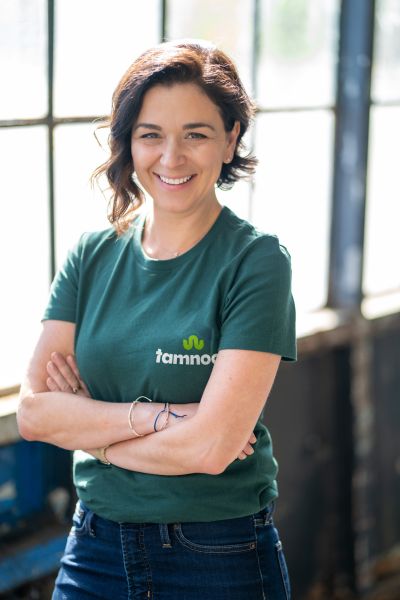
Marina Segal is an entrepreneur and product leader in the Cloud Protection Space with over 17 years of global experience in Cyber Security, MSSP, Risk Management, Compliance, and Governance. She is currently the CEO and Co-Founder of Tamnoon, and has a track record of enabling Dome9 (acquired by Check Point) and Sysdig to become leaders in the Cloud Security Market. Marina has expertise in leveraging AI and ML technologies to develop cloud security products and has been instrumental in driving innovation and delivering high accuracy results. Marina is also a board member of the Cloud Security Alliance Seattle Chapter and is the Founder of WoSec Chapter Meetup – Bay Area.