Industry executives and experts share their predictions for 2023. Read them in this 15th annual VMblog.com series exclusive.
Datacenters to finally undergo transformation
By Sim Upadhyayula, GM of Solutions, Supermicro
The year 2020 forced the hand of many organizations sitting on the fence to undertake digital transformation. If there were a silver lining to an otherwise grim pandemic, this is it. Enterprises in 2023 will be embarking on a data center transformation journey by choice or necessity.
With many businesses’ digital transformations moving towards completion, this action has moved to data centers – and many are bursting at the seams. Many factors, such as the escalating geo-political tensions, energy crisis, and climate change, will compel the data centers to modernize and scale for the future. Luckily, a few newer technologies like CXL, DDR5, and disaggregated/composable infrastructure have the potential to make this transition less painful.
The latest power-hungry processor technologies – with more cores, more extensive heat generating GPUs, denser memory, and faster IO – are pushing the limits of what is possible with traditional air-cooling technology alone. Immersion and direct-to-chip cooling are stepping in to solve this thermal problem. However, not all data centers are equipped to implement changes on a mass scale, either due to CAPEX or space constraints.
CXL is a new protocol that, when fully evolved, can disaggregate the processors, graphics, IO, and networking to provide the best utilization via pooling, the best thermal by intelligent rearrangement of components by heat map, and the best performance by matching the right resources. Pooling and intelligent rearrangement of components in a rack by their thermal footprint could be a reality. The shotgun approach of blasting cold air across the data center can be transitioned out, allowing for a more surgical approach of shooting cooler air or utilizing liquid to specific drawers of hotter components. This redistribution and rearrangement of components by their heat map will allow for effective HVAC usage and potentially lower operating costs while increasing sustainability.
While companies are currently looking at solutions to the sustainability problem as a single dimension focusing on increasing efficiency, this coming year we will see more companies approach it from a two dimensional approach: addressing both increasing utilization/efficiency of resource consumption on one end, and prolonging shelf life reducing the amount of E-waste. This dual approach has the potential to make more significant contributions to the earth’s sustainability.
In addition, several new technologies like Resource Saving ArchitectureTM help increase the shelf life of the systems by providing an option of in-place replacement of “select” next generation components without an extensive overhaul, enabling meeting the performance requirements while being less harsh on the environment & landfills.
As automation and real-time monitoring continue to rise in popularity, the amount of data being generated on factory floors, highways, and commercial/retail locations is also rising. Moving away from large data centers and moving the compute closer to where the data is collected helps lower bandwidth transmission costs and energy costs. In addition, relying on resilient infrastructure expressly designed to withstand the harsher environments of the factory floors or CO points in telecom 5G deployments via micro data centers will help lower the energy and real estate footprint while increasing performance and efficiency.
At Supermicro, being at the forefront of developing and designing various next-generation technologies has reaffirmed our belief that performance and efficiency can be attained in data centers without compromising sustainability or our shirking responsibility towards the environment. Therefore, we are very hopeful and excited about the future of data centers in the coming years.
##
ABOUT THE AUTHOR
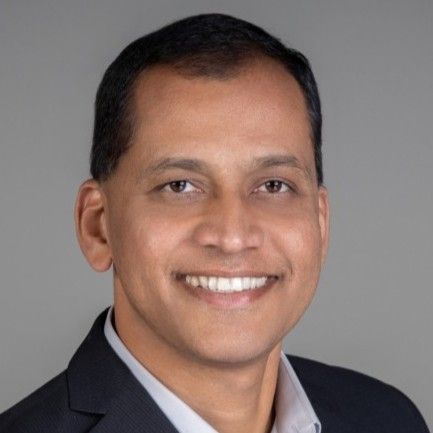
Sim Upadhyayula is General Manager for Solutions at Supermicro. With over 20 years of experience in the IT Infrastructure market, Sim is a goals driven leader helping global teams in engineering, sales, marketing and customer advocacy organizations. In his role, Sim collaborates with various enterprise and service providers in understanding their next-generation data center needs and identifying the right solutions to maximize their business outcomes.