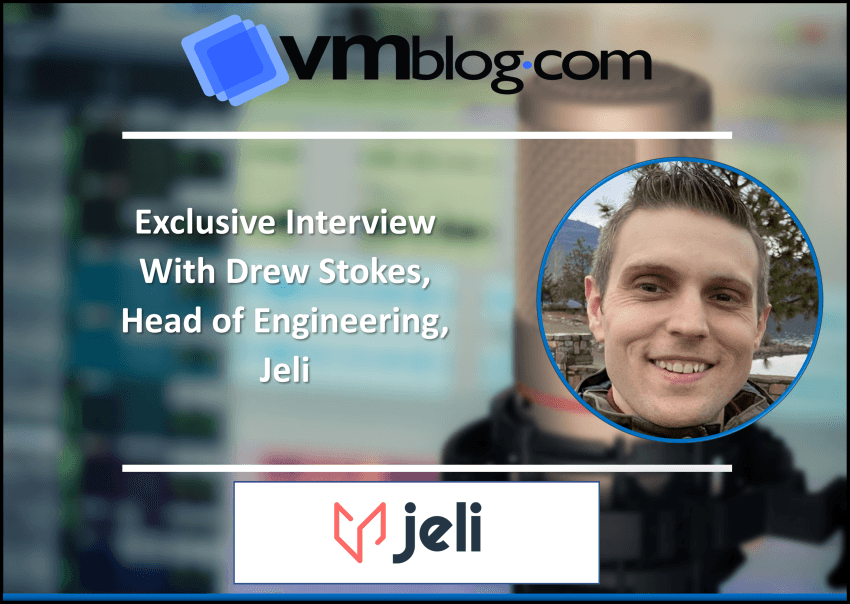
Today, Jeli made a new announcement around the launching of a new beta program for its incident management platform, adding new AI-driven capabilities. To find out more, VMblog spoke with Drew Stokes, their head of engineering.
VMblog: Jeli.io is launching the beta of some new AI-driven capabilities to help teams with incident response and analysis. Before getting into the specifics, can you explain to our readers at a high level why now and how you think AI can help teams when it comes to incident management?
Drew Stokes: I think the speed in which AI is ramping up surprised a lot of people, even us here at Jeli — and we’ve been thinking about socio-technical systems and how humans and machines should interface for a long time. ChatGPT specifically has given millions of people the experience of leveraging AI to quickly answer questions and solve problems, so it seemed like a logical step for us to try and integrate that experience into Jeli now that more people are comfortable with the idea.
VMblog: Where specifically in the Jeli product will there be AI enhancements?
Stokes:
Status Updates: The new ‘catch me up’ feature leverages ChatGPT to provide new incident responders with a quick summary of an incident as soon as they join a Slack channel to quickly get them up to speed. It also provides various teams across the organization such as support and customer success with key highlights that they can relay to customers for real-time external communication and status updates.
Narrative Builder: Narrative Builder puts together the story about how events unfolded, using AI to highlight key moments associated with Detection, Diagnosis, and Repair phases of an incident, while surfacing the knowledge possessed by key stakeholders across the organization involved with the incident. Team members can now work alongside Jeli automation to tag, categorize, and edit on the incident timeline created by Jeli.

VMblog: As an incident management platform, Jeli is often dealing with a company’s most severe and sensitive events. Is there any concern that AI may lead people in the wrong direction or provide inaccurate information? What checks are in place to make sure the human operator remains in control?
Stokes: AI cannot replace human operators. We believe that any automation like this should be supplemental and editable to ensure the most accurate representation of what happened. That’s why any time we provide AI assistance in incidents or investigations, we make sure to give the operator options to adopt, augment, or ignore what’s suggested. Jeli AI is also opt-in and can be disabled at the account level and removed entirely.
VMblog: Jeli has always promoted learning from incidents. But at what point do the machines handle all of the learning and the remediation? Is there a stage in this evolution where the human becomes unnecessary?
Stokes: Building software is a human endeavor and by extension learning from your incidents is about people. We don’t believe that there is a stage in this evolution where humans become unnecessary. We very purposefully built our AI solution to act as a co-pilot that assists the human responders and operators. If you’re interested in learning more and giving it a try you can join the waitlist here.
##