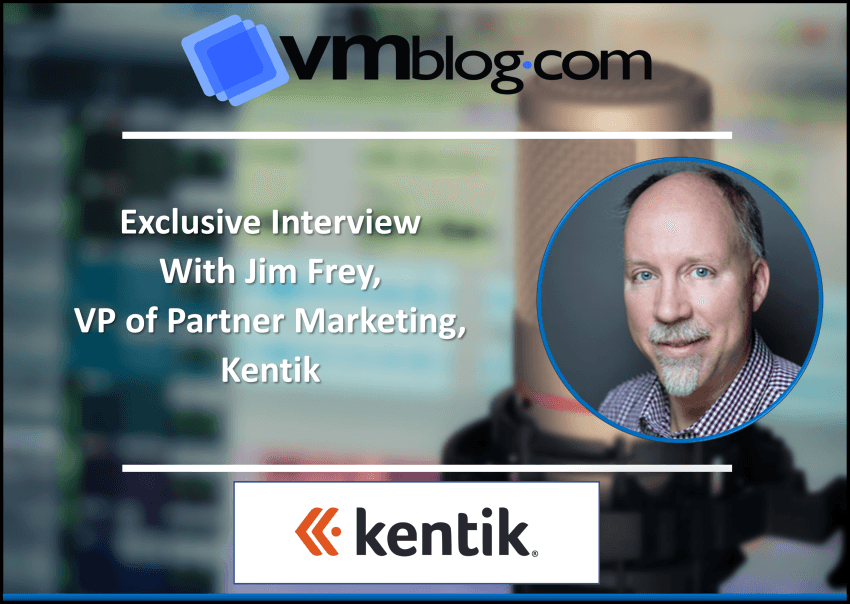
Kentik is one of the leading observability companies across the network, infrastructure, and cloud. And they are bringing their expertise and solution to the Azure Marketplace. To find out more, VMblog spoke with Jim Frey, the VP of Partner Marketing at Kentik.
VMblog: What exactly is Network Observability and how does it differ from the prominent tools in the IT Observability space?
The purpose of network observability is to answer any question about network infrastructure quickly, flexibly, proactively, and interactively. These answers can be found across any kind of network (cloud or software-defined or on-prem), network element (physical, virtual, or cloud service), or be isolated at the network level, or included with application or business context. Unlike other tools in the IT Observability space that might be focused on the application layer (i.e., metrics, logs, and traces), network observability takes a network-first approach that ingests, synthesizes, and correlates telemetry from physical devices, private and public clouds, Kubernetes, and other components of “the network” to provide immediate answers for network, cloud, infrastructure, and security teams.
VMblog: Kentik has been around for a decade — why is it just now announcing their listing on the Azure Marketplace?
The marketplace has been evolving, and so has Kentik. A decade ago, none of the folks looking at Kentik were thinking about managing hybrid and multi-cloud environments. That has changed. Further, back then, no one was thinking about procuring network observability tools via cloud marketplaces. With the growth of hybrid and multi-cloud IT architectures, this has changed too, and many teams now prefer using marketplaces to source as much of their technology as possible. Marketplaces bring a degree of cost leverage and ease of buying that make them compelling for many organizations, and so we have now chosen to make our solutions available there.
VMblog: Can you give us some insight into how many Kentik customers are using Azure compared to other cloud services?
Many of our current cloud customers are monitoring more than one cloud provider. More than a third use Kentik to monitor their Azure deployments. About half use AWS, and a third use Google Cloud. Not surprisingly, many of those using Azure and/or GCP exclusively are competitors to Amazon. We recently launched major updates to our Azure network observability solution, and while we’re seeing rapid growth across all public clouds, we’re seeing the fastest growth in Azure at this point.
VMblog: Are there any unique challenges to troubleshooting the Azure network versus other clouds or are the issues essentially the same across all of them?
Kentik made special accommodations for the unique way that Azure has implemented cloud networking, including its use of VNet routing, vWAN virtual hubs, and NSGs (Network Security Groups). For understanding activity, behavior, and issues in Azure, it’s essential to fully support these components.
Beyond those peculiarities, Azure users have the same sorts of issues that show up in other cloud environments. For instance, Azure did some “planned non-disruptive” maintenance that routed traffic off the Azure backbone to Internet endpoints. This particular traffic was to an Azure database service that one of our customers was using. In theory, this was not supposed to impact customers and was not announced. In practice, it did. We were able to see that the traffic had shifted and that shift correlated with the timing of the degradation. That helped our customer work with Azure to rectify the issue promptly.
VMblog: Are you seeing the majority of your users leverage multiple clouds and would Kentik recommend that as a best practice for a healthy network?
Enterprises leverage multiple clouds for myriad reasons: acquisitions, cost reductions, strategic initiatives, etc. Multi-cloud offers a number of benefits, but with it comes challenges:
- Optimizing resource allocation
- Maintaining consistent operations using diverse platforms, APIs, networking configurations, and security models
- Integrating multiple clouds with on-premises infrastructure and legacy systems
Many of our customers are turning to Kentik network observability for complete & consistent visibility into their hybrid and multi-cloud networks, so they can troubleshoot faster, improve performance, reduce costs, and ensure compliance. While we don’t make recommendations on whether or not to leverage multiple clouds, we’ve been hyper-focused on helping enterprises migrate to and from cloud providers, while ensuring a great experience for their customers.
##