
By Becca Uptmor, Senior Director of Web Marketing at Databricks
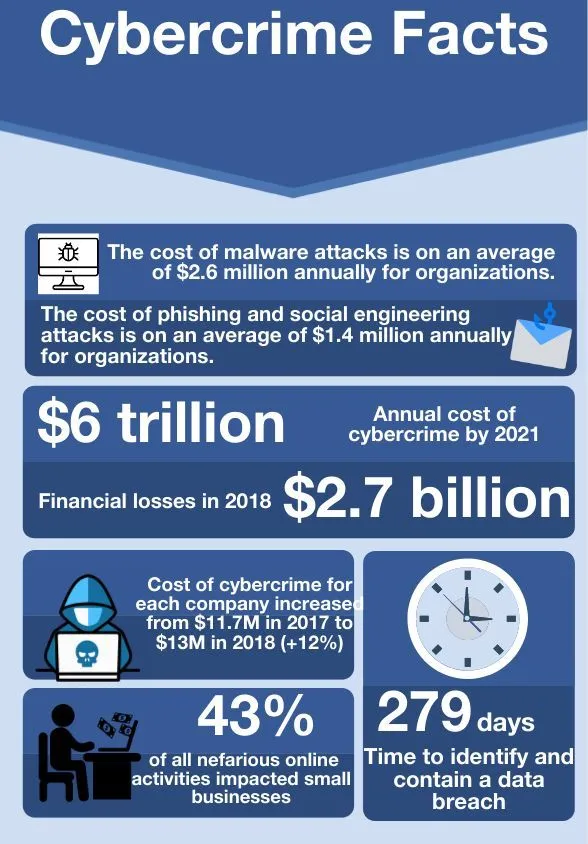
Preventing fraud should be a priority for all businesses. For many companies, fraud-related losses continuously reach over 10% of total spending. In fact, fraud costs the global economy several trillions of dollars every year.
Such high numbers mean that companies are constantly looking to improve their prevention and elimination strategies. And one of the rising stars in the world of fraud detection is machine learning, a mighty tech weapon.
But what is machine learning (ML)?
Machine learning is a computer’s ability to process large amounts of information, only to then ‘learn’ how to make decisions based on the data it receives.
As a subdivision of machine learning, deep learning is the ability to make models for specific tasks. These tasks are flexible and highly customisable. One example of a deep learning task is fraud detection.
How does machine learning (ML) perform fraud detection?
Machine learning is able to perform fraud detection due to ML algorithms that ‘learn’ from past frauds, memorizing and recognising patterns, then applying them to future scenarios.
These ML algorithms are really useful because machines are able to process information a lot faster than humans can. They can also detect minutiae fraud traits that humans would never successfully identify. Moreover, because there is so much data available, machine learning is able to learn and develop on a huge scale, improving its knowledge very quickly.
6 effective ways to use machine learning to prevent fraud
1. Identity theft
Identity theft, a type of cybercrime, can be highly damaging for an individual or company. This is because personal information such as email addresses, passwords, and bank details can be used to access accounts and steal large sums of money.
Machine learning can help examine and check over identifying documents through secure databases. Some of these real-time security features include face recognition or biometric information that is requested as additional verification when money is being withdrawn.
Lastly, machine learning also employs pattern identification to improve fraud detection. This includes tracking an individual’s spending and behavior patterns so that anomalous activity can serve as a red flag warning that fraud is taking place.
2. Account identification
Similarly, it is important to verify accounts, including social media accounts. Verifying your accounts means checking registration details, accessing networks, and the IP and MAC address of the device that is creating the account, for instance through photo identification.
Machine learning helps to identify fake accounts, including fake accounts on retail websites which are used to hide the true identity of a fraudster. Moreover, vulnerability monitoring serves to scan the servers and firewalls of websites against third-party hackers. Digitally stored details enable criminals to increase their chances of getting away with fraud, as transactions are harder to verify.
Spotting this kind of fraud is accomplished through ML detecting false activity and rate of engagement. Fake accounts tend to have high levels of followers but very little engagement on their profiles. ML tracks activity, follower counts, and the relevancy of comments. Then, through feature selection, it feeds data into a classification model which identifies whether an account is fake or not.
This is where ElasticSearch can come in handy for storing data. What is Elasticsearch?

3. Credit card fraud
Millions of dollars are stolen every year as a result of credit card information being stolen.
For instance, hackers are able to inject code into JavaScript that essentially intercepts card details after they are entered by someone making a purchase online. This is usually on badly built websites with vulnerable codes, highlighting the importance of ensuring your websites are protected against hackers and fraudsters.
Here, traditional classification algorithms can be used, as well as anomaly detection techniques, to help identify credit card theft.
4. Email phishing
Email phishing is the process of sending spam letters to people with the intention of stealing from them, usually by convincing the victim that the email is from a company or professional in that person’s network.
High quality phishing is dangerous as fraudsters create links to fake websites with URLs and visuals that look nearly indistinguishable to the actual website they are pretending to be.
Machine learning utilizes logistic regression algorithms to detect phishing. They work by using a linear model to predict numbers, in a range from 0 to 1. 0 to 1 indicates spam or not spam. In this case, working with pandas dataframes can solve the problem of organizing tabular data.
More generally, detecting phishing through ML involves collecting falsified emails that have fake URLs, then collecting legit emails, in order to train the machine in detecting each correctly.
5. ID document forgery
ID document forgery is a growing market for fraudulent activity, especially with the rise in high quality fake IDs which make it increasingly hard to verify their legitimacy and prevent fraud.
Machine learning is used to detect fraud in ID forgery through image processing. Data is used to make sense of the visual information held by an image, with whole machine learning models being used to train machines on how to perform this analysis. This is called CNN, and it imitates the human ability to process visual information through the visual cortex.
This method requires a significant number of images from both forged and real documents in order to learn to distinguish the two.

6. Stealing a person’s account
This usually happens when a criminal has somehow managed to access the victim’s personal or professional accounts, either through malware, a data breach, or phishing. With businesses increasingly using the cloud to store information, machine learning is also adapting to prevent future privacy concerns.
A hacker usually achieves this kind of fraud by learning the victim’s passwords, or through phone scamming. The ‘account recovery’ option can also result in sensitive information being accessed by the criminal, if they are able to gain your email address or phone number. If your company isn’t already using VoIP systems to organize their professional calls, this is a good next step in protecting your business from fraud.
Machine learning (ML) is very effective in combating account takeover. In a lot of cases, it can prevent any damage taking place by acting as soon as an account becomes compromised. Like with account identification, it does this through behavioral analysis, as well as by cross-referencing user data. Past user data is compared with current activity to spot anomalies that might be flagging an account takeover.
Conclusions
The above are just a few of the ways in which criminals can commit fraud online, most often by stealing sensitive information they can then use to trick a victim into giving away money.
As long as the e-commerce world continues to boom, there will be cybercrimes. QA to cyber security is vital for any business, but so is investing in machine learning. We need to continue implementing and improving methods to combat fraudulent activity, in order to prevent greater losses in the long run. And deep machine learning is one of the best ways we can do so.
##
ABOUT THE AUTHOR
Becca Uptmor – Senior Director of Web Marketing

Becca Uptmor is the Senior Director of Web Marketing at Databricks, specializing in everything from website redesigns and re-platforms to international SEO, Databricks Introduction of hadoop, and global content marketing campaigns. With decades of experience within the marketing industry, Becca is known for successfully facilitating the growth of a company at a global scale.