By John Allen, Director, SEO, 8×8
The popularity of cloud services has exploded in recent years. In a decade, the cloud applications market has risen by 5 times and is predicted to keep growing.
There are a number of reasons for this spike in popularity, including:
- Increased accessibility for hybrid and remote working
- Reduced hardware costs
- Increased personalization and adaptability of cloud software compared with traditional hardware
- Diversity of options, including add-ons for niche industries
In the midst of all of this new technology, three major players in the cloud services game have emerged: SaaS, IaaS, and PaaS. They are the main drivers of one of the top impactful tech trends and continue to dominate the cloud services sector.

Image sourced from statista.com
Discover the differences between these three types of cloud services, their uses, and how to get the most out of your cloud-based business processes.
SaaS, IaaS, and PaaS – explaining the difference
A key part of understanding cloud systems is understanding the differences and similarities between the major types of cloud services.
SaaS stands for software as a service, a cloud-based service model in which the service provider hosts the service centrally. The software is then licensed as a service, typically via a subscription-based payment model. Some examples in common use today are Adobe design packages, and Docusign.
IaaS means infrastructure as a service. This type of cloud software offers centrally-hosted business infrastructure, like storage and computing power. This is in contrast to traditional hardware storage and computers. Industry-favorite examples include Google cloud and IBM Cloud.
PaaS stands for platform as a service – a more comprehensive cloud-based operation that can incorporate both SaaS and IaaS. PaaS incorporates full roll-out capabilities, including complex app systems throughout their testing, building, and deployment lifecycle. Examples include Windows Azure and Google App Engine.

Along with serverless cloud systems, they make up the four main types of cloud-based technology.
What do SaaS, IaaS, and PaaS have in common?
The major element that these cloud services have in common is that they are centrally-hosted by the service provider. They can be adapted to individual business’ needs, and the subscription-based payment model means that businesses can select cloud services based on their needs and financial resources.
SaaS, Iaas, and PaaS also offer the general benefits of a cloud-based system, including remote management and access, support in defining business processes and streamlining them, and a reduced need for physical storage space for server hardware.
You may also find significant overlap between Saas, Paas, and Iaas.
For example, the Google Suite includes a VoIP phone connection for its users, but it also provides storage and collaborative working spaces within the cloud. This is a clear combination of infrastructure and software that can be purchased and tailored to individual businesses.
How to choose the right cloud service
As we can see, cloud services offer a near-unlimited range of features for businesses. When faced with such choice, it can be difficult for businesses to choose the right cloud system for them.

Choosing Saas
Software as a service is the most commonly used of the three types of hosted cloud solutions. Pretty much any type of software, including design, CRM, content, analytics, and payroll, to name a few, can be introduced as cloud-based systems.
1. Choosing hosted software
Cloud-based software is useful for so many reasons, not least for its advantages over non-hosted software or hardware. Hardware requires more storage space and, typically, more frequent maintenance. The same is true for internally-developed software.
Consider inventory management as an example. While internal inventory platform developments may be familiar, cloud inventory platform features are likely to be more flexible and manageable in the long run. With continual updates and external management, a cloud-based inventory service is likely to be the better option.
2. Is SaaS enough to meet your needs?
Every business has different needs, and most business processes are now available as a hosted piece of software.
What you need to consider is whether you need something more. For example, a retail brand may well benefit from SaaS integration, from HR and payroll to inventory management. But, if they want to create an app to go alongside their flagship product, then software alone may not be enough.
In this case, they might want to look into PaaS integration to allow them to develop and launch their app within their cloud system.
Choosing IaaS
Every business needs an infrastructure of some kind. The main choice when it comes to infrastructure as a service (IaaS) is how far you want or need to take your hosted infrastructure.
Consider communication as an example.
Communication is a key area for IaaS because businesses are increasingly virtual today, and communication is a universal need in business. There are many different cloud-based options for communication infrastructure, including virtual phone systems, video calling and meeting software, and internet-enabled hardware.
For certain companies, any of these options may be viable, at which point they would make a decision based upon cost, company size and integration with existing systems. They might look into cell phone plans for businesses, traditional hardware, or VoIP calling systems.
Choosing which IaaS integration to use, and whether to use it at all, comes down to the structure of your organization and its corresponding needs.
Choosing PaaS
Generally, platform as a service (PaaS) integrations are the most comprehensive of the three types of hosted cloud services. It is typically used by organizations and companies that develop and test their own applications.
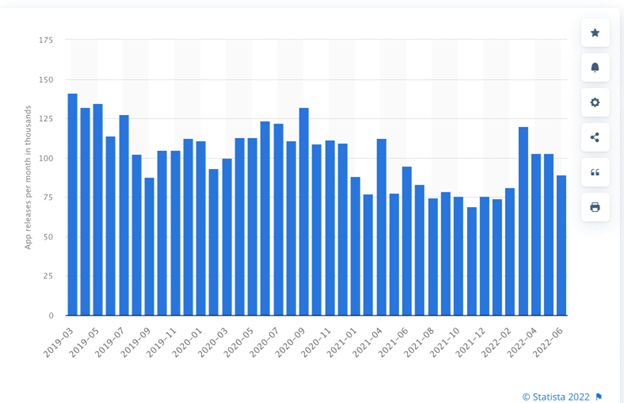
Image sourced from statista.com
The key benefit of using PaaS integration over hosting the applications in-house is that your business does not have the responsibility of maintaining the servers which host the applications.
PaaS is primarily aimed at businesses that develop, release, and maintain applications in their own right. Hosted platforms often have integrated software and infrastructure, but this development capability is what separates PaaS from other types of hosted services.
PaaS may be right for your business if you have existing applications and your current setup is not working or have immediate plans to develop an application.
Why use cloud services?
Cloud services offer up-to-date technical capabilities, including the ability to be remotely managed and accessed, and built around what businesses need. They are typically cost-saving for businesses, since they don’t require expensive hardware and maintenance
Cloud services are leading the technological business transformation, to a world where operating systems and applications work for the businesses that develop them and those that use them.
##
ABOUT THE AUTHOR
John Allen – Director, SEO, 8×8
John Allen is a driven marketing professional with over 14 years of experience, an extensive background in building and optimizing digital marketing programs across SEM, SEO, paid media, mobile, social, and email, with an eye to new customer acquisition and increasing revenue.