Industry executives and experts share their predictions for 2023. Read them in this 15th annual VMblog.com series exclusive.
Hyperscale Will Become Mainstream
By Chris Gladwin, CEO & Co-founder of Ocient
Big data keeps getting bigger. For the past 20 years, enterprise databases have been measured in terabytes. These days, a growing number of organizations are dealing with petabytes of data, a thousand times more. A select few are wrangling exabytes-a million terabytes.
In other words, data-intensive businesses are moving beyond big data into the realm of hyperscale data, which is exponentially greater. And that requires a reevaluation of data infrastructure.
What is driving this kind of data at super scale? More data is being created by more sources-autonomous vehicles and telematics, sensor-enabled IoT networks, billions of mobile devices, healthcare monitoring, smart homes and factories, 5G networking, edge computing, and more.
The technology teams responsible for growing data volumes can see the writing on the wall-even if their databases are not petabyte-scale today, it’s only a matter of time before they will be. For this reason, scalability and elasticity-the ability to add compute and storage resources instantaneously-have become top priorities.
There are many ways to scale up and scale out, from adding server and storage capacity on premises, to auto-scaling “serverless” cloud database services, to manually provisioning cloud resources. In 2023, data warehouse vendors are sure to develop new ways to build and expand these systems and services.
It’s not just the overall volume of data that technologists must plan for, but also the burgeoning data sets and workloads to be processed. Some leading-edge IT organizations are now working with data sets that comprise billions and trillions of records. In 2023, we could even see data sets of a quadrillion rows in data-intensive industries such as adtech, telecommunications, and geospatial.
Hyperscale data sets will become more common as organizations leverage increasing data volumes in near real-time from operations, customers, and on-the-move devices and objects.
##
ABOUT THE AUTHOR
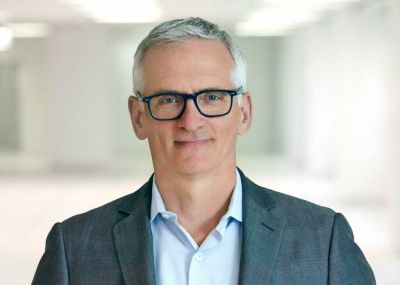
Chris Gladwin is the CEO & Co-founder of Ocient. In 2004, Chris founded Cleversafe, which became the largest and most strategic object storage vendor in the world and generated over 1,000 patents granted or filed. After raising over $100M, Chris led the company to a $1.4B exit in 2015 when IBM acquired the company. Prior to Cleversafe, Chris founded startups MusicNow and Cruise Technologies and led product strategy for Zenith Data Systems. He started his career at Martin Marietta as a database developer and holds an engineering degree from MIT.