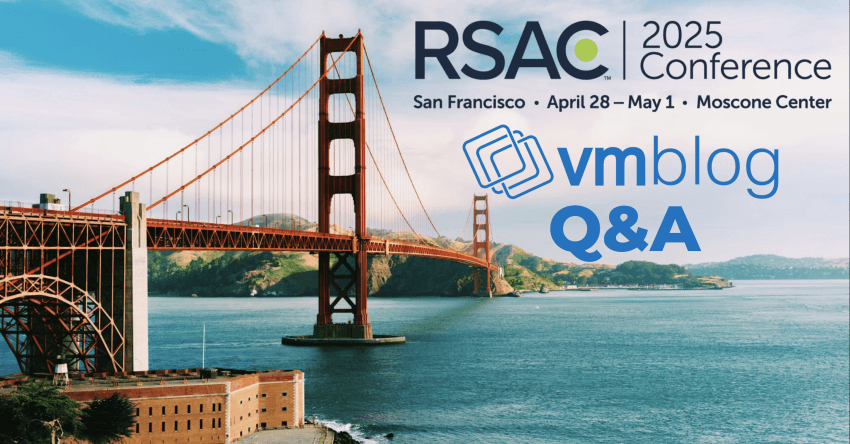
The RSA Conference (RSAC), the premier cybersecurity industry event, returns to San Francisco’s Moscone Center April 28-May 1, 2025, bringing together thousands of security professionals, vendors, and thought leaders from across the globe. This annual gathering serves as the definitive forum for the latest cybersecurity innovations, trends, and best practices, featuring hundreds of educational sessions, keynotes from industry luminaries, and an expansive expo floor showcasing cutting-edge security solutions. For organizations navigating today’s complex threat landscape, RSAC provides unparalleled networking opportunities, hands-on training, and essential insights to help bolster defense strategies against evolving cyber threats.
Ahead of RSAC 2025, cybersecurity leaders are preparing to showcase their latest innovations to address evolving threats. Among them is Aqua Security, a pioneer in cloud native security solutions. With the explosive growth of AI applications and container deployments creating new security challenges, organizations face unprecedented risks in their cloud environments.
In this exclusive VMblog Q&A, Matt Richards, CMO of Aqua Security, discusses the company’s focus on securing AI workloads, its groundbreaking container security solutions, and what attendees can expect at their booth #1727 in the South Hall. From record-breaking vulnerability numbers in 2024 to the 400% surge in runtime attacks, Richards reveals how Aqua is helping organizations navigate the increasingly complex security landscape while enabling innovation.
++
VMblog: Give VMblog readers a quick overview of your company and its core mission in the cybersecurity space.
Matt Richards: Aqua is the pioneer of cloud native security. Our Cloud Native Application Protection Platform (CNAPP) is a single, integrated solution that enables organizations to secure every cloud native application everywhere. Aqua makes companies smarter and more efficient in managing vulnerabilities by combining proactive and reactive security capabilities with context from the code commit through runtime. Aqua’s security policies are informed by real-world cybersecurity research and in-the-wild threat analysis of the cloud native stack, beyond previously learned behaviors. With Aqua, organizations can massively reduce the scale of vulnerabilities, MTTR, and the overall risk profile, without slowing down development. They can replace multiple tools with one, and get early issue detection and resolution to scale efficiently in the cloud.
VMblog: Where can attendees find you at RSA 2025? What’s your booth number, and what kind of experience can visitors expect when they stop by? What exciting demos or interactive experiences can attendees expect at your booth?
Richards: You can find Aqua Security at RSA 2025 in the South Hall, at booth #1727. We’ll be unveiling our next-generation AI application security capabilities, with a live demo that walks through a typical cloud-native AI workload-from that first code commit to runtime. Visitors can also expect expert-led presentations in collaboration with AWS and other partners, interactive experiences, and, as tradition demands, plenty of snacks. Aqua is the pioneer in securing cloud-native applications, providing full-lifecycle protection from code to cloud to runtime. With deep visibility, runtime controls, and policy enforcement across containers, VMs, and now AI workloads, Aqua empowers organizations to innovate with confidence in the age of cloud-native and AI.
VMblog: What is your message to RSA attendees coming out to the show this year?
Richards: This year, AI security is once again front and center. As organizations race to adopt generative AI and large language models (LLMs), they’re unknowingly expanding their attack surface. New risks-prompt injection, insecure output handling, and unauthorized use of external models-are becoming top priorities for security teams. What we’re seeing is that many of these AI workloads are being built in containers, reinforcing a key insight: AI security starts with container security. IDC predicts there will be over 1 billion new AI applications by 2028, translating into 10 billion containers across cloud-native environments. At the same time, runtime attacks have surged 400%, often targeting the layer where AI applications actually execute-making runtime protection absolutely critical.
Aqua has long led the industry with deep container-level visibility, behavioral detection, and runtime policy enforcement. Our platform is already aligned with the OWASP Top 10 for LLMs and is designed to mitigate AI risks across development, infrastructure, and runtime layers. As AI becomes more deeply embedded in cloud-native stacks, Aqua delivers a scalable, policy-driven approach to securing modern applications-AI included.
VMblog: What were your key learnings from 2024’s security landscape, and how have those insights shaped your solutions for 2025?
Richards: We saw a record number of vulnerabilities in 2024, proving that software security-particularly as it relates to cloud native applications and the supply chain used to develop them-is more critical than ever. As cloud native technologies have become the backbone of modern IT infrastructure, this staggering figure highlights a growing threat. More troubling: A notable delay in public disclosure of vulnerabilities, particularly in open source projects, creates a risky window in which attackers can find and exploit cloud native applications and infrastructure. As mentioned before, the rapid adoption of AI and the increasing frequency of AI-related attacks are another growing concerns. These factors combined have informed our product strategy.
In addition to major advancements in our ability to secure AI applications and workloads, we have focused on customer operationalization. It can be very difficult to know which of the hundreds of thousands or millions of issues found in an environment are the truly dangerous ones. Aqua helps solve this problem by pulling together complex data sources to help customers better understand what is happening in their environments and then be able to take immediate action, either with Aqua or other tools as appropriate. We’ve upleveled capabilities like Dynamic Threat Assessment, process tree mapping, and a patent-pending memory dump, which enables cloud servers to provide memory dumps to incident response teams. All of these capabilities and more help make teams more effective and companies more secure.
VMblog: Can you share any exclusive previews or announcements that attendees can expect to see at your booth this year?
Richards: Aqua first entered the AI security space in 2024 with first-of-its-kind protection for LLM-based applications. Attendees should look for announcements from Aqua regarding advancements in our technology to better combat threats to AI applications. We are also launching a first-of-its-kind risk assessment for container security. This new offering delivers a unique view into runtime behavior, arming security teams with the insight needed to identify, prioritize, and reduce risk based on actual production data, not assumptions or static scans. More details will be available soon!
VMblog: What sets your solution apart in today’s crowded cybersecurity marketplace? Why should RSA attendees prioritize visiting your booth?
Richards: This is an excellent question, because we’ve certainly seen the cloud security space become very crowded over the past few years. If you run containers, you need to secure them. If you need to secure them, you owe it to yourself to see us; we invented the space. It’s important to know that competitors lack functional areas where Aqua excels: providing comprehensive security throughout the entire container lifecycle. Aqua enables scanning of container images and detection of vulnerabilities, protecting running workloads and preventing attacks. As more organizations migrate to the cloud and adopt containers, Aqua’s ability to secure every application everywhere uniquely positions the company as the go-to vendor for enterprise application security.
And let’s not forget, we have food.
VMblog: Are you participating in any speaking sessions or panel discussions at RSA 2025? Can you tell us more about these presentations?
Richards: We’re excited to have two of our incredible security researchers presenting at RSA Conference 2025.
On Monday, April 28, from 8:30-9:20 a.m. PDT, Assaf Morag and Yakir Kadkoda will be presenting “Cracks in the Fortress: How Major Companies Leak Their Secrets.” The session, which is based on extensive research, will tackle the challenge of protecting secrets in the SDLC. Attendees will learn how they may be unknowingly exposing secrets to attackers, lessons learned, and strategies for secrets protection.
On Tuesday, April 29, from 1:15-2:05 p.m. PDT, Morag and Kadkoda will take the stage again for another session titled, “Shadows in the Cloud: The Invisible Pathways to Breaching AWS Accounts.” Based on proprietary Nautilus research, the discussion will reveal attack vectors that led to the discovery of multiple critical vulnerabilities in AWS, exposing paths to remote code execution, account takeovers, and data leaks. Last year, during Black Hat, Nautilus released initial research on this topic, which can be reviewed on our blog. Later, during fall 2024, the team announced additional findings about potential account takeover. This presentation follows those announcements, offering new revelations and deep insight about AWS risk.
VMblog: How is your company addressing the challenges of securing hybrid and multi-cloud environments?
Richards: ?Aqua Security addresses the challenges of securing hybrid and multi-cloud environments through our comprehensive CNAPP, which offers unified security across diverse infrastructures-from on-prem (Kubernetes, OpenShift, Docker, and even mainframe) to all major cloud providers. It protects functions, serverless and VMs as well. Aqua even ensures that isolated systems, such as air-gapped environments, remain secure. It detects vulnerabilities, enforces compliance, and blocks risks all without external connectivity.
Aqua protects everything with one engine, one set of rules. The ability to provide consistent security controls and visibility across public, private, and hybrid cloud infrastructures is a primary strength. This approach mitigates issues arising from inconsistent security tooling and visibility, which are common in hybrid or multi-cloud setups. With Aqua, you can set up your environments up once and protect them anywhere you run your applications.
VMblog: How can security leaders better prepare their organizations for the evolving threat landscape in 2025 and beyond?
Richards: If you’re responsible for defending your infrastructure, you already know the attack surface has shifted-and runtime is the new battleground. Container adoption continues to grow, and with it, the volume and sophistication of attacks targeting these environments. Industry-wide, runtime threats against containers have spiked nearly 400% this year.
Adversaries aren’t just scanning ports-they’re also exploiting behaviors. And many of today’s tools don’t provide the runtime context you need to detect, investigate, and respond effectively.
At Aqua, we’ve analyzed billions of cloud security events and hundreds of thousands of real-world attacks. This is what we can help you understand, so you can help your organization safely and securely adopt the latest technology without introducing excess risk or slowing the business down.
##