After nearly a decade without significant innovation in the Infrastructure-as-Code space, Platform Engineering Labs is introducing formae, a ground-up reimagining of how platform teams manage cloud infrastructure. The new open source platform addresses persistent challenges that have plagued operations engineers and SREs: infrastructure drift, undocumented changes, fragile state management, and the overwhelming complexity of modern cloud estates. Released under the FSL license, formae automatically discovers and codifies all running resources�regardless of whether they originated from IaC, manual patches, or ClickOps�creating a unified, versioned source of truth that eliminates the firefighting and toil that consumes platform teams today.
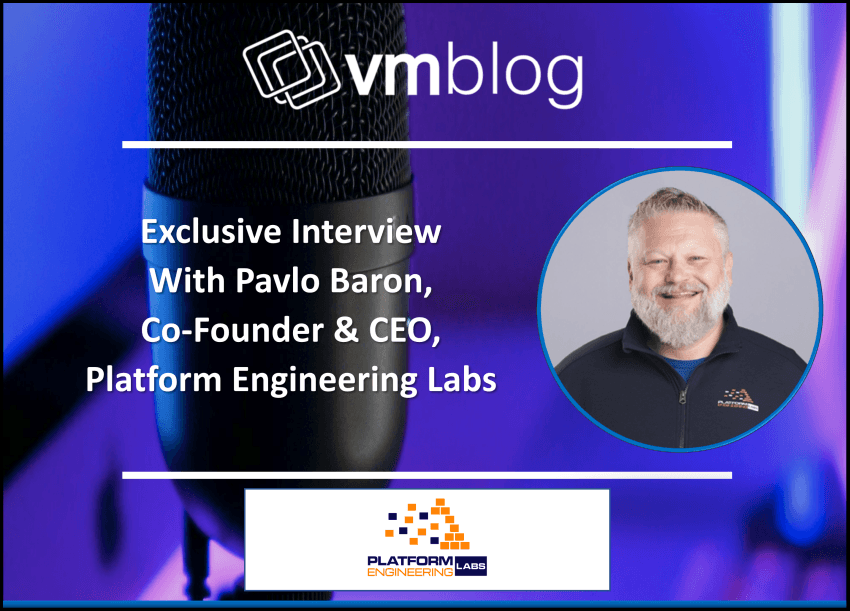
In this exclusive VMblog Q&A, Pavlo Baron, co-founder and CEO of Platform Engineering Labs, explains how formae’s agent-based, state-free approach fundamentally differs from existing tools, and why the timing is critical. As developers leverage AI to dramatically increase workload delivery frequency and diversity, operations teams have been left behind with outdated tooling. Baron shares his vision for formae as the foundation that will finally enable platform engineering adoption at scale, empowering every engineer to confidently contribute to infrastructure while paving the way for AI to safely augment operations without the burden of fragile toolchains and manual intervention.
++
VMblog: What does Platform Engineering Labs do, and what is formae?
Pavlo Baron: Platform Engineering Labs builds tools for platform teams, operations engineers, and SREs to reduce toil, human error, and infrastructure chaos. Its mission is to empower every engineer to confidently contribute to infrastructure. Formae is their new open source Infrastructure-as-Code (IaC) platform, designed from scratch to unify all cloud resources into a single, versioned source of truth no matter their origin, be it IaC, patches, ClickOps or anything else. By continuously discovering and codifying environments, formae provides teams with a safe, modern foundation for managing complex cloud estates.
VMblog: What problems do today’s platform teams face that formae is designed to solve?
Baron: Platform teams wrestle with overwhelming complexity in sprawling cloud environments, infrastructure drift, and undocumented changes. Existing IaC tools often force teams into fragile state management and duct-taped integrations, leaving them firefighting outages instead of building resilient systems. This results in wasted time, cognitive overload, and burnout. Formae tackles these problems by automatically discovering and codifying all resources, eliminating drift, and replacing fragile toolchains with a unified, trustworthy, and declarative approach to infrastructure management.
VMblog: What are the core capabilities and benefits of formae?
Baron: Formae introduces five key capabilities: automatic discovery and codification of all running resources; removal of explicit state management by versioning reality directly in code; agent-based reconciliation without manual intervention; schema-safe, declarative configuration; and extensibility for plugins, integrations, and enterprise extensions. These innovations give teams confidence to evolve infrastructure safely, empower every engineer to contribute, and provide a scalable foundation for resilient operations. Ultimately, formae reduces toil, eliminates drift, and ensures predictable, error-free environments.
VMblog: Why did Platform Engineering Labs choose to make formae open source, and what license is it released under?
Baron: Platform Engineering Labs chose open source to maximize accessibility, adoption, and community participation at any budget level. By releasing formae under the FSL license, they ensure the project can grow with contributions and experimentation, while still supporting a sustainable commercial path through value-added extensions. This approach balances openness with business viability, making formae immediately usable and safe for organizations, while fostering innovation, collaboration, and trust within the global infrastructure and platform engineering community.
VMblog: Who are the target users for formae?
Baron: Formae is built for operators and platform teams first, while remaining accessible to all engineers. Target users include operations and DevOps leads, SREs, infrastructure architects, startup CTOs, technology consultants, and solution architects. These professionals share the challenge of managing complex, dynamic cloud estates. Formae equips them with a unified, reliable system to discover, codify, and evolve their environments, enabling infrastructure management that is safe, predictable, and collaborative without the burden of fragile toolchains.
VMblog: Why does the launch of formae matter to the industry right now, and what vision does Platform Engineering Labs have for the future of infrastructure management?
Baron: The launch matters because the Infrastructure-as-Code space has seen little real innovation in nearly a decade, leaving operators behind while developers benefit from AI advances and dramatically increase the frequency and diversity of workload delivery. Platform Engineering Labs envisions formae as the new foundation for modern infrastructure: state-free, agent-based, and grounded in reality. We think the platform engineering discipline is the way to go, but its adoption is stuck because of wrong foundation and outdated basis tooling. By eliminating drift and unnecessary toil, formae empowers engineers and paves the way for AI to safely augment operations.
##
Pavlo Baron is Co-Founder and CEO of Platform Engineering Labs who are crafting tools to remove the toil from the operations work, with current focus on infrastructure. He is a veteran in the space, having served in all kinds of roles throughout his career that spans more than 35 years. Previously, he was co-founder, CTO and major inventor at an observability startup Instana that was acquired by IBM in 2020. Pavlo is a frequent conference speaker and author of several books.