Industry executives and experts share their predictions for 2024. Read them in this 16th annual VMblog.com series exclusive.
Generative AI Will Reign but Security and Privacy Issues Remain
By Raju Vegesna, Chief Evangelist at Zoho
The year 2023 was a volatile one. Hype ran rampant for generative AI but it was tempered by the amount of uncertainty it presented. Economies at both global and local levels have encountered issues, and there is no end in sight. But there is much to look forward to in 2024 to help alleviate some of these problems. Here are my predictions:
A productivity revolution, particularly for software development, is fast approaching
Source code generation, in my opinion, is the best, and potentially most disruptive use for LLMs. Already, AI has made programmers 50 percent more productive, and as the technology improves over the next year or two, we’ll likely see that number increase another 25 percent.
What machine looms did for the textile industry, AI and automation will do for software development. In the already overcrowded SaaS market, I believe this presents an opportunity both for developers and software providers: executing better customer experience through personal, human engagement. As programming becomes a commodity, new players will emerge and old ones will die out. And, the truth is, if a company isn’t openly embracing generative AI, they are about to fall way behind the competition.
An Organization of Generative AI on the Enterprise Level
In 2024, we can expect to start seeing the technology trickle down to small businesses. They will start small, using AI for things like personalizing aspects of CX, developing actionable analytics, or simply choosing a new icon for a product. Small businesses are perpetually strapped for resources and have to maximize each person’s contributions, so encouraging employees to relegate small tasks to AI while focusing on what matters will have a huge impact on a company’s success in both the long and short term.
Over time, we’ll likely see successful business leaders transitioning development roles downstream toward customer experience. Businesses can leverage the domain expertise and creative problem solving of their development teams to assist sales and solutions teams to drive better outcomes for customers. Technology will speed up production, but the industry will rely on people to guide, support, and ensure consumption.
Customers are key, but employees are the main drivers of a company’s success. I suggest all businesses look inward to EX by establishing a centralized hub and source of truth to ensure all employees are on the same page. Adoption of AI and ML into SMB technology will help, offering predictive functionality while focusing on cybersecurity.
Heightened Attention on Data Privacy
As businesses begin to implement AI, it’s important that they don’t lose forget about data privacy. With the high number of breaches in recent memory, along with the inconsistent policies around privacy globally, companies have to exercise caution. Governance will not save them, as most of the legislation is behind the technology’s rate of evolution. Instead, small businesses can find a vendor who offers full transparency and focuses on longevity over the hottest new trend.
In Closing
So much has changed over the last year, but in many ways, so much has stayed the same. Customers and employees continue to guide companies towards the most successful endeavors, and by keeping close tabs on their sentiments, these companies can anticipate shifting needs and make the necessary adjustments-made easier by the technology bolstering their suite. Privacy and security will always be important, and by ratcheting up the focus on these two things, companies can set themselves apart from the competition and start earning trust. I look forward to what this next new year brings with the understanding that by this time next year, the game will have changed in ways we cannot anticipate, with accompanying challenges that will be thrilling to conquer.
##
ABOUT THE AUTHOR
Raju Vegesna, Chief Evangelist at Zoho
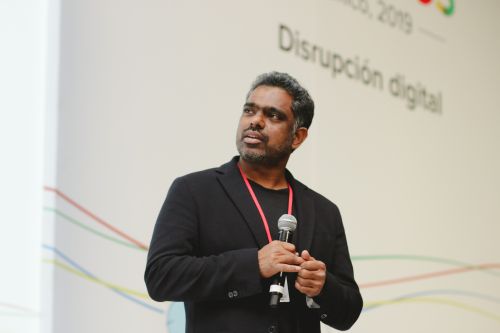
As Chief Evangelist at Zoho, Raju Vegesna plays a leading role in presenting Zoho’s message to the business market worldwide. He has been with Zoho over two decades, and in that time Vegesna has seen the company grow from being a few-app SaaS vendor to a global technology company, providing more than 55 applications as part of a deep tech stack, built entirely in-house, which serve Zoho’s more than 100 million users across hundreds of thousands of companies around the world.
As a longtime privacy advocate, Vegesna has spearheaded the company’s many initiatives and industry-leading policies, recently removing all third-party trackers from every Zoho product. While deeply knowledgeable about technology and critical to the engineering and marketing process of each new app or service, Vegesna is also heavily invested in the culture, supporting and initiating programs that not only benefit Zoho’s 15,000 employees but also the communities where they live.