By Manav Khurana, Chief Product & Marketing Officer for GitLab
2025 was a banner year for AI breakthroughs.
When Gemini 3 by Google, Opus 4.5 by Anthropic, and GPT-5.2 by OpenAI launched, they fundamentally altered how teams approach coding. Gergely Orosz reports in his Pragmatic Engineer newsletter that experienced engineers routinely delegate 90%+ of their production code creation to AI.
This dramatic shift reveals a deeper opportunity: true innovation velocity requires AI-powered speed for every other critical phase of software development, from quality validation through security scanning, compliance checking, and long-term maintainability assessments.
Current data reveals that AI enables a 48% increase in developer productivity, with developers generating functions, debugging errors, and implementing features at unprecedented speed. Yet this impressive gain masks a fundamental limitation: coding accounts for merely 20% of the software delivery cycle. According to Amdahl’s Law, accelerating coding by 10x delivers only a 1.25x overall speedup. The reason? The remaining 80% of activities, including code review, testing, security, and deployment, remain unchanged. Organizations that focus AI only on coding will hit a wall. Their teams will experience productivity gains while drowning in review backlogs, flaky tests, compliance requirements, and performance optimization.
This challenge represents what GitLab calls the ‘AI Paradox.’ While AI significantly accelerates coding, the greatest opportunity to accelerate innovation lies in enhancing quality, security, and speed throughout the entire software lifecycle.
Why Teams Need Intelligent Orchestration: Transitioning From Sequential Stages to Continuous Loops
Traditional software delivery functions in discrete stages with manual handoffs: plan, code, test, secure, deploy, operate. Each handoff introduces delays, context loss, and coordination overhead. When AI accelerates only one stage, coding, the handoffs become the bottleneck. Each transition between stages eliminates the velocity gains from faster coding.
Intelligent orchestration transforms this sequential model into continuous execution loops. Rather than “code, then test, then secure,” teams continuously generate, test, secure, deploy, and verify work in parallel. AI agents execute autonomously within this continuous flow while humans orchestrate from above, defining direction and governance without engaging with every tactical decision.
This approach eliminates the gaps between stages that slow team velocity. Work no longer waits in queues before the next stage begins. Context persists throughout the loop rather than being lost at each handoff.
Intelligent Orchestration: Three Pillars
Resolving the AI Paradox requires intelligent orchestration constructed on three foundational pillars:
Workflows: Teams and AI Agents in Partnership. Software teams create the rules for AI agents, including which context to rely on, workflows to streamline, and compliance rules to enforce. Organizations advance beyond one-to-one AI chat experiences to team-level agentic workflows where multiple agents collaborate on complex tasks, issue-to-merge-request flows, security analysis, code reviews, and CI/CD operations. One agent supports numerous developers. Multiple agents work in parallel across teams. Humans guide and direct rather than oversee each AI output individually.
Context: Unified Data and Intelligence Across the Lifecycle. Rather than sequential handoffs that break flow, intelligent orchestration maintains continuous execution across stages through a unified data model. Unlike fragmented tools that lose context across systems, this provides complete context across the entire lifecycle. Teams gain visibility into not just code, but requirements, history, security implications, deployment constraints, and operational feedback. This enables teams to work on multiple projects and releases simultaneously without losing context. All stages operate together. What used to be tickets, waiting, handoffs, and remediation sprints becomes continuous generation, continuous compliance, and continuous improvement.
Guardrails: Governance and Compliance Embedded Within Flow. Flexible deployment options with custom rules for security and compliance deliver full control over your data and workflows. Agents analyze risk and recommend appropriate levels of autonomy for each task, with policy-driven guardrails that ensure higher-risk changes receive more human oversight, all through a single orchestrated system. This enables teams to maintain velocity without sacrificing security or compliance, which are built into the flow and operate automatically rather than being added afterward.
The Human Standard
The solution requires more than tools or faster AI. Success depends on rethinking how humans and AI work together and fundamentally redesigning the software delivery process itself. GitLab’s research shows that 76% of DevSecOps professionals believe AI will create more engineers, not fewer. The future of software development is evolving.
When AI writes most of the code, the skills that become critical are those that organizations once expected of senior or staff-level engineers: breaking work down into well-defined pieces, making sound architectural decisions, taking a product-minded approach, deploying automated testing and observability, and tracking tech debt. As Gergely Orosz observes, “Tech lead traits will almost certainly be more in demand. When AI can implement any well-defined ticket, who will write the ticket that makes AI correctly create the code?”
AI agents handle repetitive tasks autonomously across multiple stages, generating code, running tests, scanning for vulnerabilities, and deploying changes. Humans set direction, maintain governance, and make judgment calls. This shift moves developers from writing every line of code to orchestrating systems and guiding AI agents. The valuable human skills, such as creativity, strategic vision, judgment, and architectural thinking, become more critical, not less.
At Ericsson, a leading telecommunications company, managing enterprise software deployments across more than 300 global communications service providers requires seamless orchestration across multiple tools, systems, and workflows. After adopting a unified platform approach, Ericsson achieved 50% faster deployments and saved 130,000 hours over six months, enabling it to deliver updates in weeks rather than months.
This pattern emerges across industries. Indeed achieved a 79% increase in daily software development pipelines while lowering its hardware costs by up to 20%. At CERN, 10,000 scientists from over 100 countries collaborate on particle physics research, achieving 90x faster job startups. Lockheed Martin retired thousands of Jenkins servers and accelerated software delivery, moving from monthly to weekly deployments, with security and compliance built into workflows.
These cases represent more than individual developer productivity. They show how intelligent orchestration enables teams to maintain velocity at enterprise scale.
Orchestration as Strategic Imperative
Individual AI productivity gains represent only the first wave of software development transformation. Intelligent orchestration accelerates teams enterprise-wide by putting AI to work across the entire software development lifecycle.
Enterprise leaders should evaluate whether current tools amplify team innovation velocity or introduce new friction points. When software teams and AI agents collaborate, they enable human developers to focus on the broader vision, rather than logistics. Organizations will replace the question ‘can we coordinate this?’ with ‘what should we build next?’
##
ABOUT THE AUTHOR
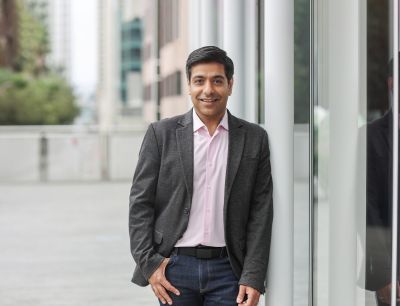 Manav Khurana is the Chief Product and Marketing Officer at GitLab, where he leads GitLab’s product, design, and marketing functions. Manav is passionate about building tools that enable engineers to do their best work and build great software.
Manav’s career spans 25 years, and before joining GitLab, he served as the Chief Product Officer at New Relic. He has also served in product and marketing leadership roles at Twilio, Aruba HPE, and Motorola. Manav has deep expertise in establishing new technology categories and taking a data-driven approach to building billion-dollar businesses.
Manav holds a B.S. in Electrical and Computer Engineering from the University of Rochester, an MBA from Santa Clara University, and has completed a leadership program at Stanford University.