The promise of agentic AI is running headlong into an infrastructure reality that most enterprises weren’t prepared for: the cost of watching AI now routinely exceeds the cost of running it. According to new research commissioned by Apica, more than half of enterprise organizations saw their telemetry data volume triple in just the past 12 months, with AI and ML workloads driving roughly 43% of that growth. And with agentic AI projected to multiply telemetry volumes by 9.5x on average — with 44% of respondents expecting somewhere between 6x and 100x growth — the data management challenge isn’t on the horizon. It’s already arrived.
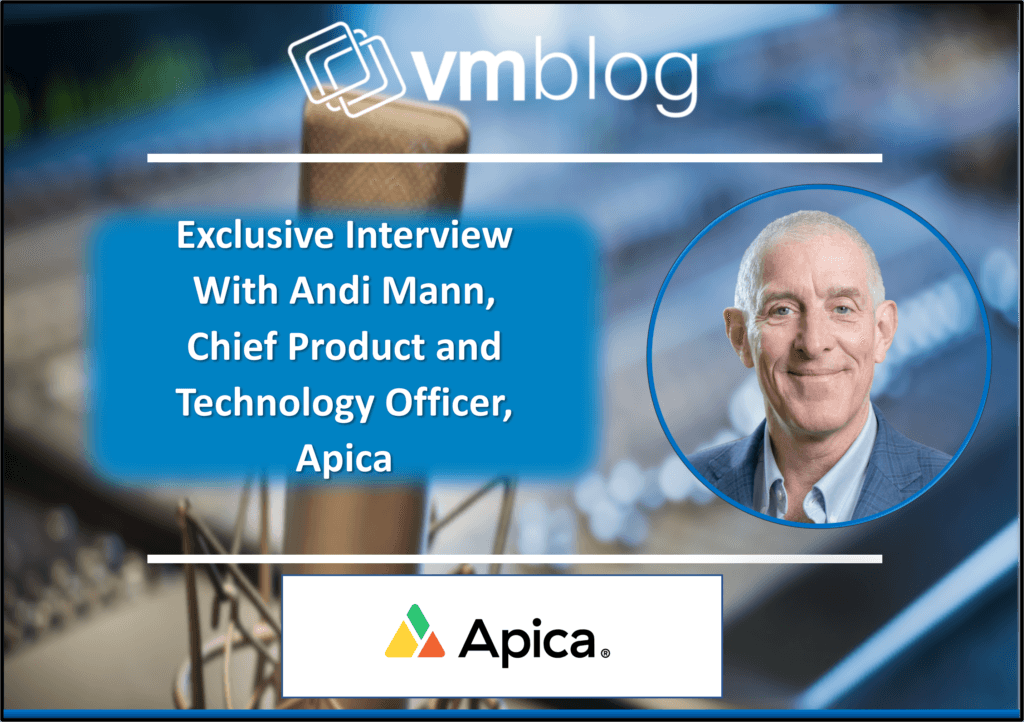
To make sense of what this means for enterprise IT leaders, VMblog sat down with Andi Mann, Chief Product & Technology Officer at Apica, to dig into the findings. The conversation covers why 59% of organizations have already shelved agentic AI deployments because monitoring costs spiraled out of control, why the agents getting killed first are the ones handling cybersecurity, compliance, and fraud detection, and what a pipeline-first observability architecture actually looks like in practice. With 68% of enterprises actively evaluating observability changes within the next six months — and nearly one in four saying incumbent vendor relationships won’t factor into that decision — Mann makes a compelling case that the market is in a genuine displacement cycle, and the window to get ahead of it is closing fast.
VMblog: The report opens with a pretty striking claim: The telemetry data explosion isn’t a forecast, it’s already happening. Walk us through what you’re actually seeing in enterprise environments right now that led you to commission this research.
Andi Mann: What pushed us to commission this research was a pattern we kept seeing in customer and prospect conversations: Organizations would tell us agentic AI was their top infrastructure priority for 2026, and then in the same conversation mention they’d quietly paused or killed an AI deployment because the monitoring costs had gotten out of control. That gap between stated priority and operational reality was striking, and we wanted to quantify it.
What the data confirmed and what I’ve seen firsthand across two decades in enterprise technology, from BMC to Splunk to CA Technologies is that the telemetry problem isn’t waiting for agentic AI to arrive. It’s already here. More than half of the enterprises we surveyed saw their telemetry data volume triple in the past 12 months. AI and ML workloads now account for roughly 43% of all telemetry growth in enterprise environments. The organizations that think this is a future planning problem have already missed the first wave.
VMblog: The 9.5x average telemetry growth figure from agentic AI is eye-catching, but the report notes that’s actually just the average — 44% of respondents expect somewhere between 6x and 100x growth. What does that kind of uncertainty tell you about where enterprises are in their understanding of what agentic AI is actually going to do to their infrastructure?
Mann: The range is the real story, not the average. When a significant portion of enterprise IT decision-makers, people with direct budget authority over observability, can’t bound the data growth they’re expecting, that’s not a measurement gap. That’s an architectural exposure. You can’t plan incrementally against an unbounded problem.
What it tells me is that most organizations are still thinking about agentic AI as a workload to size, when it’s actually a data volume multiplier with compounding characteristics. Every agent action generates telemetry. Every agent-to-agent handoff generates telemetry. Every decision, retry, escalation, and tool call, all of it produces observability data at a rate that scales with the autonomy and complexity of the agent, not just with the number of deployments. Until enterprises internalize that distinction, they’ll keep underestimating the infrastructure requirement.
VMblog: One of the most compelling findings is that in 69% of agentic AI projects, observability costs already exceed compute and infrastructure costs combined. How does that invert the way most IT leaders have been thinking about where their AI project budgets are going?
Mann: For most of the past decade, the default assumption in enterprise AI project budgeting was that compute is the expensive part: GPUs, training runs, inference at scale. Observability was an operational line item, not a strategic one. This data inverts that completely, and it’s not a small inversion. In the majority of agentic AI projects, the cost of watching the AI now costs more than running it.
That has real consequences for how IT leaders need to present AI business cases to their boards and CFOs. If your observability architecture isn’t part of your AI cost model, your AI cost model is wrong. The organizations I’ve seen successfully scale agentic AI deployments are the ones who treated telemetry data management as a first-class architectural decision from the start, not something you bolt on after you’ve already committed to a platform that charges per ingested byte.
VMblog: The human cost of this is where the story gets really serious — 59% of organizations have already terminated or delayed an agentic AI deployment because monitoring costs were too high, and you specifically call out that it’s the cybersecurity, compliance, and fraud detection agents getting shelved. What’s the business risk conversation that enterprises need to be having right now that they’re not?
Mann: This is the finding that I think hasn’t fully landed yet in the broader conversation about AI risk. When we talk about AI governance and safety, the discussion tends to focus on model behavior: Hallucinations, bias, output quality. But what this data shows is that a significant and growing category of AI risk comes from the agents you’re not running because you couldn’t afford to monitor them.
Shelving a cybersecurity agent because the observability bill is too high doesn’t mean the threat surface that agent was meant to cover goes away. Pausing a fraud detection deployment doesn’t mean the fraud stops. The risk doesn’t disappear with the monitoring budget, it just goes unaddressed. That’s the conversation CISOs and CIOs need to be having together, and in most organizations it isn’t happening because the cost problem is being treated as an IT infrastructure issue rather than a business risk issue.
VMblog: You surveyed more than 300 enterprise IT decision-makers who all have direct budgetary authority over observability investments. That’s a pretty specific audience. What surprised you most in what they told you?
Mann: Two findings genuinely surprised me. The first was the 35% figure for widespread agentic AI deployment. Agentic AI as an enterprise category has existed for less than two years. Torsten Volk at Omdia was blunt about it. He said he didn’t believe that 35% represents genuine production-scale deployment. What it represents is competitive pressure. Every CEO is telling their teams they need to be agentic, and that pressure is showing up in survey responses before it shows up in infrastructure decisions. The gap between claimed adoption and actual readiness is one of the most important findings in the report.
The second surprise was how persistent the scalability challenge is across maturity stages. We expected to see a pattern where more mature organizations had largely solved the data management problem. Instead, approximately 60% of enterprises across every agentic AI maturity cohort report ongoing scalability challenges. This is not a beginner’s problem that organizations graduate out of. The most advanced deployments are feeling the data surge most acutely precisely because they’re the furthest along.
VMblog: The report makes a clear argument that a telemetry data pipeline is the architectural answer, and the market seems to agree — with 97% of organizations having implemented or actively evaluating one. But there’s still a meaningful gap in readiness. What is it that pipeline adopters are actually doing differently from the organizations that are still struggling?
Mann: The core difference is architectural posture. Organizations without a pipeline are in a reactive position; they ingest everything, route it to a centralized observability platform, and then try to manage costs by reducing retention or throttling coverage. That approach has a ceiling, and agentic AI volumes will hit that ceiling hard.
Pipeline adopters have shifted to a proactive control model. They’re making decisions about telemetry data before it reaches the platform: Routing high-fidelity signals to full-retention backends, filtering redundant or low-value data, enriching data at the point of collection so it’s analytics-ready before ingestion. That architecture doesn’t just reduce costs today. It scales without requiring re-platforming as data volumes grow. That’s why pipeline adopters are 50% more likely to be prepared for the 6x-plus growth agentic AI will demand; they’ve built the architectural control point that makes scaling manageable rather than catastrophic.
VMblog: You’ve described the pipeline as “the control layer” — can you unpack what that means architecturally? What does a pipeline-first approach actually look like in practice versus how most enterprises have built their observability infrastructure up to now?
Mann: Most enterprises built their observability infrastructure on a collect-everything model that made sense when data volumes were predictable and platform pricing was manageable. The architecture was: Instrument everything, route all telemetry to a centralized platform, query what you need. That model breaks under agentic AI data volumes because the platforms that anchor it were not priced or architected for exponential, unbounded growth.
A pipeline-first architecture inverts the control point. Instead of making data management decisions at the platform, retention policies, query costs, sampling after ingestion, you make them at the pipeline, before data reaches any backend. That means intelligent routing based on data type and destination, content-based filtering that drops genuinely redundant signals, enrichment that adds context at collection time, and governance that ensures the right data reaches the right platform for the right use case.
“Control layer” means the pipeline is where policy lives, not the observability platform. When the pipeline governs what flows where and at what fidelity, you have multi-cloud flexibility, cost predictability, and the ability to add or swap backends without re-instrumenting your environment. That’s the architectural difference between organizations that can scale into agentic AI and those that are already hitting the ceiling.
VMblog: The research identifies the top things buyers want from a pipeline — multi-destination routing at 47%, data reduction and sampling at 43%, content-based routing at 41%. How does Apica Ascent specifically address those purchase drivers, and how do you differentiate in what’s clearly becoming a very active evaluation market?
Mann: Those three capabilities map directly to what Apica Flow, our telemetry pipeline product, was built to do. Multi-destination routing lets enterprises send the same telemetry to multiple backends simultaneously, which is critical for multi-cloud environments and for organizations that want to use different platforms for different use cases without duplicating instrumentation. Data reduction and sampling gives enterprises the ability to reduce what reaches costly backends without sacrificing the signal quality that matters for AI observability and incident response. Content-based routing means routing decisions are driven by what the data actually contains, not just its type or source, which is where intelligence in the pipeline pays off most.
What differentiates Apica in this evaluation market is the breadth of the platform around that pipeline capability. Apica Ascent is the only end-to-end telemetry data management suite purpose-built for the agentic AI era: Pipeline, storage, observability, synthetic monitoring, and agent management in an integrated architecture. Buyers evaluating point pipeline solutions will find capable routing and filtering. What they won’t find elsewhere is a platform where the pipeline is the control layer for a complete telemetry data management architecture, not just an ingestion preprocessor.
VMblog: The report has a sharp final message: the buying window is open, with 68% of enterprises planning to evaluate observability solution changes within six months, and nearly 25% of buyers saying existing vendor relationships aren’t an important factor in their decision. What does that signal to you about the competitive dynamics in this market right now?
Mann: It signals that the observability market is in a genuine displacement cycle, not just an expansion cycle. When nearly one in four enterprise buyers say incumbency doesn’t factor into their decision, the established platforms don’t have the protective moat they’ve historically relied on. That’s a meaningful shift.
The reason is structural. Legacy observability platforms were built for a different data environment. They’re not losing deals because of sales execution or pricing strategy; they’re losing them because enterprises that are seriously scaling agentic AI workloads are discovering that their current platforms can’t absorb the data volumes at a cost model that makes the AI business case viable. The evaluation cycle happening right now isn’t “should we add a pipeline?” It’s “should we rebuild our entire telemetry architecture around a platform that was designed for this moment?” That’s the conversation we’re having with a lot of enterprise teams right now, and the urgency in the data reflects it.
VMblog: If you’re talking to a CIO or VP of Infrastructure who reads this report and recognizes their organization in the “not ready” category — what are the first two or three concrete steps they should take right now, before the agentic AI data surge fully arrives?
Mann: First, get honest about your actual cost trajectory. Most organizations know their observability budget is growing. Fewer have modeled what 9.5x data growth at their current per-GB ingestion rate actually costs. Run that number. When it’s real and in front of you, the architectural investment required to avoid it becomes a straightforward ROI conversation rather than a “nice to have” infrastructure discussion.
Second, audit what you’re actually ingesting. The majority of organizations we talk to are collecting significant volumes of telemetry data that never drives a decision, never surfaces an incident, and never feeds an AI model. It exists because collection is easier than governance. That’s the low-hanging cost reduction opportunity and it’s also the exercise that reveals where your pipeline control points need to be.
Third, evaluate pipeline solutions before the wave hits, not after. The organizations that will scale agentic AI successfully are the ones building the architectural foundation now, while they have budget optionality and time to do it deliberately. The 68% of enterprises in an active evaluation cycle right now understand this. Waiting until observability costs are unmanageable means making architectural decisions under budget pressure, which is the worst possible condition for getting them right.
##
To learn more, download the full survey report.