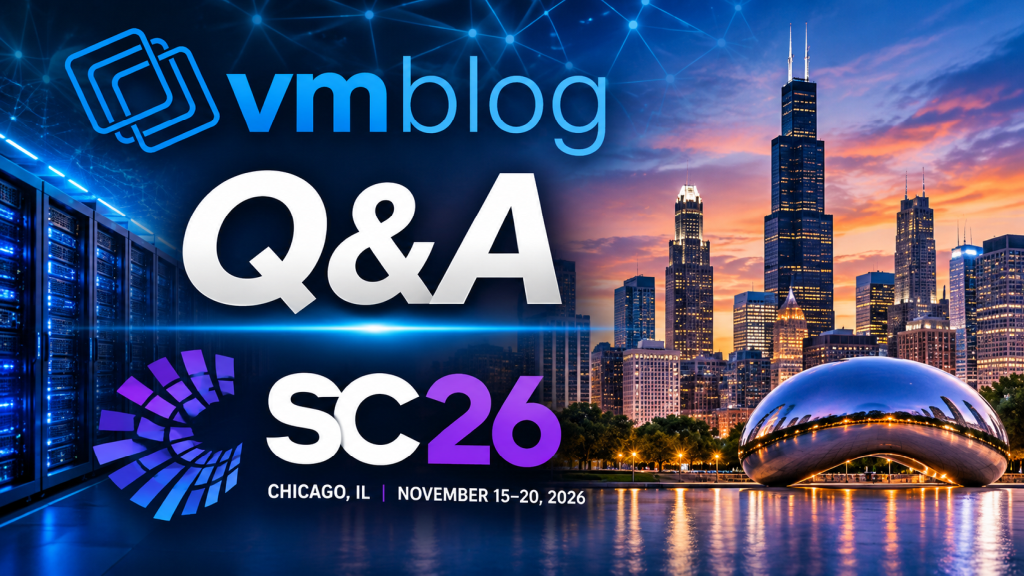
As SC26 approaches, AI infrastructure budgets are under heavy scrutiny and hardware costs keep rising. In this VMblog pre-show Q&A, Bill Conrades, VP Engineering at AHEAD, argues that the industry is measuring the wrong thing. Instead of asking how many GPUs an organization can buy, he says the better question is how quickly the right capacity can be put into production. Conrades explains how AHEAD Foundry moves receiving, rack assembly, cabling, configuration, burn-in, and validation into a controlled integration environment. According to Conrades, that process can reduce a typical multi-month on-site go-live path to roughly four to six weeks. He also previews what AHEAD will show at booth 6720, including its Hatch IT lifecycle intelligence platform.
The conversation goes well beyond the booth. Conrades offers practical guidance on power and cooling, including why 800 VDC isn’t a switch every facility can flip today and how a phased, pilot-and-validate approach can help customers retrofit existing data centers. He also shares his bets for SC27, where he expects the focus to shift from peak accelerator performance to time to power, time to cool, and time to deploy. Finally, he addresses how organizations should evaluate quantum alongside classical HPC and AI, advising them to treat it as a specialized accelerator and to start with a concrete use case and a classical baseline. His advice: “Don’t bet on a buzzword. Prove it against a workload.”
++
VMblog: If you were giving an SC26 attendee a quick overview of your company, what would you say? How can attendees find you at SC26? What hands-on demos, live benchmarks, or interactive experiences will you have at your booth, and what’s the one thing you’d tell someone not to miss?
Bill Conrades: AHEAD helps organizations turn complex AI and HPC designs into infrastructure they can deploy and operate. AHEAD Foundry engineers, integrates, configures, and validates that infrastructure before it reaches the data center, creating a repeatable path from design to usable capacity.
At SC26, find us at booth 6720. Visitors can learn how rack design, cabling, power and cooling interfaces, configuration, and burn-in come together. We will also demo how AHEAD provides visibility into the components and documentation behind the build with AHEAD Hatch IT lifecycle intelligence platform. Hatch helps clients move from build to deployment with greater confidence and fewer surprises.
Founded in 2007, AHEAD accelerates the impact of technology on business, engineering solutions that connect strategy to execution.
VMblog: What key message will SC26 attendees hear from you this year? With AI infrastructure budgets under heavy scrutiny and hardware costs rising, what concrete value proposition can they take back to their CFO and CIO?
Conrades: Stop measuring AI infrastructure by GPU price alone. Measure time to usable capacity, deployment rework, scalability, and the effort required to operate it.
AHEAD Foundry moves receiving, kitting, rack assembly, cabling, configuration, burn-in, and validation into a controlled integration environment. The Foundry process can reduce a typical multi-month on-site go-live path to roughly four-to-six weeks. The payoff: less delay, fewer surprises, and a clearer path from capital investment to workload availability.
The better question isn’t “How many GPUs can we buy?” It’s “How quickly can we put the right capacity into production?”
VMblog: This year’s SC theme is “HPC Unites.” Where does your company fit into that idea? Which partnerships, joint reference architectures, or open standards are you announcing or demonstrating that make the whole greater than the sum of its parts?
Conrades: HPC only comes together when the systems around compute work together. Compute, storage, networking, power, cooling, software, data movement, and operations all shape the result. AHEAD connects those dependencies into an environment customers can run.
We work across ecosystems including Dell and NVIDIA, bringing architecture, facility assessment, custom engineering, rack integration, validation, logistics, and lifecycle management disciplines. That gives the client one accountable engineering motion across the dependencies. At SC26, we’re showing how to keep modular systems extensible, match CPU, GPU, Ethernet, or InfiniBand resources to the workload, and standardize configuration, testing, documentation, and operations.
The goal: a validated system, not just a list of compatible parts.
VMblog: Rack densities are climbing fast, and 800 VDC power and liquid cooling are now on nearly every roadmap. What are you showcasing for power, cooling, and performance per watt, and how do you help customers retrofit existing facilities rather than only build new ones?
Conrades: Power and cooling aren’t accessories; they set the limits for what a rack can do. Foundry supports air-cooled, rear-door heat-exchanger, and direct-to-chip liquid-cooled rack integration.
Performance per watt only means something against a real workload and operating envelope. A synthetic benchmark may not predict production. And 800 VDC isn’t a switch every facility can flip today. The practical move is a phased path from current constraints to future density.
For a retrofit, assess rack space, electrical distribution, cooling, network paths, storage, security, and operations. Pilot representative workloads, validate the design, then scale with evidence. Foundry helps by pre-integrating and testing infrastructure before it arrives, which can reduce fragmented shipments, troubleshooting, packaging, and rack-and-stack work in a live data center.
VMblog: Looking toward SC27 and beyond, which bets are you making, whether post-Moore architectures, photonics, neuromorphic, AI-designed systems, or something else? What will attendees be talking about a year from now that they aren’t talking about today?
Conrades: Our bet: by SC27, the conversation will shift from peak accelerator performance to time to power, time to cool, and time to deploy. Those are the measures that show whether advanced compute becomes usable capacity.
Workload-specific, heterogeneous systems are likely to define the next phase: CPUs, GPUs, specialized accelerators, and new interconnects working together. Photonics may help where data movement is the bottleneck; neuromorphic systems may fit specific sparse or event-driven workloads; AI-designed systems could improve optimization. Each has to earn its place with workload benchmarks, power and thermal analysis, and an operating plan.
Don’t bet on a buzzword. Prove it against a workload. AHEAD helps make promising architectures testable and repeatable.
VMblog: As organizations begin evaluating quantum computing alongside classical HPC and AI, what practical guidance can AHEAD share? Which parts of a hybrid architecture can customers design and validate today, and what evidence will be needed before quantum delivers measurable advantages for specific workloads?
Conrades: Treat quantum as a specialized accelerator within a broader compute strategy. Classical systems will still handle data preparation, most workflow steps, scheduling, storage, and post-processing.
We can help organizations design an architecture that leaves room for future integration and validate the classical portion of the workflow now. There’s no defensible universal date for hybrid systems to outperform classical computing. Start with a concrete use case, establish a classical baseline, and define the performance threshold a quantum component would have to beat.
##