By Pete Castello, Chief Revenue Officer, Spinnaker Support
In 2027, enterprise IT buyers will ask vendors to prove their value before signing or renewing a contract. Customers tell me they feel trapped by vendors asking them to spend more and give up control. Abrupt licensing changes from major software vendors have made many of them more willing to consider alternatives. I expect that scrutiny to shape buying decisions in several areas in the coming year.
AI budgets will depend on measurable returns
Enterprises will be more selective about scaling AI investments until they see measurable business returns. Proposals to replace core systems on the promise of new AI capabilities will face the same test. Boards approved AI pilots readily over the past two years. Forrester predicts AI will account for 20% of all business technology spend in 2027 and that CIOs and CISOs will face growing pressure to realize returns on that spending.
Moving AI pilots into production requires a business case finance can verify, and in many organizations that case is still being built. Until it is, CFOs will hesitate to fund re-platforming projects that depend on new AI features arriving on schedule.
SAP customers will weigh their AI plans against a fixed deadline. Mainstream maintenance for SAP ECC ends Dec. 31, 2027, and SAP’s optional extended maintenance through 2030 comes at a higher cost. Many will look for ways to keep ECC supported while they work out whether and when to migrate.
Legacy system support for stable ERP and database platforms gives organizations time to validate those investments without disrupting core operations. It also preserves capital for the AI projects that do show results.
Security and finance join the buying committee
Buying decisions will take longer as security, finance and procurement take a larger role in evaluating IT providers. Security teams will ask how a provider protects systems that no longer receive vendor patches, and they will expect an answer built on system hardening and compensating controls. Finance will model costs across several years before approving a contract.
Providers that rely on one executive sponsor risk losing deals when other stakeholders raise concerns late in the process. Bringing security and finance into evaluations early gives everyone time to resolve those questions before a contract reaches final approval.
Usage-based terms move up the negotiation list
Customers will negotiate harder for flexible, usage-based contract terms and shorter commitments, putting pressure on vendors’ traditional renewal models. Buyers will want to know whether costs can fall when usage declines. Few finance leaders want to commit to five years of fixed spend on platforms whose role may change as AI and cloud plans develop.
Expect customers to ask for the right to reduce coverage as systems retire or move to new platforms. Providers whose business depends on predictable multi-year renewals will have to balance revenue commitments with the flexibility customers expect.
Licensing changes will trigger earlier evaluations
Vendor-driven transitions, such as Broadcom’s changes to VMware licensing, will become a recurring buying trigger, with customers shopping alternatives when a pricing or licensing change is announced, rather than waiting for the next renewal. Following its 2023 acquisition of VMware, Broadcom ended sales of perpetual licenses and support renewals for those licenses, shifting customers toward subscriptions such as VMware Cloud Foundation and VMware vSphere Foundation. General support for vSphere 7 ended on Oct. 2, 2025.
In 2027, I expect more organizations to act on those announcements well before renewal. Some will look at independent third-party support for the systems they already run, and others will start planning a move to a different platform. For vendors, a single announcement can open a competitive evaluation in an account that is years away from renewal.
Buyers want fewer providers covering more of the stack
Enterprises will increasingly evaluate vendors on breadth of coverage across on-premises applications, databases and cloud environments, narrowing their shortlists. For lean IT organizations, each additional provider means another contract to negotiate and more finger-pointing between support teams when an incident spans systems. Procurement teams will favor providers that can support applications and the databases beneath them under one agreement, whether those systems run on premises or in the cloud. The same logic applies to database migrations. Many organizations running Oracle Database are looking at PostgreSQL for selected workloads, and they want one provider accountable for both platforms during the move.
Preparing for 2027
IT leaders who plan for these shifts early will negotiate from a stronger position in 2027. A current inventory of renewal dates and exit terms across the vendor portfolio lets them make each decision on their own timeline without putting operations at risk.
For providers, the responsibility is equally clear: demonstrate value throughout the relationship and earn the renewal before the contract comes due.
##
ABOUT THE AUTHOR
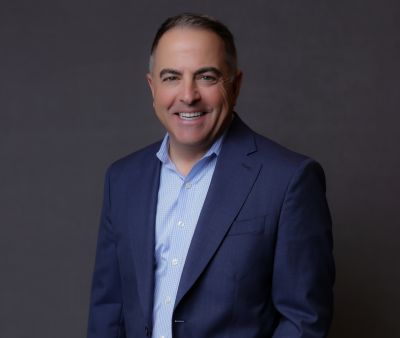
As CRO, Pete Castello defines and leads Spinnaker’s full global go-to-market operation, including sales, solution consulting, customer success, marketing and partner and alliance strategy. He brings decades of experience building and scaling commercial teams inside enterprise technology companies, with a consistent track record of driving revenue growth through acquisition, rapid expansion, and organizational change. He most recently served as CRO at Datavail and previously as Chief Commercial Officer at Navisite. Castello earned a B.S. in Actuarial Science from Penn State University and an MBA from Lehigh University.