
Every organization will have to deal with data in some way. Data can come from a multitude of sources, be collected in a variety of ways, and can be analyzed to the benefit of your organization.
But just how exactly is the data collected, and analyzed? Who’s job is to ensure that the data collected is relevant, and usable? Who knows best which questions to ask, and how to look for patterns in the data to answer them? Let’s find out.
Data Science vs Data Engineering
Most, if not all, data can hold some value if analyzed correctly. The process of collecting, formatting, and analyzing data falls under the field of data science.
Data science is a multidisciplinary field that combines mathematics, statistics, and computer science elements. It covers all the methods, technologies, and knowledge that help us realize the value of data.
At the field’s emergence in the 1970s, they were responsible for collecting, formatting, processing, analyzing, and presenting the findings from data.
As the years rolled on, however, and the complexity of collecting and analyzing data increased, the field of data engineering has become somewhat separated from data science.
Data engineering refers to the processes involved in creating mechanisms to access data. It is still a branch of data science, and the two fields are still closely related, but it is more concerned with the practical applications of data acquisition, and analysis.
The movement of data from its source to a state where data scientists can analyze it requires entire infrastructures. Building and maintaining this infrastructure is the focus of data engineering.
Now that we’ve established the differences between data science and data engineering, it’s time to look in-depth at the roles of data scientists, and engineers to see how much they differ.
What Does a Data Scientist Do?
If a business needs to extract value from its data, the first person it should talk to is a data scientist. Data scientists are responsible for analyzing the data provided to them, and providing insights on how the data can be helpful to the organization they’re working for.
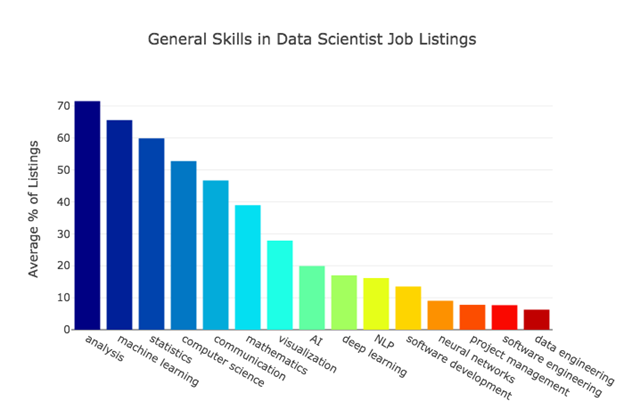
The best data scientists are technically proficient. They possess business knowledge, allowing them to freely communicate with clients about the goals and challenges facing their business, for example, how to implement their ecommerce growth strategy. This will enable the data scientist to analyze the data to maximum effect.
Data scientists will analyze data from internal and external sources, using a diverse methodology to find hidden patterns in the data that can help with decision-making. There are several key responsibilities that data scientists have.
Data Preparation
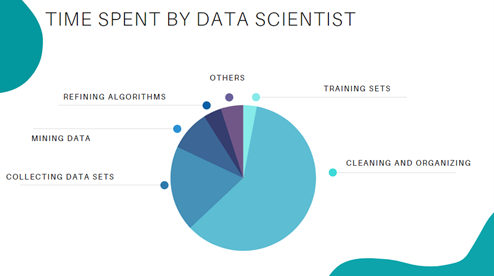
Before data can be used to draw any firm conclusions, the data’s quality and accuracy must first be established. This can be a lengthy process, but it is vital to ensure those accurate conclusions are drawn.
The data scientist will identify which data is relevant to the business goals you wish to achieve, where this data can be obtained, and how it can be analyzed to draw appropriate conclusions.
Feature Engineering
Data points each contain a myriad of values or features. To use the example of a transaction from an e-commerce store, the features would be the date of the transaction, the time it occurred, the value of goods purchased, and so on.
Depending on the needs of the business, some of these features will be more relevant than others. The data scientists will determine which elements need to be analyzed, and which can be ignored for a particular model.
Choosing Algorithms
Choosing the right algorithms to use when analyzing data is essential to producing relevant results, while the right contact center technology is essential to improving customer satisfaction, and retention rates.
Data scientists are well acquainted with machine learning algorithms, and can identify which should be used for a particular set of data to obtain the desired results. Criteria such as the size of the dataset, and the number of features will play a part in this decision.
Data scientists will be well versed in many data analysis methods, so they could quickly implement Naive Bayes classifiers or define convolutional neural network.
Model Training
Once an algorithm is selected, the data scientist splits the dataset into three parts. These are for training, testing, and validation. The training set is fed to the algorithm to produce a target value, predicting future results.
The data scientist may use supervised or unsupervised learning to train the model depending on the situation.
Model Testing & Validating
The data scientist will also be responsible for optimizing the model throughout the process, ensuring the best results possible are achieved. Cross-validation is used to gauge the model’s performance against other datasets with different parameters. This comparison will reveal which set, and model generates the most accurate predictions.
Building Visualizations
One of the final responsibilities of the data scientist is to build visualizations of the data to make it more understandable. Graphs and charts are used to make the data and their findings easily comprehensible, making sense to business executives who may not have their specific skill sets, and understandings.
How Do You Become a Data Scientist?
Data scientists will often have a background in statistics, mathematics, computer technology, or similar fields. They will often have to explore large datasets, so having a broad knowledge of data infrastructures, machine learning algorithms, statistics, and data mining will benefit you.
This will allow them to effectively explore the data, pose relevant questions to be answered, and present what they have found. Proficiency in programming languages such as Python, Java, and SQL is expected of data scientists, alongside an understanding of tools commonly used in their field, such as the Apache Hadoop Ecosystem, or Hive.
What Does a Data Engineer Do?
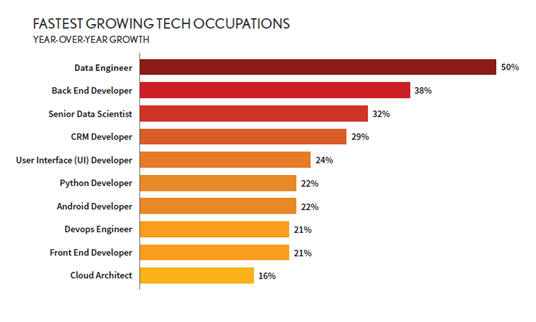
Data engineering is one of the fastest-growing tech occupations. A data engineer is responsible for developing, constructing, testing, and maintaining the architectures used to collect and format data, such as databases, and processing systems.
They will choose the right tools to ensure that the data is handled as efficiently as possible (just as you would look at the best contract management software reviews before you settle on the right platform choice).
A data engineer is more concerned with the practical applications of data collection and analysis than a data scientist, who is more concerned with extracting patterns, and conclusions from the data.
A data engineer has several key responsibilities to fulfill, including, but not limited to, the following.
Developing Instruments
Data engineers are responsible for developing, integrating, and managing the tools that support the data infrastructure. These could include databases, data warehouses, and analytical systems.
Data engineers are often programmers first, and data specialists second. They will use these big data tools to construct free-flowing pipelines that allow for complex data to be analyzed by real-time analytics applications.
Deploying Machine Learning Models
Data scientists will often design the machine learning models used in data analysis, but they will be deployed, and maintained by data engineers.
They will set up the resources that the model requires, establish the pipelines that connect the data to the models, and monitor the model’s performance as it works.
Managing Data
Data engineers are responsible for controlling how data is stored in the various data repositories, and, if the repository requires it, how it is structured.
There are various types of data repositories that a data engineer may employ:
- Data lakes are used to hold raw data that is not yet ready for use, and can support structured, semi-structured, or unstructured data.
- Data warehouses hold structured data that has been curated, and is ready for use.
- Data marts hold highly structured data that has been further curated to make it ready for department-specific analysis.
Data engineers should be well versed in all data storage methods and know about their pros, and cons, allowing them to make informed choices about which method to use. For example, a skilled data engineer would be able to solve the dilemma of RDD vs dataframe.
Improving Data Quality
Sometimes known as ‘massaging data,’ data engineers are responsible for improving the quality of the available data so that reliable conclusions can be drawn from it. Data engineers will be dealing with raw data that may contain human or machine errors, suspect records, or other flaws that may prevent it from being used.
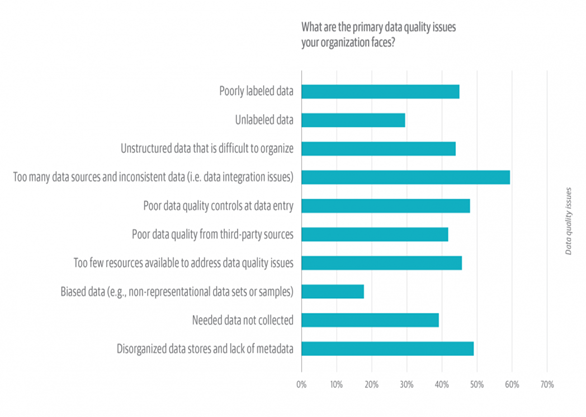
Data engineers will need to recommend and implement methods of improving the data’s reliability, quality, and efficiency. This may be done using various tools and computer languages, acquiring new data from other systems when necessary.
Providing Data Access Tools
Data scientists will often have enough knowledge to access data directly from storage, but this may not be true for nontechnical business intelligence users. In this instance, data engineers will quickly establish data access tools to generate reports, and insights from the data.
Think of it in the same vein as using legacy systems in insurance industry. A method is provided that offers easy access to the required information, simple enough for anybody to use, regardless of their computer literacy.
Monitoring Infrastructure
The data pipeline should be able to operate automatically. Still, as we know, systems rarely work flawlessly (just look at the work that had to go into testing Meltdown and Spectre bugs to ensure systems could withstand them once they’d been discovered).
Data engineers are responsible for monitoring the stability and performance of the data pipeline, and performing modifications when necessary to keep it running smoothly.
How Do You Become a Data Engineer?
Like data scientists, data engineers may well have a background in mathematics or statistics, giving them the knowledge to apply different analytical methods to solve business problems. It’s more likely, however, that their background will be in software engineering or programming.
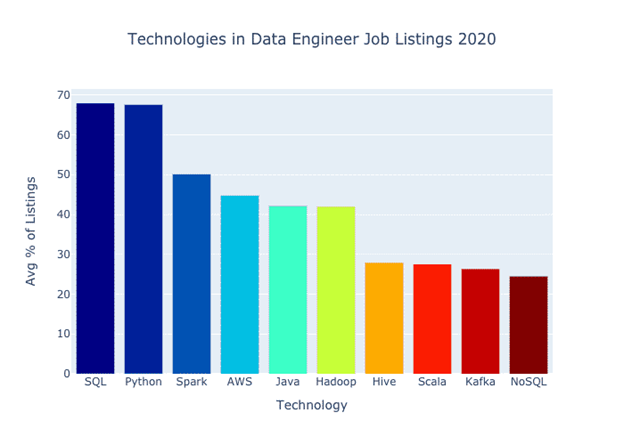
They will have an in-depth knowledge of programming languages, and experience dealing with data repositories such as data lakes or data warehouses. There are a variety of specific data engineering certifications available that will highlight a candidate’s proficiency in data engineering.
How do Data Scientists and Data Engineers Work Together?
It may seem like data scientists and data engineers should possess many overlapping skills, and knowledge. In large, this is true. Both roles require many common traits, such as a strong knowledge of programming languages.
Some data scientists possess enough knowledge about infrastructure to manage a data pipeline, and there will be data engineers who know enough about testing hypotheses to analyze data. But there are far more benefits to keeping the roles separate.
Firstly, it’s not likely that one person will have the time to fulfill both roles. Building and maintaining the data pipeline is a mammoth task, as is extracting value from that data. By keeping these roles separate and giving the responsibilities to different teams, you can ensure that both tasks are given the attention they deserve, and the time to generate meaningful results.
If we look at the example of ETL, which stands for extract, transform, and load. This process involves extracting data from a source, massaging the messy data to clean it up, aggregating it, then inputting the more usable data into a new destination, such as a data warehouse.
This is a lengthy process but a valuable one. This task is often given to a data engineer so that a data scientist can then get to work straight away on analyzing the data without worrying about its usability or reliability.
The key to a successful partnership between data scientists and data engineers is keeping their methods, and goals aligned. Because the two functions are mainly dependent on one another, there must be meaningful communication between the scientist, and the engineer.
This means that mutually beneficial methods can be used, such as using programming languages that both teams understand or utilizing methods that both teams are confident with.
Data Scientist or Data Engineer: Which is the Right Choice?
The simple answer to this question is both. While data scientists and data engineers share some overlapping skills, both roles are specialized in some key areas. To get the most out of your data, you need a data scientist, and a data engineer working together.
While the data engineer focuses on setting up and maintaining the data pipeline, the data scientist can pose relevant questions, and analyze the data to draw meaningful conclusions.
Although the data scientist may present their findings to you, a data engineer is invaluable in ensuring that the data scientist has relevant, usable data to work with. If you really want to make the most of your data analysis, work with both data engineers, and data scientists.
##
ABOUT THE AUTHOR
Pohan Lin – Senior Web Marketing and Localizations Manager

Pohan Lin is the Senior Web Marketing and Localizations Manager at Databricks, a global data ingestion architecture and AI provider connecting the features of data warehouses and data lakes to create lakehouse architecture. With over 18 years of experience in web marketing, online SaaS business, and ecommerce growth. Pohan is passionate about innovation and is dedicated to communicating the significant impact data has in marketing. Pohan Lin also published articles for domains such as SME-News. Here is Pohan’s LinkedIn.




