Industry executives and experts share their predictions for 2025. Read them in this 17th annual VMblog.com series exclusive.
By Jared Peterson, Sr. Vice President, Platform Engineering at SAS
As we start a new year, it’s time to think about what tech trends are coming in the months ahead. I think 2025 will be particularly interesting, because now that AI has been around long enough to go from novel to normal, we’ll stop marveling at what it can do – and start watching what it actually does.
I’m sure there will be some surprises in store. After more than a year of speculation about how AI will drastically change our lives, there’s a good chance we’ll see a blend of forward motion with a return to fundamentals. The hype dies down. Simplicity makes a comeback.
When it comes to AI – and how it will impact our lives and businesses in 2025 – here’s what I expect will dominate the conversation:
What’s old is new again
With technology becoming so big and pervasive, I think we’ll see a turn toward smaller, quieter, easier ways of working. Small language models will appeal to businesses looking for focused solutions that are faster and less resource-intensive than their large language model (LLM) counterparts. We may even see a resurgence in dumb phones, which offer a welcome respite from their noisier, smarter counterparts. So while there’s no turning back the clock in terms of technology – we’re certainly not turning away from progress – we’ll still see a movement that harkens back to a simpler time.
GenAI hype cycle comes back down to earth
Generative AI will never not be cool, but we reach a point where we give a slight nod to the hype cycle – and then get down to the business of delivering real value. This is one thing we’re focusing on at SAS, and we’re doing it by simplifying our approaches as well as our rules and models, complementing them with a targeted use of LLMs.
Catch you later, cloud
I expect the cloud exit movement will pick up more steam, thanks to rising costs. Players both small and large will continue to leave cloud providers to find other, more budget-friendly alternatives, which in turn will affect how those providers do business. As a result, tech companies with a vested interest wait to see if there’s a calm after the storm.
Impacts of AI regulation
We’re seeing additional regulation to keep AI in check, which keeps businesses accountable – but makes it harder to freely tap into open-source resources. And that, of course, means innovation takes a hit and more silos appear as companies create solutions tailored to meet region-specific regulations. It’s possible that the impacts will be temporary. In the meantime, tech companies can focus on finding compliant solutions that drive progress without compromising ethics or accountability.
More mergers and acquisitions
Finally, I think we can expect significant consolidation in the AI and data sectors in the coming year. Established organizations will look to acquire smaller, more innovative players to merge data analytics and AI capabilities. There’s no question that evolving technologies will inspire interesting new partnerships.
As we all settle into the new realities of AI, it’s likely that 2025 will be a year of balancing innovation with pragmatism. We’re watching a fascinating mix of trends that harken back to simplicity and progress, signaling a shift in how people and businesses approach technology.
Whether it’s finding smaller, quieter tech solutions, streamlining AI use, or navigating regulations, each of these trends reflects a desire for purpose-driven innovation. Business moves will be notable but calculated. I’m excited to see how these trends evolve and what new opportunities they’ll bring along with them.
##
ABOUT THE AUTHOR
By Jared Peterson, Sr. Vice President, Platform Engineering at SAS
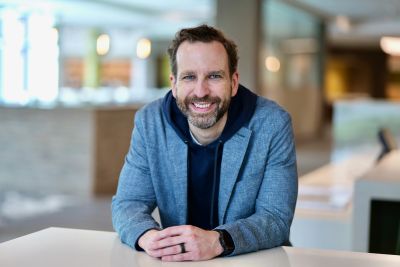
As Senior Vice President of Platform Engineering at SAS, Peterson leads a global, multi-faceted team dedicated to delivering SAS’ market-leading data and AI platform, SAS Viya. He is responsible for all aspects of research and development, including software engineering, cloud-native design and continuous integration/continuous delivery (CI/CD). His teams deliver products across the entire data and AI life cycle, providing knowledge in the moments that matter.