By Jakob Freund
AI agents are here – and they’re getting smarter, faster, and more embedded in enterprise systems. From accelerating case resolution to generating content to making decisions in real time, AI is helping organizations progress toward becoming more automated and autonomous. But, with this evolution comes a hard automation truth: AI must be integrated into other enterprise systems to be effective.
Without orchestration, even the most capable AI agent becomes a silo. In enterprise environments, silos don’t scale. They fragment otherwise promising automation strategies.
That’s why a new orchestration model is emerging to meet the moment: agentic orchestration.
The AI scaling problem
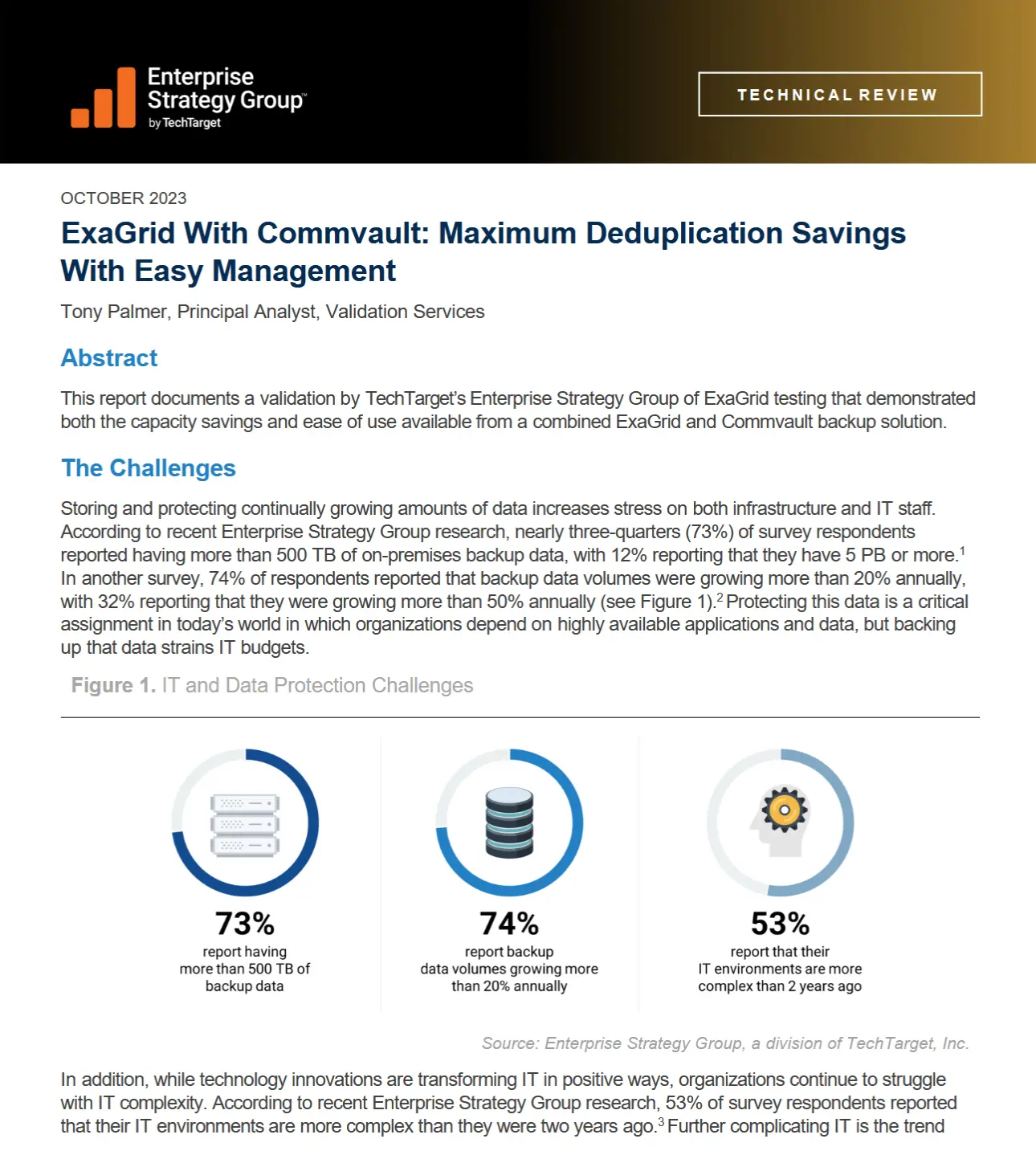
Many organizations have spent the past few years piloting AI tools, including embedding chatbots, automating document processing, or using machine learning to spot anomalies. But as they attempt to extend these efforts across departments and business processes, the limitations of siloed automation becomes clear. According to recent research, 85% of IT leaders face challenges being able to scale and operationalize AI across their organization.
Rule-based automation (deterministic) works well when the process is linear and the inputs are predictable. But real-world business processes are rarely linear. Teams must manage exceptions, interpret unstructured data, and adapt to changing inputs. This is where AI agents shine, yet deploying them without structure often leads to more chaos than clarity.
The challenge, then, becomes about creating the conditions for AI agents to operate responsibly, reliably, and in sync with everything else in the business.
From determinism to dynamism
Think of process automation and orchestration as a spectrum:
- Deterministic orchestration works to orchestrate a sequence of tasks across endpoints within a business process based on pre-defined logic. It’s predictable, easy to audit, and cost-effective. But it lacks the flexibility to handle the unknown.
- Dynamic orchestration brings AI into an automated business process to interpret context and make decisions on the fly. It’s useful for handling exceptions or case management. But it can be opaque, difficult to govern, and risky for regulated environments.
- Agentic orchestration sits in the middle. It enables AI agents to operate independently within guardrails. It combines the structured logic of deterministic business process models with the adaptability of AI, ensuring agents act in concert within an automated process and within the necessary compliance frameworks.
This hybrid approach is crucial as more enterprises move toward semi-autonomous operations. For these processes, you can choose from a spectrum of human involvement – ranging from letting the AI agent decide when it needs to escalate to a human, to having a human double-check everything the agent does. Agentic orchestration provides the flexibility AI needs to thrive without sacrificing the control business leaders and regulators require.
Why agentic orchestration matters now
Organizations today are managing conflicting interests. On one hand, they need to move faster – digitally transform, reduce costs, and respond to changing customer expectations. On the other hand, they must maintain compliance, preserve auditability, and avoid introducing unnecessary risk. Agentic orchestration allows them to do both.
Take industries like financial services, telecommunications, or healthcare. These sectors deal with massive volumes of transactions, strict regulatory oversight, and rapidly evolving customer demands. They’re under pressure to do more with less, but can’t afford to make mistakes.
Agentic orchestration enables these organizations to embed AI into business processes like document analysis, claims triage, trade reconciliation, or fraud detection – without losing visibility or control. It ensures AI decisions are traceable. It gives humans a role in the loop, while providing a framework for escalation, review, and oversight.
Rather than giving up control, it’s about designing the right level of autonomy into the right parts of the business process.
Toward a responsible AI operating model
Perhaps the most important feature of agentic orchestration is that it treats AI as a first-class business process endpoint, rather than a black box or a bolted-on solution.
This means rethinking how we build automated business processes. Instead of assuming every step must be predefined, teams can now design processes around goals and outcomes, letting AI handle the “how” when it makes sense and reverting to deterministic process orchestration or human judgment when it doesn’t.
It also means embracing a new kind of modularity. Instead of massive, monolithic systems, organizations can deploy AI agents as interchangeable building blocks – each orchestrated as part of a larger, end-to-end process. This makes it easier to scale what works and phase out what doesn’t.
Most critically, it supports a more responsible approach to AI adoption. One where the organization defines the boundaries, monitors the outcomes, and evolves the system over time.
Inevitably, the question isn’t about whether AI will be a part of your business. It’s about how you’ll manage it when it is.
##
ABOUT THE AUTHOR
Jakob is the co-founder and chief executive officer, and is responsible for setting a bold vision and strategy for Camunda. He is also the driving force behind Camunda’s global growth and cohesive company culture. Jakob co-authored the best-selling book, “Real-Life BPMN,” and is a sought-after speaker at technology and industry events. He holds an MSc in computer science from Hochschule f�r Technik und Wirtschaft Berlin.