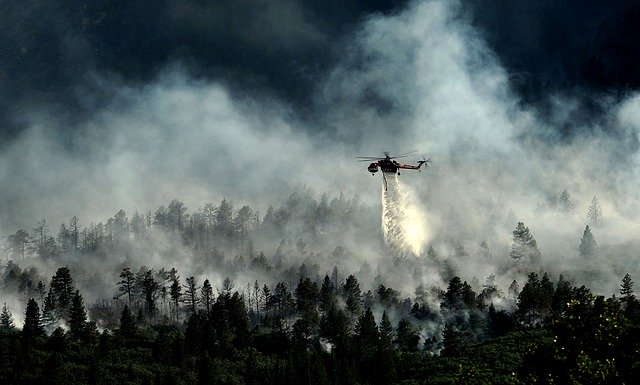
For people in California and other West Coast states, forest fires are seasonal, progressively worsening events. Analysts found that smoke from the blazes currently happening in California was so widespread that it reached Northern Europe. As professionals race to predict future forest fires and address current incidents, they find that big data is a useful resource in these trying times.
Understanding How Fires Would Respond to Management Efforts
Experts often bring up climate change as a critical factor in exacerbating forest fires. The management of forest lands matters too, however. Forest restoration can mitigate wildfires, but it also affects water usage in those wooded areas and how much of that liquid runs downstream.
Researchers examined satellite imagery data from 1985 to 2017 and focused on how fires affect evapotranspiration – mainly how forest vegetation uses water. They found that evapotranspiration dropped an average of 36% in the first year after a fire and continued declining at a rate of 23% annually for the next 15 years.
Qin Ma, leader of the research team for this project, noted, “Understanding how water use in forests has changed after disturbances in the past can help us predict how forests – and the water supply they provide – will respond to comparable management actions such as thinning or the reintroduction of low-intensity fire in the future.”
Making Homes More Fire-Resistant
There’s no such thing as an entirely fireproof home, but data can help people identify the factors that reduce the overall damage sustained during blazes. For example, researchers at an insurance institute came up with several key elements that help, including metal gutters, dual-paned windows and buffer zones between homes and landscaping.
Since big data tools draw such conclusions much faster than humans could alone and can handle huge quantities of data, they speed decision-making for new residences. Crews also utilize data-driven solutions during construction, such as for excavation and bulldozing tasks. Precise information boosts productivity and reduces mistakes.
The available features that people want to add to their new homes are also budget-dependent. Companies overseeing the building and design processes can use big data software to provide projections about the cost for certain amenities and fireproofing options versus others. It then becomes easier for households to make smarter choices while staying within budget.
Predicting How and Why Future Wildfires Will Spread
If researchers have a clearer idea of the areas most at risk for future wildfires or how those blazes might grow, it’s easier to plan for and receive the necessary resources to limit the damage. Officials in California spent $4.5 million on a pilot project that shows what’s possible. The setup uses planes equipped with high-tech equipment that collects real-time information and sends it to a supercomputer.
The goal is to create a better warning system that helps residents get out of harm’s way. However, this ultra-sensitive approach may not be the best choice. Some people think it would give alerts too frequently, urging people to leave their homes prematurely. If that happens, residents may start ignoring notifications that occur too soon and too often, risking the chance that they wait too long to evacuate during genuine emergencies.
Cost concerns create other obstacles. Many officials understandably won’t want to spend millions of dollars on technology – even to test it – unless they have plenty of assurances it will work as promised. However, tech isn’t always so inaccessible. Concerned citizens recently began using publicly available air pollution sensors to track the activity associated with ongoing fires.
Other types of data-driven tools provide simulations of how events could play out if fires start or persist. In one case, a wildfire burned a forest outside of Montana’s Glacier National Park. Data models showed that a thunderstorm could stoke the fire and move it to a nearby lake’s edge. Members of the area’s fire safety team anticipated that event before it occurred.
Learning More About Catastrophic Events
Wildfires cause tremendous damage to homes, animal and plant life and businesses. The particulate matter associated with those events often makes the air dangerous to breathe and causes people to carefully consider how to safely do everyday necessities, like walking their dogs. There is no single solution to stop wildfires or predict them. However, as these examples show, big data can reveal trends that otherwise get missed.
##
About the Author

Kayla Matthews is a tech-loving blogger who writes and edits ProductivityBytes.com. Follow her on Twitter @productibytes to read all of her latest posts!