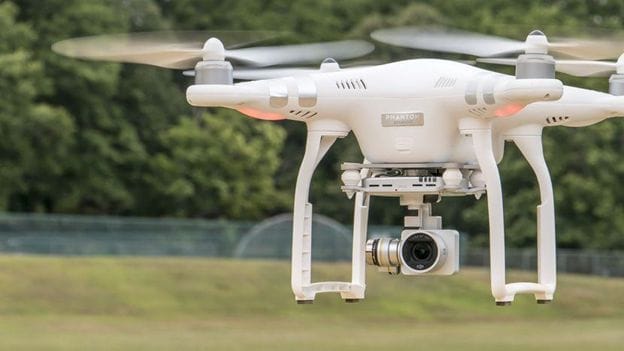
Drones are becoming more and more popular in the United States. People from all age groups have expressed interest in flying their own drones. It didn’t take long before drones that are specifically designed for children started appearing on the shelves.
Surprisingly, the leading manufacturer of drones in the United States is not an all-American company. It’s Chinese. It’s called Dà-Jiāng Innovations (DJI), and it’s based in Shenzhen, Guangdong, People’s Republic of China. Shenzhen is widely regarded as China’s answer to the US’s Silicon Valley.
According to its website, DJI as a company is dedicated to mining ideas from the most talented of thinkers and creators. They recognize that the biggest leaps of change in the world started with a simple concept. Such concepts just need to be nurtured and supported in labs, and that is what the company intends to continuously do.
The innovativeness of DJI’s products is undisputed. They really reign supreme and the company is now considered as the world leader when it comes to drone products and distribution.
Of course, the American players just cannot sit complacently and watch their Chinese compatriot dominate this portion of America’s technology market. Big names such as GoPro and 3DR joined the bandwagon and started producing technologically advanced drones.
However, their bid to compete in a market that already embraces DJI and its products was surely not easy, and it eventually ended with them withdrawing from the race. Analyst Gerald Van Hoy, who covers the drone industry, thinks that the American companies’ biggest mistake was that they announced their products too early but manufactured them too late. “The business lesson here is, don’t telegraph your moves to the industry – especially if you’re not a big player,” Van Hoy says. It also didn’t help that their products were quite expensive, going well above the $1000 price point.
Another thing that made it hard for the two companies to compete is the fact that they outsourced the production of some or all parts of the drone. DJI, on the other hand, manufactured everything themselves. It appears that the Chinese company is still true to it commitment to uphold the value of a concept and to support it the best way they could.
As the bigger American names abandoned their drone projects, startups from all over started sprouting. If we are to believe Van Hoy’s analysis, this is a possibly more fruitful venture. “DJI is positioned well. They take advantage of everything that’s given to them, and they run with it – that’s why it’s hard to compete with them toe to toe. The only way you beat those guys is you come in quiet.”
The new players in the American market seem to have learned so much from the experience of those who came before them. Impossible Aerospace, a company founded and manned by Tesla veterans, intends to design and assemble its products within the US instead of going overseas. Altair Aerial, a Nebraska-based drone manufacturer, also makes sure that their products are cheap so that more of the market can get their hands on them.
The availability of the cheapest drones contributed so much to the popularity that the industry now enjoys. The exponential increase in the use of drones in the United States has pushed some to explore the possibility of applying network virtualization principles in the management of drones or UAVs.
Whatever the future holds, it’s certain that DJI will continue to assert its relevance in the United States and elsewhere. The various startups that aim to get a slice of the drone market pie are making significant strides. Whether such strides are going to be enough to tip industry control in favor of the Americans is yet to be seen.
##
(Image Source: https://www.cnet.com/reviews/dji-phantom-3-advanced-review/ )