Photo Courtesy of The IT Press Tour
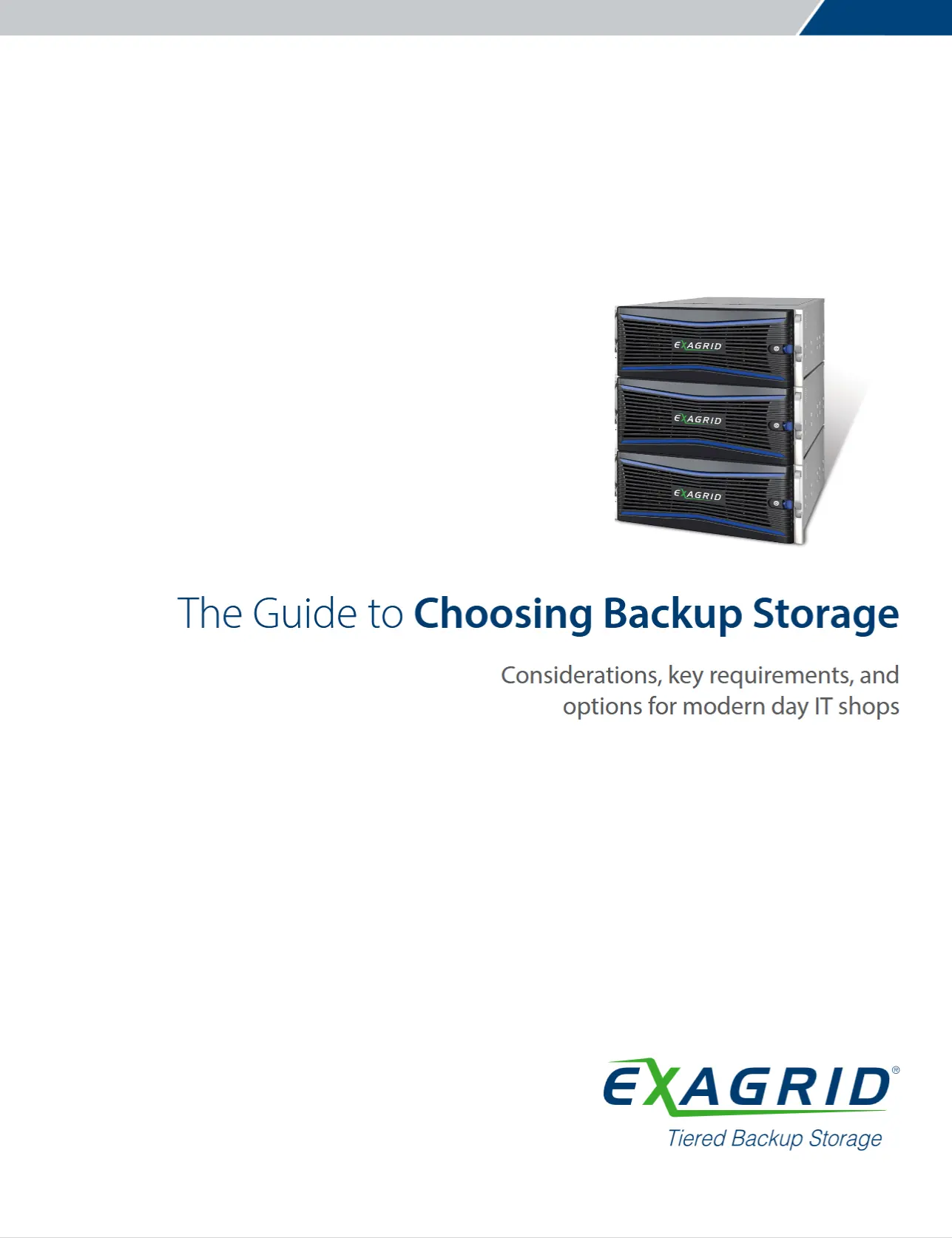
In the ever-evolving world of data storage and protection, one company is making waves with a unique approach to backup storage. ExaGrid, a Massachusetts-based technology firm, is challenging industry giants with its innovative “tiered backup storage” solution. At a recent briefing during the 58th IT Press Tour in Boston, ExaGrid CEO Bill Andrews laid out the company’s strategy for tackling the $6+ billion backup storage market.
A Laser Focus on Backup Storage
From the outset of our briefing, Andrews made it crystal clear what ExaGrid’s position was in the market:
“First and foremost, we’re in backup storage. We’re not a backup application. We don’t compete with Veeam. We don’t compete with Commvault. We don’t compete with Rubrik. We sit behind the backup application as a target.”
This laser focus on backup storage sets ExaGrid apart from many of its competitors. The company isn’t trying to be all things to all people. Instead, it’s zeroed in on a specific, critical need in the enterprise IT landscape.
Targeting the Upper Echelons
ExaGrid isn’t afraid of challenging the 800-pound gorillas in this market, and they therefore aren’t chasing after small businesses either. As Andrews explained:
“We go after the upper mid-market, up through the small enterprise, enterprise and into the large enterprise. So, we do not chase the SMB. We don’t chase companies with 200 employees, 500 employees, 800 employees, etc. Most of our customers have thousands to tens of thousands of employees.”
This focus on larger enterprises is reflected in ExaGrid’s average selling price of over $100,000 per deal. The company is playing in the big leagues, competing directly with storage behemoths like Dell, HPE, and NetApp.
Understanding Customer Pain Points
ExaGrid’s success hinges on its deep understanding of customer needs in the backup storage space. Andrews laid out the key concerns:
“What customers really care about? They care about storage savings, because it’s backup. They care about WAN savings. They always care about cost. They care about backups being as fast as possible to get the backups done in the shortest backup window. They care about the restores being fast, because they have to keep users productive. They care about security, making sure that the backup data doesn’t get attacked, and if the primary data gets attacked, you can recover, let’s say, from a ransomware attack.”
The Best of Both Worlds: Tiered Backup Storage
One of ExaGrid’s key innovations is its tiered backup storage architecture. This approach aims to combine the best aspects of both primary storage and deduplication appliances, addressing the shortcomings of each.
To better understand this concept, Andrews explained, saying, “We have taken the best aspects of both of these and built them into an integrated box. A front end landing zone allows you to back up without any deduplication in the way for fast backup. It allows you to keep the most recent backups un-deduplicated so you can do fast restores. However, to get rid of the high cost of using primary storage, we deduplicate all of the long term data, the weeklies, monthlies, yearlies into the repository in a deduplicated format.”
This tiered approach offers several key benefits:
Fast Backups and Restores: By keeping the most recent backups in an un-deduplicated format in the landing zone, ExaGrid enables rapid backups and quick restores for the most frequently accessed data.
Cost-Effective Long-Term Storage: The repository tier deduplicates older data, dramatically reducing storage costs for long-term retention.
Fixed-Length Backup Window: ExaGrid’s scale-out architecture ensures that the backup window remains constant even as data volumes grow.
Enhanced Security and Ransomware Protection: The tiered approach, combined with features like delayed deletes and immutable data objects, provides robust protection against ransomware attacks.
Fortifying Against Ransomware: ExaGrid’s Deletion Protection
In an era where ransomware attacks are becoming increasingly sophisticated and frequent, ExaGrid has developed a robust deletion protection system as part of its comprehensive security strategy.
The importance of this feature cannot be overstated. As Andrews explained, “Security isn’t just about ransomware recovery. People have this wrong. We talk to customers all the time in our support group, saying, ‘What do you need?’ And they’ll say, ‘Of course, we need to be able to recover from a ransomware event, but we also need encryption at the drive level, we also need WAN encryption.'”
ExaGrid’s deletion protection works on multiple levels:
Non-network-facing Repository Tier: The repository tier, where deduplicated long-term data is stored, is not directly accessible from the network. This creates a “tiered air gap” that makes it extremely difficult for attackers to directly access and delete this data.
Delayed Deletes: ExaGrid implements a delayed delete policy. Even if a delete command is issued (potentially by ransomware), the system doesn’t immediately execute it. Instead, it waits for a specified period, giving administrators time to detect and respond to potential attacks.
Immutable Data Objects: All objects inside the repository are immutable, meaning they cannot be altered once written. This prevents ransomware from encrypting or modifying existing backup data.
This multi-layered approach to deletion protection provides ExaGrid customers with a robust defense against ransomware and other malicious attempts to compromise backup data. It ensures that even in the worst-case scenario, organizations have a clean, unaltered copy of their data to recover from.
Integration: The Key to Performance
Another of ExaGrid’s key strengths is its deep integration with leading backup applications. The company has developed specific optimizations for popular solutions like Veeam, Commvault, and Veritas NetBackup.
For example, with Veeam, ExaGrid offers features like:
- Integration with Veeam Data Mover for faster ingest
- Support for Veeam Fast Clone for rapid synthetic full backups
- Automatic resynthesis of synthetic fulls for the fastest restores in the industry
These integrations allow ExaGrid to deliver performance that often outpaces even all-flash arrays when it comes to backup and restore operations.
The Go-to-Market Challenge
Despite its technological advantages, ExaGrid faces a significant challenge in penetrating accounts dominated by industry giants. Andrews was candid about this difficulty:
“It’s very hard to get these customers to look at us, but when we do, we consistently have over a 70% win rate. When that customer cuts a PO to either the incumbent, somebody else or us, we’ll take it seven and 10 times.”
To overcome this hurdle, ExaGrid relies heavily on partnerships with resellers and a robust inside sales team. The company’s strategy involves building relationships over time and waiting for the right project opportunity to arise.
“We need two things to get in – relationship and timing,” Andrews explained. “It has to be a project, because we have to be able to create projects where customers are either trying to save money, or they’re trying to shorten their backup window, or improve security, or whatever they’re trying to do.”
Impressive Customer Metrics
ExaGrid’s approach appears to be paying off. The company boasts some impressive statistics:
- Over 4,400 customers across 80+ countries
- 95% customer retention rate
- 99% of customers on maintenance and support contracts
- Net Promoter Score (NPS) of +81
- 49% of bookings come from existing customers
These numbers suggest that once ExaGrid gets its foot in the door, it tends to create happy, loyal customers.
Looking to the Future
While ExaGrid is already a significant player in the backup storage market, the company has no intention of resting on its laurels. Andrews hinted at future developments, including:
- Expansion of AI/ML capabilities for improved data analysis and anomaly detection
- Potential move into backup-as-a-service features for managed service providers
- Continued global expansion, with a particular focus on IT outsourcing partnerships
Notably, Andrews was clear that ExaGrid is not currently looking to be acquired or go public. The focus remains on organic growth and continued product innovation.
“We just see we can build a much bigger company, and that’s all we focus on,” Andrews stated. “We are not having any conversations with any investment bankers. We are not having any conversations with any acquirers. We are not doing anything other than focus on growing the business.”
A Formidable Challenger in Backup Storage
ExaGrid has carved out a unique position in the crowded backup storage market. By focusing exclusively on backup storage and developing a tiered architecture that addresses key customer pain points, the company has become a formidable challenger to industry giants.
While ExaGrid still faces significant hurdles in penetrating large enterprise accounts, its impressive win rates and customer satisfaction metrics suggest that its technology is resonating with those who give it a chance. As data volumes continue to explode and the threat of ransomware looms large, ExaGrid’s approach to fast, efficient, and secure backup storage is likely to become increasingly attractive to organizations of all sizes.
In a market often dominated by incremental improvements, ExaGrid’s tiered backup storage architecture represents a genuine innovation. It will be fascinating to watch how the company evolves and expands its reach in the coming years, potentially reshaping the backup storage landscape in the process.
##