Industry executives and experts share their predictions for 2019. Read them in this 11th annual VMblog.com series exclusive.
Contributed by Lori Ellsworth, Vice President of Product Management for Professional Services Automation (PSA) at FinancialForce
5 Trends that Will Shape the Professional Services Market in 2019
The professional services industry experienced phenomenal growth the last two years. Services firms recorded higher profits and a larger rise in headcount than at any period in the past 10 years, according to SPI Research.
2019 looks bright as well-for those services organizations that remain alert, agile and able to leverage the market’s evolution. As we head into 2019, here are five emerging trends that will shape the professional services sector.
Professionals services will power the service economy
2018 saw companies continue to transform into service companies and this trend will accelerate in 2019. Beyond software as a service, there is now a universe of services built to suit practically every taste and occasion. Increasingly, companies that historically sold a product-whether a piece of software, a medical device or consumer packaged goods-are moving to a service model because that’s what customers now demand.
As a result, professional services are becoming ever more critical and strategic to all organizations, which don’t want to sign up a customer and then, six months later, see the customer leave. If an organization is selling a software product, for instance, it needs a professional services organization to implement it. More important, it needs the services team to ensure that customers are happy and that they keep renewing again and again.
Services organizations will-must-evolve
A few years ago, most services companies offered implementation services and that was it. But this is no longer enough. Services organizations are being pushed to engage with customers as never before and this requires a much broader portfolio of offerings. Yes, you still need to provide traditional implementation services, but you also need to introduce new services into your portfolio to respond to customer desires and to keep your firm humming.
Indeed, many customers now want a full range of managed services, including ongoing support and maintenance. That means services teams will need to step up and become more responsive and agile. To do this, services organizations will have to keep their finger on the pulse of what customers want and evolve their portfolios quickly to deliver it. That’s how professional services can be a real differentiator and drive the bottom line.
People are the product
People are the product and that has always been the case for services. This means that your services organization will be under increasing pressure to find, develop and retain the very best talent, because that’s what you’re selling.
A key ingredient in this effort will be to provide your people with the right productivity tools and technologies to enable them to work quickly, easily and intuitively. You’ll also need to provide the right programs and opportunities to allow your people to grow in their jobs and constantly learn new skills.
Data analytics will transform professional services
Real-time data analytics has the potential to transform the way that professional services organizations operate. Instead of manually cobbling together best guesses based on past events, professional services organizations can use real-time analytics to deliver insight to what is happening right now and then start to predict future performance. This in-the-moment decision-making is especially important for managing resources, maintaining profit margins, keeping projects on track, resolving issues and, ultimately, delighting customers.
For example, if you can see in real time how many hours are being billed to a particular project and you notice that billing is running lower than projected, you can intervene immediately, before the problem escalates and negatively impacts your overall profit margin. You need to make those sorts of critical adjustments in real time, when you can still control the situation, rather than wait till the end of the project, when it will likely be too late.
The bottom line is that analytics can help your services organization avoid expensive mistakes, accelerate growth and conquer the marketplace.
Services will be key to customer success
Many organizations now have chief customer success officers or VPs of customer success at the executive level. In today’s service economy, the customer success role is critical because customers don’t buy once and go away-they keep renewing month after month or year after year. So, it’s essential for organizations to stay engaged at every point in the customer lifecycle.
Services leaders, for their part, are no longer bystanders or casual observers in this customer journey. Instead, they must be active and engaged participants. Services leaders are the first people in the door when the deal closes, and they must increasingly be the ones standing by over the course of the entire relationship. That’s how services can drive more value and make a significant impact on the business.
In the coming year, the professional services market will only continue to grow. The pressure will be on services organizations to step up, evolve their portfolios of offerings and play an essential part in the overall corporate strategy.
##
About the Author
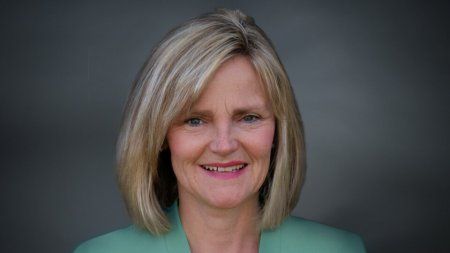
Lori Ellsworth is Vice President, Product Management for Professional Services Automation (PSA) at FinancialForce. She is responsible for developing and implementing the company’s PSA product strategy, vision and high-level roadmap. She also manages market-facing responsibilities including Go-To-Market plans, PSA sales enablement and the successful roll out of FinancialForce PSA applications to customers.