Data security is one of the most important issues businesses are currently facing. Between the threat of cyber-attacks and compliance with data protection laws, it is essential to have robust data security measures in place. Without such safeguards, companies risk legal action, the erosion of customer trust, and financial loss.
As such, the need for innovative solutions is high and one secret weapon for data security has emerged: data tokenization. If you haven’t adopted data tokenization yet, read on to discover what it is and how it can benefit your business.
What is meant by tokenization of data
There are many ways to protect your organization’s data. In some cases, encryption is the answer. For example, whenever a work PC or laptop is being remotely accessed, RealVNC remote desktop encryption would be a good solution.
In other situations, tokenizing data is the answer. Data tokenization is the process of replacing sensitive data elements, such as credit card details, with unique, non-sensitive identifiers called tokens.
This can be a better option than data encryption, which is susceptible to being reversed with a decryption key, while tokenized data cannot be reverted back to its original state. Tokens are randomly generated and have no traceable relationship to the original data.
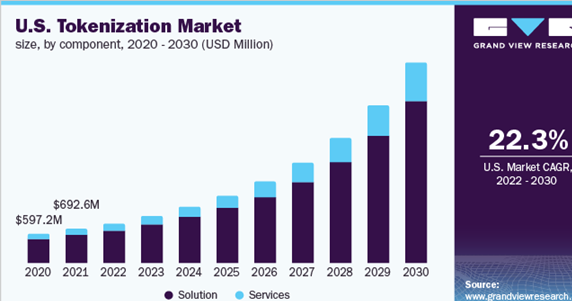
Image sourced from grandviewresearch.com
What is the importance of data tokenization?
These are the key ways in which data tokenization can help reinforce your data security.
Compliance with data protection regulations
Data protection regulations have come into force across the globe. These impose stringent requirements on organizations to ensure the safe storage and handling of sensitive data. Non-compliance comes with serious consequences, including heavy fines and irreparable reputational damage.
Data tokenization is a great solution for attaining regulatory compliance. This is because it helps to minimize the storage and handling of sensitive data, thus allowing you to reduce your compliance scope.
Data breach prevention
Though data breaches declined globally at the beginning of 2023, they still remain a significant threat. The use of data tokenization drastically reduces the risk of a data breach. Because even if data tokens are obtained by the wrong people, they’re unable to gain any valuable information from the tokens.
That means that your and your customer’s sensitive data is well protected, helping to prevent crimes like fraud and identity theft.
Scalability
Data security is not just a concern for big organizations, as cybersecurity threats are also one of the common risks for small businesses. However, small businesses can grow into large ones and this is where the scalability of data tokenization can be hugely beneficial.
Tokens can be generated quickly, and as an organization grows and data requirements increase, tokenization scales seamlessly to meet the demand. This scalability means that data security remains rock-solid, even as the business expands.
Controlled access
Data tokens can also carry contextual information, such as data type or access control. This allows you to control access to data based on a variety of factors. One example of this is role-based control, which would mean the token could only be accessed by certain individuals in the organization based on their job role e.g. senior management or finance team members.
Another example is a time-based control so that the data token would only be accessible for a limited period of time. These controls add an additional layer of security to your data and lower the risk of unauthorized access.
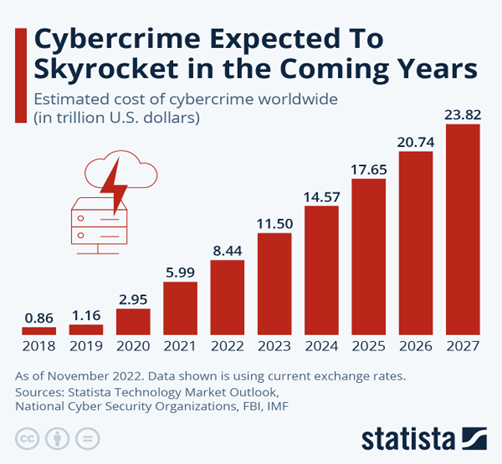
Image sourced from statista.com
Reduced data retention risks
In some cases, there are strict limits on how long data can be stored. Data tokenization makes the process of data removal far easier, as it enables you to delete tokens that are associated with specific factors.
For example, in the event a customer cancels a subscription, it may be necessary to permanently delete some of their data, such as payment card details, from your system. This helps ensure data isn’t improperly retained and further mitigates the risk of data breaches.
How do I start tokenization?
It’s good to be informed, but sometimes it’s difficult knowing where to start. If you wanted to improve your website’s accessibility for disabled visitors, you’d start with website accessibility testing. Likewise, if you want to improve your data security with tokenization, start by assessing your current situation.
Assess your data security needs
Begin by conducting a comprehensive assessment of your organization’s data security needs. This will help you to guarantee that the tokenization process is tailored to address specific vulnerabilities and requirements within your organization.
Start by identifying the types of data that require protection. This may include personally identifiable information (PII), financial data, and other sensitive data elements. Understanding the nature of the data will empower you to implement the right tokenization strategy.
Evaluate data flows
Now you have clarified the data you want to tokenize, you need to evaluate your existing data flows and storage systems. This means mapping out how data moves from collection points to storage locations and eventual use – once again, identifying points of vulnerability.
This assessment ensures that tokenization is applied at the appropriate stage to provide maximum protection. It also allows you to establish the most suitable approach for integrating tokenization into your existing infrastructure.
Additionally, if your organization uses Magento 2 for e-commerce, implementing a Magento 2 quick order feature can further streamline the tokenization process. This feature allows customers to quickly and securely place orders by entering tokenized data, ensuring a seamless and efficient user experience while maintaining data security.

Free to use image from Unsplash
Integrate
Tokenization is an additional layer to existing security controls, not a standalone solution. It is therefore vital to evaluate how tokenization can integrate with other security measures. This may include encryption, firewalls, and an IT security audit checklist.
By integrating tokenization with existing security measures you can enhance data protection capabilities, while minimizing disruption to daily operations.
Additionally, data tokenization can also be enhanced through the use of Residential Proxies, which provide an additional layer of security and anonymity. Residential Proxies act as intermediaries between the user and the internet, routing data requests through real residential IP addresses. This helps to mask the user’s identity and location, making it harder for malicious actors to track and target sensitive data.
By incorporating Residential Proxies into your data tokenization strategy, you can bolster the security of your organization’s data and strengthen your overall data protection measures.
Define policies and procedures
When implementing data tokenization you will need to develop clear guidelines and protocols for generating and managing tokens. This includes specifying who has access to the tokenization system and under what circumstances.
Make sure you define rules for token generation that ensure uniqueness and randomness. Additionally, you should establish processes for securely storing and managing the tokenization infrastructure, such as key management and access controls. Implementing data leak prevention measures alongside data tokenization can further enhance your organization’s data security and minimize the risk of unauthorized data exposure.
Conclusion
Data security is a top priority for organizations across all industries and data tokenization offers an effective solution to address these concerns. By implementing tokenization, organizations can mitigate the risk of data breaches, achieve compliance with data protection regulations, and ensure controlled access to sensitive information. Embracing data tokenization as a secret weapon in the battle for data security will not only protect an organization’s most valuable asset but also bolster customer trust and confidence. Stay one step ahead by adopting data tokenization and fortifying your data security defenses.
##
ABOUT THE AUTHOR
Adam Stead – Content Marketing, Global App Testing
Adam Stead is a Content Marketer at Global App Testing, mobile app deployment and best-in-class software testing company that has helped top apps including Google, Microsoft, Facebook and Craigslist deliver high-quality software in markets across the world. Adam has 10 years of experience in editing, content creation and digital marketing within the tech section, with a wealth of Social Media Marketing, Content Creation, Project Management, Podcasting and Graphic Design skills. You can find him on LinkedIn.