
By Yakir Golan, Kovrr
By now, security leaders recognize that artificial intelligence carries serious business risk, regardless of sector or scale. GenAI tools and autonomous AI agents sit inside core operations, handling sensitive data and automating decisions that once required human judgment, creating new categories of exposure in the process. The most pressing challenge in 2026 and the years ahead will be one of sequencing. Security and risk teams must decide which of those exposures to address first when many of them appear urgent at once.
The Scope Is Wider Than Most Teams Assume
Much of the difficulty in prioritization starts with how narrowly AI security tends to be defined, often being treated as a matter of protecting individual models or filtering what users type into a prompt. Those concerns carry significant weight, but they only account for a fraction of the exposure an enterprise faces.
AI security extends into how data moves throughout these systems and whether those systems stay available under pressure. It reaches the integrity of the decisions they automate and the governance processes meant to oversee them. External vendors add another dimension, since many of them are embedding AI of their own.
Moreover, each new deployment interacts with existing systems and workflows in ways that are rarely contained. An organization might recognize a weakness in one place while missing how it correlates with others to create material exposure. When this scope is misjudged, investment follows the same uneven pattern. Visible concerns attract attention and budget, while quieter ones accumulate exposure in the background until a disruption propels them into the open.
Why Conventional Prioritization Methods Struggle With AI
Despite years of industry guidance recommending otherwise, many organizations have opted to manage AI risk with the scoring methods they apply to traditional cyber and IT programs. Such methods rely on static assessments and qualitative ratings, refreshed on a periodic schedule suited to environments that change slowly. AI environments offer no such stability, with new use cases appearing weekly. Models are retrained without notice, and dependencies move quickly underneath teams who have no reliable way to track them.
The pace mismatch is compounded by an organizational one. A single AI deployment can affect operational continuity and regulatory standing simultaneously, yet conventional methods assess those domains independently, often through separate teams that rarely collaborate. That fragmentation skews decision-making toward whatever is easiest to document rather than whatever carries the greatest consequence. Effort and impact drift apart. Teams produce thorough assessments and detailed risk registers, while leadership retains little confidence that resources are optimally allocated.
How Exposure Builds, Unnoticed
AI exposure in most enterprises is introduced incrementally, one tool or integration at a time. A business unit picks up a GenAI tool to move faster. Capabilities enter the environment through routine software updates and third-party platforms that sit outside formal approval workflows. The implications of each action seem minuscule on their own, but taken together, they form a network of dependencies stretching across data flows and operational processes.
By default, GRC leaders and CISOs are inheriting that labyrinth of exposure, along with the expectation to explain it. Boards and executives are now asking which AI exposures matter most and how that conclusion was derived. The information needed to answer usually exists somewhere, scattered across business units, each holding a partial view shaped by competing priorities. Lacking a consistent way to compare exposures, however, leaders fall back on maturity scores and qualitative explanations that fail to give stakeholders anything trustworthy to anchor a decision to.
Quantification as a Common Language
Effective security programs, whether in cyber or operational risk, are built around quantified exposure. Organizations that can express AI risk as potential financial loss and operational and regulatory fallout are better equipped to prioritize and defend those priorities under scrutiny. AI risk quantification, or AIRQ, gives security and GRC leaders the framework to articulate risk at that level.
AIRQ expresses exposure in financial and probabilistic terms, giving disparate risks a common unit of measurement. A data leakage scenario tied to a customer-facing chatbot and a model availability event affecting an internal workflow can be weighed on the same scale and communicated accordingly.
That modeling methodology follows a principle sometimes leveraged for cyber risk quantification, where the analysis draws on the MITRE ATT&CK framework to map adversarial behavior. Kovrr’s AIRQ takes a similar approach with MITRE ATLAS, mapping how AI-specific attacks begin and calibrating the effect of controls against frameworks like the NIST AI Risk Management Framework and ISO/IEC 42001.
With quantification outputs available, leaders stop debating semantics such as whether a risk should be rated as high or low and start working from tangible, forecasted loss figures and the likelihood of those losses occurring. Controls earn a more consequential evaluation as well. A safeguard is judged by how much exposure it removes, which allows teams to sequence investments by effect.
From Awareness to Defensible Action
Knowing that an AI asset exists, whether sanctioned or unmonitored, is a critical first step in AI governance and security, but does little on its own to reduce the risk environment. Progress in reducing that risk depends on determining which assets contribute most to the overall exposure, and not only prioritizing them accordingly but being able to explain why in terms that resonate with those who allocate resources. When AI risk carries a financial figure, prioritization becomes a structured process anchored in consequence.
Effective prioritization brings continuity as well. As systems change and new use cases emerge, the same logic carries forward instead of being rebuilt under pressure. Teams spend less time relitigating which issue counts as urgent and more time on the work that measurably reduces exposure.
The volume of AI risk facing enterprises will keep climbing. Some organizations will keep reacting to whatever threat or issue surfaced most recently. Others will align their efforts to the exposures that carry the greatest financial consequence and maintain a resilient posture as the risk environment intensifies. Quantification is what separates the two.
##
ABOUT THE AUTHOR
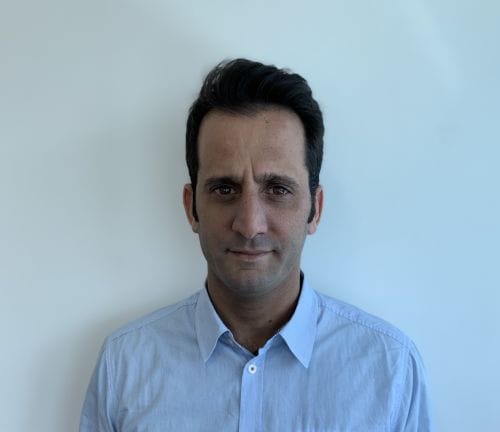
Yakir Golan is the CEO and co-founder of Kovrr (https://www.kovrr.com/). He began his career in the Israeli intelligence forces and later built multidisciplinary expertise across software engineering, product development, and enterprise risk strategy. Over the past decade, he has worked closely with CISOs, risk executives, and boards to strengthen how organizations govern cyber and AI-related risk at scale. Yakir holds a BSc in Electrical Engineering from the Technion, Israel Institute of Technology, and an MBA from IE Business School in Madrid.