In the rapidly changing age of digitization, businesses have to be very agile in their operations and responsive to changes in the environment. Cloud scalability allows firms to achieve such dynamic adjustments in their IT resources based on demand. The public cloud computing market generated a revenue of 292 billion U.S. dollars and is forecast to reach 476 billion U.S. dollars by 2028. Unlike traditional approaches to scalability, cloud scalability involves flexible cloud infrastructure, making it cost-effective and offering enhanced performance. This article shows how businesses can use cloud computing for scalability to increase growth and maintain their competitive edge.
Key Benefits of Cloud Computing for Business Scalability
Cost Efficiency
Moving from capital expenditures to operational investments saves costs. Cloud solutions charge businesses based on use, which helps avoid high expenses used for maintaining and upgrading physical servers. By incorporating A/B testing in cold email campaigns, companies can optimize their marketing strategies while managing their IT resources. This way, companies save maintenance costs by optimizing their resource consumption depending on the demand and use the saved resources to invest in other critical areas.
Performance Improvement
Cloud scalings bring another important feature which is increased system performance. With cloud services, organizations can accomplish speedier applications and a greater capacity to handle loads. This leads to improved user experience and more customer satisfaction. Cloud computing, in addition, enables companies to minimize downtimes while allowing enhanced availability which is an absolute must for business continuity.
Business Agility
Cloud scalability opens up the chance for fast responses by businesses to shifting business markets and evolving customer needs. Such agility makes companies competitive and allows them to seize opportunities and face challenges without restraint. An enterprise cloud solution enables enterprises to spool operations perfectly, which supports growth and innovation. Cloud adoption further allows for the rapid working of new applications and services in a bid to keep businesses ahead in the game.
Types of Cloud Solutions for Scalability
Vertical Scaling
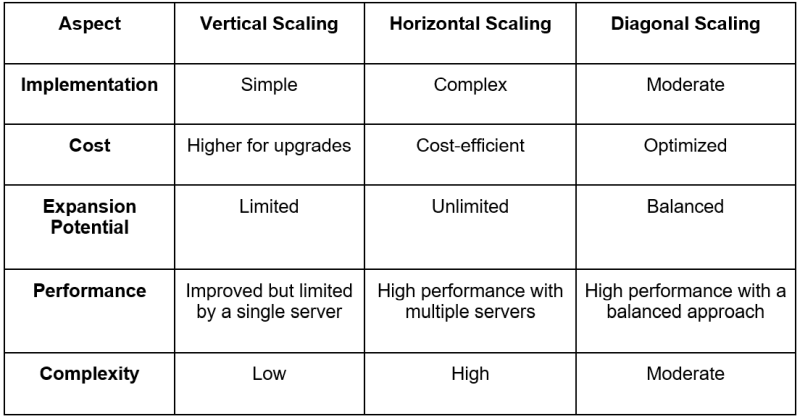
Vertical scaling, or scaling up, is the addition of resources to an existing server to enhance its capacity: this can be achieved by upgrading memory or processing power, or by adding storage.
Advantages:
- Simple implementation
- No code changes required
- Flexible resource allocation
Horizontal Scaling
Horizontal scaling refers to adding new servers to account for increased demand. Greater flexibility and performance come with the price of more complicated implementation. In effect, these are the two speediest theoretical approaches for extending a system.
Advantages:
- Cost-efficient
- High performance
- Flexible server expansion
- Unlimited scalability
Diagonal Scaling
Diagonal scaling combines vertical and horizontal scaling. It starts with scaling up until the server reaches its capacity, then scales out by adding more servers.
Advantages:
- Avoids bottlenecks
- Improves performance
- Optimizes costs
Steps to Achieve Cloud Scalability with Cloud Infrastructure
Assess Current Cloud Infrastructure
Evaluating existing IT assets, software, and data storage requirements is crucial. Identify any bottlenecks and understand your current capacity to determine the best approach for scalability. Using cloud adoption for businesses involves conducting an analysis of current systems and predicting future needs.
Set Clear Objectives
It became necessary to co-evaluate a current profile of IT assets, software, and storage data requirements. The bottlenecks should be identified and the existing capacities assessed for the most reasonable approach towards scalability. A business adopting cloud usage needs to analyze the existing systems and forecast future requirements.
Choose the Right Cloud Scalability Model
Align your choice of vertical, horizontal, or diagonal scaling with your business goals and IT strategy. Utilize best practices like microservices and containerization to enhance scalability. These methods enable efficient resource use and facilitate easier scaling.
Implement Automation in Cloud Services
Automation is key to dynamic resource allocation based on real-time demand. Tools like AWS Auto Scaling or Azure Automation can help manage resources efficiently. Automation reduces manual intervention, ensuring quick response to varying workloads and optimizing cloud infrastructure usage.
Monitor Performance
Continuous monitoring is essential to identify and address performance issues. Use performance monitoring tools to track metrics and ensure optimal operation of your cloud infrastructure. Regular monitoring helps in proactive maintenance and resource management, ensuring seamless scalability.
Overcoming Challenges in Enterprise Cloud Solutions
Managing complex infrastructure layouts, data flows, and network constraints can be challenging. Skilled IT teams or consulting services can help navigate these complexities, and cloud providers often offer comprehensive support and training to assist businesses in managing their cloud environments effectively.
Additionally, increased interconnectivity can introduce potential security vulnerabilities, so it is crucial to implement robust security measures, such as regular audits, encryption, and access controls, to safeguard your cloud environment. Leveraging the security features provided by reputable cloud providers can further enhance your overall security posture.
Cost Implications
Understand the initial transition costs and ongoing expenses associated with cloud scalability. Thorough budgeting and cost management are critical to achieving cost efficiency. Consider the total cost of ownership, including hidden costs like data transfer fees and storage costs, when planning your cloud strategy.
Future Trends in Cloud Computing Benefits
Emerging Technologies
New technologies like edge computing, AI, and machine learning are shaping the future of cloud scalability. These innovations offer greater flexibility and efficiency, enabling businesses to scale more effectively. The integration of these technologies with cloud infrastructure can lead to unprecedented levels of performance and agility.
Predictions for the Future
The cloud computing landscape will continue to evolve, with increased adoption of hybrid cloud solutions and multi-cloud strategies. Businesses will benefit from more tailored and versatile cloud services, supporting their scalability needs. Staying informed about these trends can help businesses make strategic decisions about their cloud adoption.
Vertical vs. Horizontal vs. Diagonal Scaling
Conclusion
Leveraging cloud computing for business scalability provides significant advantages, including cost efficiency, improved performance, and enhanced business agility. By selecting the right cloud solutions and implementing best practices, businesses can achieve seamless scalability, driving growth while maintaining a competitive edge.
FAQs
1. What are the main differences between vertical and horizontal scaling in cloud infrastructure?
Vertical scaling involves adding resources to an existing server, while horizontal scaling adds more servers to distribute the load. Vertical scaling is simpler but limited in capacity, whereas horizontal scaling offers greater flexibility and performance but is more complex.
2. How can businesses ensure the security of their scalable cloud environments?
Implement robust security measures, such as regular security audits, encryption, and access controls. Use services from reputable cloud providers and stay updated on best practices for cloud security.
3. What factors should businesses consider when choosing a cloud provider for scalability?
Evaluate providers based on scalability options, cost structures, support services, and compatibility with existing systems. Consider the provider’s track record and customer reviews.