
Industry executives and experts share their predictions for 2022. Read them in this 14th annual VMblog.com series exclusive.
Why 2022 will be the year for software companies to avail of quantum computing
By Anne-Marie Tierney-Le Roux, department manager for foreign direct investment at IDA’s Technology & Emerging Business Division
Quantum computing is getting a huge jolt of late, and 2022 will see even greater momentum due to the demand in computer power that had not been imaged when the era of computers began. In the first three quarters of 2021, venture capitalists invested over $1.02B globally in early-stage quantum computing companies, an amount greater than the total invested in the industry in the previous four years, according to PitchBook. In the last decade, global quantum investment has reached almost $25B.
Big Players, Big Stakes
It may be difficult to match the resources of players like IBM, Google, Rigetti and Alibaba, who are partnering with governments and corporations and committing enormous sums to accelerate quantum’s R&D in the sprint to develop the world’s most powerful and reliable quantum computer. But software companies working in this nascent field will see plenty of opportunities in 2022 to develop the software needed to (1) mine data and run quantum algorithms and (2) enable these massive computers to perform.
The global quantum computing software market is projected to grow to $430M in 2026 from $110M in 2021, a compound annual growth rate (CAGR) of 30.5% over the five-year period.
The tiniest of bits with colossal potential
Over time, quantum computing’s rapid capabilities have the potential to overhaul untold industries. The vision of quantum is to run – in minutes – AI models that because of the breakneck computing power speed that quantum offers, would take typical computers days, weeks or even years to run.
Quantum harnesses computing power that significantly surpasses existing machines by using subatomic particles or electrical circuits – known as ‘quantum bits’ or ‘qubits’ – to perform quadrillions of calculations simultaneously – while also consuming far less energy.
Traditional binary computers use binary ‘bits’ that can be either one or zero. A quantum bit (qubit) can be one, zero or both at the same time. Quantum computing operates in such a way that subatomic particles can exist in a ‘superposition’ of two distinct locations at the same time. When algorithms are built in the right way, these superpositions can process exponentially more data and computations than traditional computers. This advantage enables quantum computers to solve some of the most complex problems in a fraction of the time it would take a binary computer to perform the same function.
A robust arena for quantum technologies
As important as the hardware is to this developing technology, software will become vital to mine all of the data.
For the immediate future, I see transformative opportunities for emerging quantum software developers in pharma, finance, cryptography, blockchain and cybersecurity. Here’s why:
- Drug Discovery. Running pharma modeling in the cloud is not only cost-prohibitive, but you eventually run out of algorithms. Quantum could speed drug discovery by making it easier to predict a drug’s effects on candidates. Quantum computing could also better predict how proteins fold in the body, making it easier to better design protein-based medicines used to treat cancer, autoimmune diseases, genetic disorders and other serious conditions.
- Finance/Insurance. Quantum applications are expected to provide better forecasting models for market and portfolio performance, risk and trading optimization as well as fraud detection. The insurance industry could gain access to better risk calculations for pricing policies, assets and dynamic pricing.
- Cryptography/Cybersecurity. Powerful quantum computers threaten to break encryption and other techniques commonly used today to keep sensitive data and electronic communications secure from unauthorized users. Companies are countering this threat with new methods that would be more resilient to quantum computers. Interestingly, quantum computing also has the solution here, too, in the form of quantum cryptography. In fact, a Euro Quantum Communication Infrastructure (QCI) initiative aims to build just that, to span the whole EU. By using quantum-based systems, the EU hopes that EuroQCI will protect Europe’s governmental institutions, data centres, hospitals and energy grids
- Blockchain. A double-edged sword here. While there’s the promise of substantially quicker applications for supply chains, smart contracts, identity management, asset trading and more, like cybersecurity, quantum also brings opportunities to mine more quickly through quantum computing power, addresses threats of potentially breaking encryption, and impact pricing stability of cryptocurrencies.
Seizing on quantum possibilities
China, Germany, Canada and the US currently lead the pack in quantum computing. By 2030, North America and Europe are expected to cumulatively hold over 78% share in the quantum computing market.
Ireland is among those countries solidly positioned to aid Europe’s thriving quantum software development efforts. For an island of its size, Ireland plays in the big league of supercomputing for which it has always had a high-performance track record.
For some time, the Irish Center for High Tech Computing has been running simulations of quantum machines so that researchers can gain access to quantum models of computing without having access to the quantum machine. In itself, a synthetic quantum environment is an intriguing concept.
A small island with big investments in quantum
In 2020, a $11M quantum computing initiative in Ireland (QCoIr) began laying the groundwork for a quantum research ecosystem that brought together a consortium of seven that included global giants IBM and Mastercard and several disruptive SMEs to the state-of-the-art cryogenic quantum optics laboratory at Ireland’s Tyndall National Institute in Cork. Tyndall, which is the National Microelectronics Research Center, is also establishing a Quantum Center of Excellence.
And, earlier this year, University of Dublin’s Trinity College announced a collaboration with Microsoft that supports cutting-edged quantum research at the college’s School of Physics and also funds a scholarship program for women Masters’ students in the school’s Quantum Science and Technology program.
Quantum computing is still a budding technology, but early applications are already taking shape. 2022 looks to be an exciting year for software companies with the talent, vision and innovative thrust to drive these critical processes and improve business outcomes.
##
ABOUT THE AUTHOR
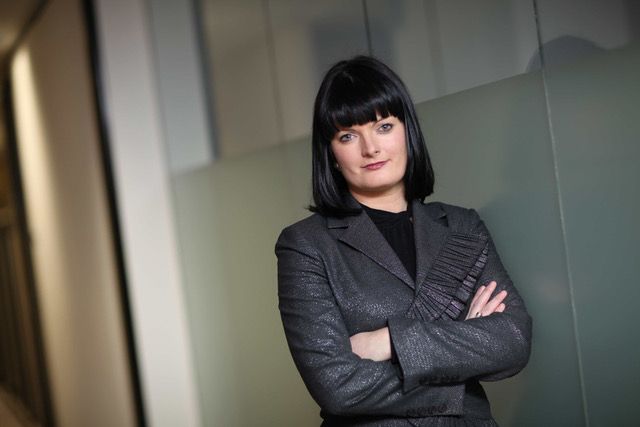
Anne-Marie Tierney-Le Roux is department manager for Foreign Direct Investment (FDI) at IDA Ireland‘s Technology & Emerging Business Division. In this role, Tierney-Le Roux works with global tech companies to help them establish or expand their operations in Ireland. Prior to this, Anne-Marie held positions as Director of Europe based in Paris and project manager in the Technology Division. Tierney-Le Roux is a law graduate from University College Dublin and holds an MSc in International Marketing. She is an associate practitioner of the European Chartered Institute of Marketing. Contact her at https://www.linkedin.com/in/amtierney/