By Joe Sykora, CEO, Coro Cybersecurity
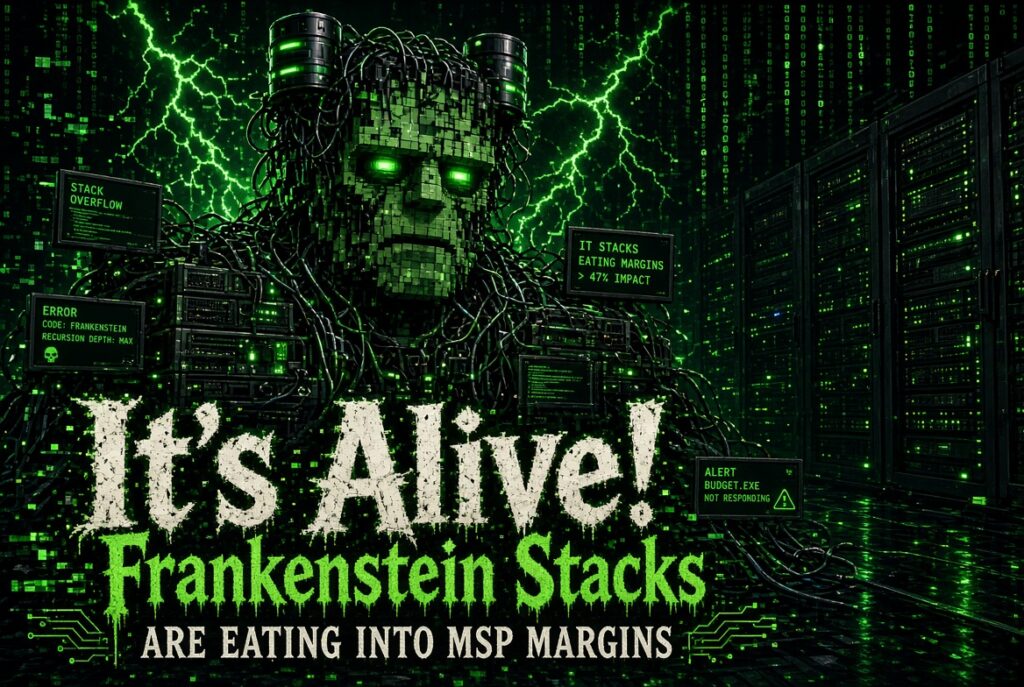
Most of us know the tale of Frankenstein’s monster: a scientist stitched together parts that each worked fine on their own and never asked whether they could function as one body.
What we often forget, despite Jacob Elordi’s Oscar-nominated performance, is that Mary Shelley’s story is a warning.
I have spent close to 30 years in cybersecurity, first running a managed security business and then on the vendor side, and I have walked into more Frankenstein stacks than I can count. That’s the term I use for a security environment assembled one product at a time from different vendors, where each tool runs its own agent, keeps its own data, and sees only its own slice of what’s happening. An endpoint tool from one vendor, email protection from another, a cloud product added after a scare. The stack runs, and the dashboards fill with alerts. The trouble usually shows up during a real attack, when those tools suddenly need to work together and were never set up to do it.
How “Franken-stacks” Get Built
Nobody sets out to build a “franken-stack.” They grow one problem at a time. For instance, a phishing incident brings in a new email tool, an insurance renewal requires a new control, an auditor flags a gap, and another product gets bolted on to close it. Each decision makes sense in the moment, and each new part brings its own agent, console, alert format, and renewal date.
Larger vendors are doing the same thing at a bigger scale. They buy companies, connect the products through integrations, put one logo across the top, and call the result a platform. I have been on the vendor side during acquisitions, and putting two products under one roof is far easier than getting them to share one brain. Underneath the new logo, the data still lives in separate places.
The Parts Never See the Same Attack
Integrations pass alerts between tools, but they rarely give every tool the same picture of what’s happening. That works when a threat stays in one lane, but modern attacks almost never do.
Let’s say a phishing email lands in an inbox and a few days later, that user’s account logs in at an odd hour. Then someone starts browsing a cloud file share, and data begins leaving a little at a time. The email tool sees the first step, the identity tool might flag the second, and the cloud tool may catch the third. But none of them sees the whole story, so none of them treats it as urgent.
Somebody still has to connect those dots by hand across four or five consoles. That gap matters even more as organizations lean on automation, because automated detection and response can only be as good as the data feeding them. Give an automated system clean, connected data, and it can recognize related activity and shut it down quickly. Give it fragments from tools that were never designed to work together, and it will either miss the pattern or hand you confident answers that are wrong.
The Burden Lands on People
Every gap in a Frankenstein stack gets filled by a person. Someone has to know which console holds which piece of the story, and someone has to know why a rule was set up the way it was three administrators ago. When that person leaves, the reasoning leaves with them.
MSPs feel this most. They often inherit stacks that clients built long before they arrived, yet they’re the ones on the phone late at night when something breaks. An analyst who correlates alerts by hand across multiple dashboards might cover 20 or 30 client environments. When correlation and routine remediation happen automatically, that same analyst can cover those numbers several times over, and the MSP can grow without its margins shrinking.
Resource-constrained IT teams face the same math. Earlier this year, I spoke with an organization in Germany whose IT department went from 50 people to five. Those five people still carry the same data, the same regulatory exposure, and the same attack surface they had before, with a stack that was built for ten times the staff.
Attackers Are Moving Faster
Across the partners and customers I talk with, attack volumes this year are running three to four times higher than last year. Attackers are using AI to find misconfigurations faster, write more convincing phishing emails, and move more quickly once they get in. Meanwhile, clients won’t accept higher prices from their MSPs, and boards want IT to cover more ground with fewer people. When you can’t raise prices or hire your way out, efficiency is the only lever left to pull.
A Frankenstein stack works against that. Misconfiguration is one of the most common causes of breaches, second only to human error. When every tool is configured separately, by different people under different logic, the odds of a gap grow with every part you add. Attackers know this, and they go looking for the seams where two tools meet.
A Few Honest Caveats
I want to be straight about a few things: no single provider is the best at every security function, and a specialist tool tested in isolation may well beat a consolidated approach in its own lane. Automation won’t reach 100 percent either, and there will always be events that call for human judgment. Putting more of your security in one place also carries real concentration risk, and that decision deserves the same scrutiny as any other major commitment.
The better test is how the whole system performs when an attack touches several parts of it at once. Can it recognize activity across email, identity, endpoints, and cloud applications as one event? Can it contain routine threats on its own so your people can focus on the cases that truly need them?
Nothing needs to be replaced overnight, either. Most organizations are better served by running a more connected approach alongside what they already have, comparing the results, and making decisions as each contract comes up for renewal.
Every Organization Deserves Protection That Works
What bothers me most is who ends up living with these “franken-stacks.” Large enterprises can afford a specialist for every tool. But a school district, a regional healthcare practice, or a 200-person manufacturer are often at a disadvantage when it comes to allocating resources like budget, yet they carry the same data and face the same attackers as the biggest companies in the world. Too many of them have been told that strong security requires a complex stack and a large team, and they’ve quietly settled for less protection than they need.
Security can be simple to run without giving up any of its strength. In Shelley’s story about Frankenstein’s monster, the creature eventually turned on the man who built it. A stack stitched together from parts that can’t work as one will do the same, usually at the worst possible moment. These stacks were built one decision at a time, and they can be rebuilt the same way, ideally before the next thing goes bump in the night.