Industry executives and experts share their predictions for 2018. Read them in this 10th annual VMblog.com series exclusive.
Contributed by Kaushik Balasubramanian, Sr. Director, VMware Practice Area, Rackspace
Virtualization in 2018: Customers will Demand Help to Navigate Multi-Cloud Complexity
Living in the fast-paced, iterating world of technology can be a whirlwind – one year can yield advances that shake up the industry multiple times over. It’s because of this that I find it’s always helpful to pause at this time of year to appreciate progress made, as well as look ahead at what to expect for the coming year.
As I predicted last year, 2017 was a pivotal time in the world of virtualized computing. We saw two unlikely allies – AWS and VMware – come together in a partnership that reiterated a trend I predicted last year: In the cloud journey, multi-cloud is a reality and hybrid cloud is the ultimate destination. Additionally, we saw private cloud further level the playing field with advancements in SDDC technologies and an increased demand for expertise and value-added services up the stack.
As I look at what’s coming next in 2018, I see the market building heavily, and rapidly, on these themes. At the core, the biggest driving force in the adoption of hybrid cloud will be managed services – more specifically, the evolution of managed services.
As virtualized technologies grow more powerful, they will also grow more complex and require deeper expertise. Customers will increasingly seek out the help of managed services providers to navigate these upcoming trends:
Public Cloud Economies at Private Cloud Scale
As the VMware Cloud on AWS service matures over 2018, it will introduce more server configurations and data centers, and thereby enable a wider variety of workloads. Subsequently, this will drive down the cost of a VMware SDDC environment. VMware service providers will be forced to come up with new deployment models and new pricing models for their existing hosted infrastructure, as well as introduce service differentiation through alliances with other service providers and technology vendors.
As an example of this disrupted consumption and deliver model for private clouds, Rackspace and HPE recently announced the first on-demand OpenStack private cloud with pay-per-use infrastructure, and we plan to extend this consumption model to VMware SDDC private clouds in 2018. This offering leverages HPE Flexible Capacity and Rackspace’s private cloud operational expertise, giving customers the benefits of public cloud – utility pricing, on-demand infrastructure – in a private cloud, single-tenant environment. I expect to see other providers follow this model in 2018.
Rise of the Hybrid/Multi-Cloud
The alliance between VMware and AWS validates that private cloud will co-exist with public cloud, and providers will continue to further integrate the two technologies to provide a more seamless experience for customers. This will enable and increase both hybrid and multi-cloud use cases.
Case in point – the VMware Cloud on AWS service uses VMware Cloud Foundation (VCF). By virtue of using VCF, customers now have a consistent SDDC architecture for hosting their vSphere based workloads, be it on a public cloud (AWS), a hosted private cloud in a service provider DC or in a private cloud on-premise. Technologies such as VMware HCX, multi-site support in VMware vCloud Director (VCD) and VMware NSX will enable customers to leverage the three locations as needed with minimum overhead.
Although, the VMware Cloud on AWS offering was focused on pulling in workloads from on-premise into the cloud, counter-intuitively, it has granted a lease of life to on-premise workloads by providing a credible location to burst. Providing services on-premise will also be a potential area of differentiation for VMware Service Providers.
Improved Agility of Traditional Workloads
Many customers have a cloud-first model with new applications, driving them to build and optimize for the public cloud to leverage its agility benefits. However, there is a common misconception that traditional workloads must always be refactored to leverage these benefits.
We will see this misconception fade over the course of 2018. Traditional workloads no longer need to be left behind to run on traditional infrastructure. Customers can adopt software defined infrastructure for increased agility in deployment, configuration and upgrade of the infrastructure.
For example, VMware NSX virtualizes the entire network stack and makes provisioning of network along with edge devices such as firewalls and load balancers very agile, scalable and secure. VMware vSAN brings similar agility benefits via storage virtualization. Through the increased adoption of SDDC, and by using technologies such as Pivotal Cloud Foundry, customers will be also able to iterate faster through the development process and operations of their traditional workloads, thereby bringing in agility to the workloads that are not suitable for public cloud.
Evolution of Managed Services
As a result of VMware building a service that provides an SDDC environment in the public cloud, the entire VMware ecosystem will see an improvement in the lifecycle management of VMware products. The complexity of running the product in a multi-cloud environment will require customers to have a more refined and deeper set of skills.
Basic challenges with deployment will no longer be a concern, and customers instead will require help effectively operating a multi-cloud environment. Removing traditional obstacles will enable service providers to focus on providing and innovating value-added services for their customers at the multi-cloud infrastructure and platform level.
We will see managed services evolve from the basic outsourcing of environment management to a strategic relationship between customer and provider aimed at optimizing the IT environment. Service providers will move up the stack to support OS, application and platform-level services, they will provide guidance on security and compliance needs and will help customers plan for a more predictable OPEX model. All this while helping customers build a single operational model that works across multiple clouds.
Rackspace has been doing this for quite some time, with Fanatical Support for Rackspace Private Cloud built on VMware Cloud Foundation, as well as similar offerings across other leading private and public cloud platforms. I’m excited to share with the market how we plan to evolve these offerings throughout the year. And, I’m excited to help customers tackle new the challenges and opportunities that come with these upcoming industry trends.
##
About the Author
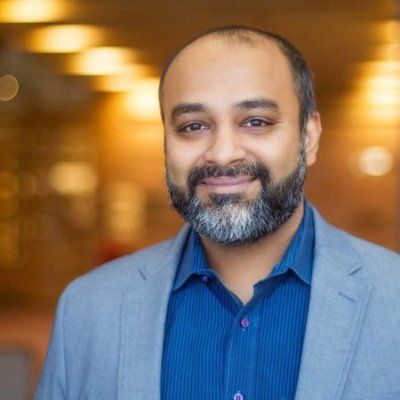
Kaushik Balasubramanian is the senior director of product development within the VMware Cloud Practice at Rackspace. He is responsible for discovery and delivery of products, in addition to leading the product architecture and engineering, software engineering, product operations and project management teams. He has been with Rackspace since 2013. Prior to Rackspace, he was a senior manager in R&D for VMware’s software defined networking offering, NSX.