Honoring the Digital Guardians: SysAdmin Day 2026
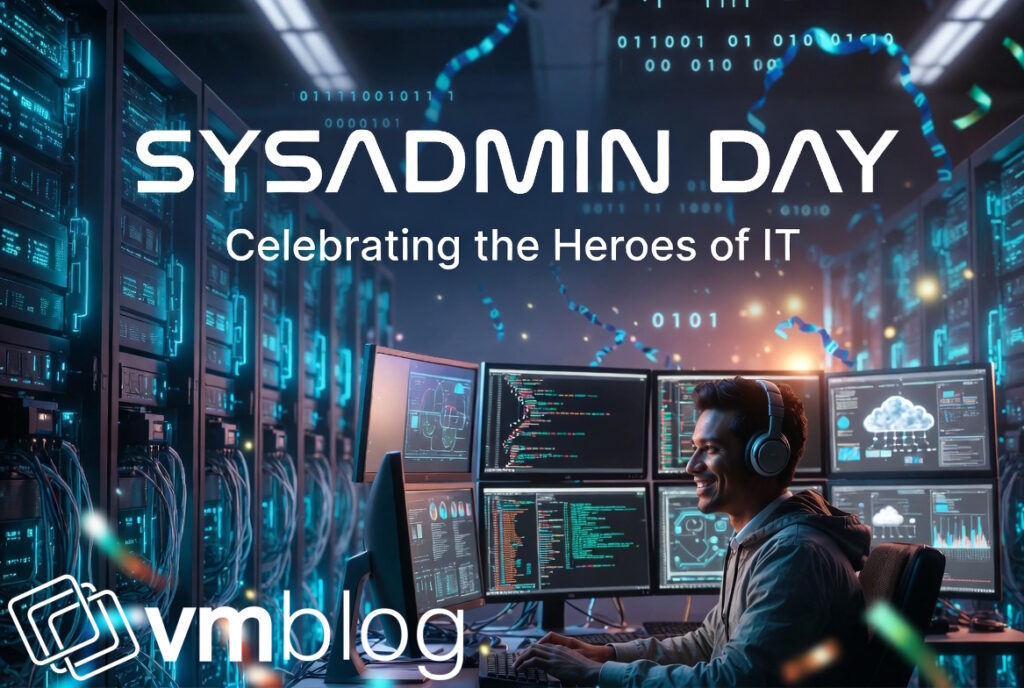
This July 31st marks another SysAdmin Day, our annual tribute to the dedicated IT professionals who serve as the backbone of our increasingly digital world. As we navigate 2026’s complex technological landscape, from agentic AI and multi-cloud sprawl to relentless cybersecurity threats and hybrid work environments, System Administrators remain the steadfast guardians ensuring business continuity, data protection, and seamless user experiences.
SysAdmins are more than troubleshooters; they’re strategic architects of digital transformation, security sentinels protecting against evolving threats, and innovation enablers who transform complex technologies into business solutions. They work behind the scenes, often unnoticed until something goes wrong, yet their expertise keeps millions of applications running, networks flowing, and organizations thriving in our hyperconnected economy.
For SysAdmin Day 2026, VMblog has assembled insights from industry veterans and thought leaders who understand the critical value these professionals bring to modern enterprises. Join us as we explore the evolving role of System Administrators, celebrate their indispensable contributions, and recognize the technical mastery and dedication that keeps our digital infrastructure resilient and responsive. It’s time to shine a spotlight on the professionals who make our connected world possible—the SysAdmins who ensure tomorrow’s technology works today.
++
Bill Andrews, President & CEO of ExaGrid
In my 40 years, there is no role in business that is the least recognized for the most work done than the IT department and its staff. The IT staff are the folks that keep everything running so that all employees in all departments can be efficient and productive. If the apps, primary storage, networking, internet, etc. are down, then no one can work. When everything works, very few employees say, ‘Good job!’ but when things are down, everyone screams and runs around like their hair is on fire. Thanks to all of those that keep everything running so the rest of us can do our jobs. Great job!!! Without you, the wheels of business would come to a screaming halt. The IT department staff are the unsung heroes in the story, and we owe them a debt of gratitude.
++
Lars Ziegler, Chief Information Officer, IGEL
System administrators are often recognized for restoring order when technology fails. Their greater contribution is building environments where fewer things fail in the first place. That means reducing unnecessary complexity, managing endpoints consistently and creating a trusted foundation that is easier to secure, govern and recover. As a CIO, I believe the best technology gives administrators greater control without adding another layer to maintain. On SysAdmin Day, we recognize the professionals who keep organizations moving and continue to show us what simpler, more resilient IT should look like.
++
Anthony Cusimano, Solutions Director, Object First
As ransomware and other cyber threats grow more aggressive, and technology grows more complex, it has become harder and harder for system administrators to guarantee resilience. Seemingly every week, there’s a headline about an IT system that was taken offline for days or a company whose data was deleted and cannot be recovered. SysAdmins are working to combat newly sophisticated and accelerated AI-powered attacks with the same tools and resources they’ve always had. It’s just not a fair battle.
Last year, we surveyed 500 IT and cybersecurity professionals and found 84% report feeling uncomfortably stressed at work due to IT security risks, and 59% have considered or actively begun looking for new jobs because of it. To sustain strong digital defenses, system administrators need to be recognized for the hard work that they do and armed with the right tools to get the job done effectively without burning these employees out. They need simple, third-party tested solutions that just work. Immutable storage – backups that block even the most privileged admin from altering or deleting data – offers the security and peace of mind that even if the worst should happen, SysAdmins won’t be left with nothing.
++
Shawn Rosemarin, Vice President, R&D, Everpure
Every company says it’s becoming an AI company. Almost no one is talking about who will actually make these new applications and services reliable as a foundation into the future.
The sysadmin role has changed more in the last five years than in the previous twenty—and most job descriptions haven’t caught up. It used to be simple: manage the data center, keep the lights on. Now that same person is orchestrating clouds, unifying data silos, extending services to edge locations, factories, retail floors and ensuring that key corporate assets remain secure—often all before lunch.
I describe the shift as going from 16 colors to 16 million. Architectural complexity has exploded. The expectation of “always on” is higher than ever. When something breaks at 2 a.m., the sysadmin is still the one who gets the call.
Here’s what most people miss: Yes, AI runs on models. But it also runs on infrastructure and feeds off your network of applications. Every model, every agent, every “transformational” AI initiative is only as good as the systems and the data underneath it—and those systems are increasingly spread across everywhere at once. The center of gravity has moved out of the data center, and the ground is still shifting.
So who keeps all of that secure, available and resilient while the whole industry bets its future on it? The sysadmin.
Will AI replace them? No. It will augment them and increase leverage—the ability to manage complexity at a scale no human team could touch alone. The irony is hard to miss: the technology everyone thinks will make sysadmins obsolete is the very thing making them indispensable.
++
DARREN GUCCIONE, CEO AND CO-FOUNDER, KEEPER SECURITY
System administrators don’t just keep the lights on; they enforce the access policies that determine whether a breach becomes a headline. That distinction matters more today than it ever has.
The work is foundational and often invisible: managing access, enforcing policy, patching systems before a vulnerability becomes an incident. What has changed, and changed faster than most organizations have adjusted to, is the scale of what they are now responsible for governing. AI agents, cloud workloads and non-human identities have multiplied the attack surface these teams are responsible for securing. The question of who has access to what has always been the critical one. It is now exponentially harder to answer, with higher stakes when the answer is wrong. Credentials proliferate faster than most organizations can track.
Here is what the organizations getting this right understand: system administrators are the operational layer through which zero-trust principles either get executed or get ignored. Privileged access management, least-privilege controls and credential hygiene are not optional layers added on top of a security program. They are the foundation. When that foundation is weak, every other layer of the security stack is compensating for a problem it was not designed to solve.
Security leadership owes these professionals two things: the tools to do the job properly, and the organizational support to act on what those tools surface. The risk of not providing both shows up in incident reports, and organizations learn that the hard way.
Recognizing that work today is the easy part. The harder part, and the more important one, is making sure the professionals doing it have what they need to succeed and the organizational standing to act on what they find. Security does not hold at the perimeter anymore. It happens at the access layer where these professionals live every day.
++
George Crump, Chief Marketing Officer, VergeIO
System Administrator Appreciation Day arrives at the end of a year that asked more of IT operations teams than most. Administrators absorbed the fallout of VMware licensing changes and ran migrations no one had budgeted for. They rewrote capacity plans around memory prices that climbed every quarter and server orders that slipped just as often. The applications stayed up anyway. Data centers run smoothly today for one reason: the people who solved these problems quietly before anyone upstairs noticed there was a problem at all.
++
Mark Christie, Field CTO, StorMagic
SysAdmin Day is a chance to recognize the people whose best work often goes unnoticed. When everything works, it is easy to forget how much effort goes into keeping it that way. Behind every reliable infrastructure environment, available application and uninterrupted workday is someone making careful decisions, watching for issues, fixing problems before they become something bigger and planning for what the business will need next. It is quiet, essential work that keeps businesses running, often without people realizing it.
That responsibility has only grown as infrastructure becomes more distributed, hardware refresh cycles stretch longer, budgets tighten and expectations for uptime continue to rise. SysAdmins are being asked to maintain stability in environments that are more complex than ever, often while doing more with the infrastructure they already have. They deserve credit not only for their technical skill, but for the judgment, patience and discipline it takes to keep critical services running day after day.
++
Dave Joyce, CEO, Macrium
Most people only really think about the systems they rely on when something stops working, but sysadmins live with that possibility every day. They’re the ones dealing with the failed update that takes a critical machine offline, keeping ageing infrastructure operational when replacement isn’t realistic, and responding when a misconfiguration or ransomware attack turns an ordinary working day into an organization-wide crisis. Much of their best work is invisible because, when everything runs smoothly, nobody has a reason to notice it.
That responsibility has been amped up in the past few years as IT environments have become more connected and intertwined. Sysadmins are expected to understand dependencies that stretch across endpoints, servers, cloud services and legacy systems, all while keeping disruption to an absolute minimum. They also know that prevention can only take you so far. Hardware fails, software breaks, and attackers sooner or later get through, which makes the ability to recover quickly one of the clearest measures of resilience. SysAdmin Day is a chance to recognize the people who test those recovery plans, prepare for the failures nobody wants to contemplate and get organizations moving again when the worst happens.
As a small thank you, Macrium is offering verified IT professionals a free one-year Macrium Reflect X Home license from 29–31 July. It means sysadmins can use the same dependable backup and recovery technology to protect the PCs they rely on outside work. Sysadmins, this one’s for you. The free one-year Macrium Reflect X Home license can be claimed here between 29-31 July: https://info.macrium.com/sysadmin-day-2026-free-reflect-x-home-license-for-it-professionals
++
Shai Gabay, CEO of Trustmi
System Administrator Day is a reminder that some of the most important defenders in every organization rarely get the spotlight. But AI has fundamentally changed their job. It’s no longer enough to keep systems running, patch vulnerabilities, or reset passwords. Attackers are using AI to move faster, scale broader, and exploit trusted business processes in ways we’ve never seen before. What once took weeks of reconnaissance and phishing can now happen in minutes, often faster than security teams can respond. That shift is changing executive priorities, too. The World Economic Forum’s 2026 Global Cybersecurity Outlook found that CEOs now rank cyber-enabled fraud and phishing as their top cyber risk, surpassing ransomware.
It’s a clear signal that resilience is no longer just about protecting networks; it’s about protecting the business from attacks designed to manipulate trusted processes and move money. Today’s system administrators have become the frontline architects of trust. They’re securing the identities, infrastructure, and applications that keep businesses running while enabling organizations to embrace AI with confidence. But as companies automate more of their operations, resilience can’t stop at the network. It has to extend to every system and workflow that can influence the movement of money. This System Administrator Day isn’t just a celebration of IT, it’s a recognition that the people keeping our systems secure are also helping businesses innovate safely in the AI era. They’re protecting far more than uptime. They’re protecting trust.
++