By Jasmeet Singh, EVP, Infosys
The service advantage
Simply put, servitization is a business model where organizations don’t sell their products, but rather their products’ outcomes as a service. It was pioneered decades ago by manufacturing companies such as Xerox and Rolls Royce, which leased, rather than sold, their equipment, charging for the capabilities they enabled – photocopying and flight hours respectively. Today, not just manufacturing, but even service industries are adopting servitization: examples include Amazon, which offers its Elastic Compute Cloud on-demand, and media as service providers, such as Netflix and Spotify.
Traditionally, the shift to servitization was motivated by financial benefits: client organizations shifted to servitization to convert large, fixed, upfront capital expenditure into ongoing, variable operating costs linked to actual use; providers saw the model as an opportunity to open new service revenue streams – fleet logistics or equipment maintenance, for example. Other benefits included hassle-free access to the latest products for users, and for their providers, a chance to improve and lock-in customer relationships. Today, the case for servitization is even more compelling, because, done right, it can extend the useful life of products and components to support a circular economy.
Challenges remain
But despite these factors, and widespread interest in servitization, few companies are bundling products with services. Organizations have been slow to adopt this model because of several challenges.
Operational challenges include widespread change to processes, such as logistics, asset tracking, billing and customer support; creating a reverse logistics mechanism to take back products for reuse, refurbishment or recycling is especially difficult. Some organizations may need to implement a new support structure or maintenance practices to be able to offer the proactive support demanded by servitization. Also, manufacturing companies need to be capable of providing advanced services such as deep integration, product customization and maintenance contracts, which entails large investments in research and innovation.
There are daunting market challenges, such as the regulatory compliance mandates in different countries, and customer demand for sustainable manufacturing and personalized service experiences.
Another problem is the lack of clarity and consistency in servitization performance metrics, which can range from financial measures (revenue, market share) to internal deliverables (process outcomes, innovation).
Tech can help
The good news is that with technological advancement, a number of digital solutions have emerged that can enable organizations to not only meet these challenges but also achieve success in servitization. These are briefly discussed below:
Cloud and advanced analytics: Modernization of legacy systems on cloud is enabling companies to consolidate massive data from connected products and perform advanced analytics for various insights, including those related to servitization, such as internal asset performance.
Mobility and Internet of Things: Like it has done in every sphere, mobility is elevating user experience in servitization: the “Collection” app from Mercedes-Benz allows customers to lease a range of their vehicles, complete with insurance, roadside assistance and maintenance, on a subscription basis. Embedded sensors and the Internet of Things play a vital role in servitization by ensuring continuity and reliability of service; by continuously gathering data from assets on the field, sensors keep manufacturers informed on the condition of their products and equipment, enabling them to act quickly in case of a problem and thereby reduce downtime, prolong equipment life, and gain customer loyalty. An interesting example here is the servitization relationship between Philips and Amsterdam-Schiphol, through which the former offers LED lighting as a service to the airport; with every light being connected to the IoT, Philips is able to continuously monitor their condition and proactively replace lights that are about to fail.
Augmented and Virtual Reality: It is common for manufacturers to leverage augmented reality/ virtual reality to allow customers to visualize and design their own products – for example, Airbus uses VR technologies to virtually design aircraft cabins and interiors meeting client specifications. In addition, the company is using AR/VR to support installation, repair and maintenance services: by seeing images of cables superimposed on the aircraft through their AI glasses, Airbus engineers are able to achieve 25 percent faster installations.
Blockchain: As mentioned, undertaking reverse logistics operations is one of the main challenges in the servitization model. Physical problems apart, manufacturing organizations need to deal with a large number of unknown entities. Blockchain can mitigate their concerns to a great extent by bringing transparency and auditability to the product return cycle.
Do it right
While servitization is not a new idea, it is drawing new momentum from a range of digital technologies – cloud, analytics, IoT, AR/VR, and blockchain, to name a few. But organizations need more than just technology to succeed, for example, the right servitization strategy and implementation approach. They also need the right partner, one who can help them integrate and implement the technologies and maximize value from this innovative business model.
##
ABOUT THE AUTHOR
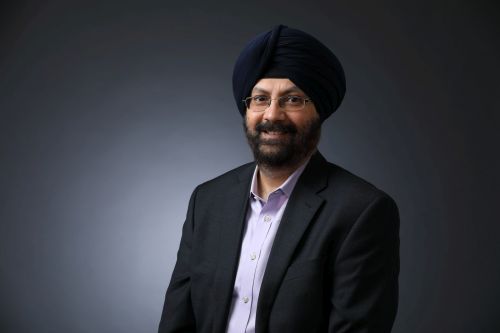
Jasmeet Singh is Executive Vice President and Global Head of Manufacturing at Infosys, a global leader in next-generation digital services and consulting. At Infosys, Jasmeet is responsible for overseeing and growing client relationships in the Automotive, Aerospace, Defense and Industrial Manufacturing sectors. Under his leadership, the sector has recorded double-digit growth for the past two years while improving the margin profile of his business. Jasmeet is also on the Board of Fluido, a Finland-based digital transformation leader and Salesforce platinum consulting partner that became part of the Infosys family in October 2018. With over two decades of experience in IT and technology driven business transformation, Jasmeet brings a deep appreciation of business processes and the usage of technology as a strategic differentiator for clients.