KubeCon NA 2025 Marks a Watershed Moment for Infrastructure and Intelligence
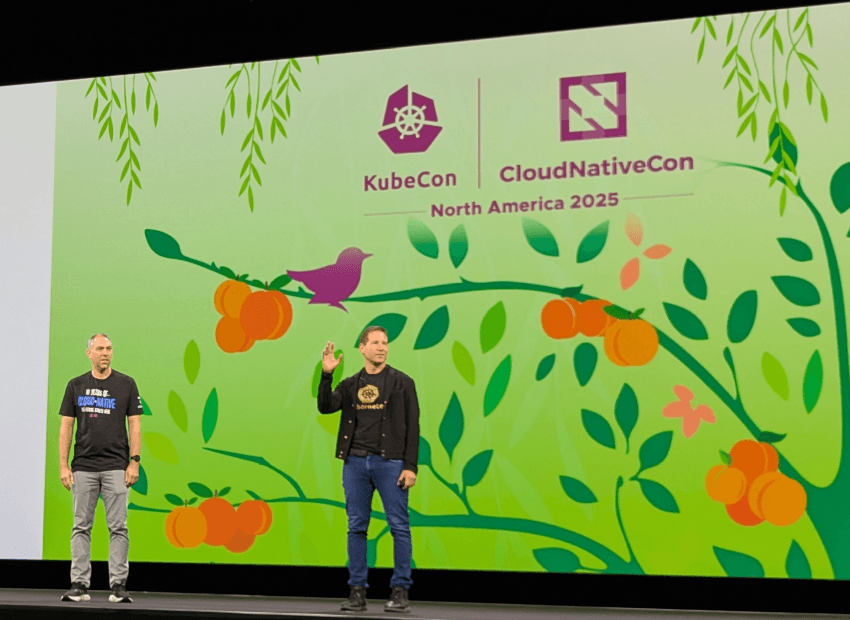
From a packed keynote stage at KubeCon North America 2025 in Atlanta, interrupted by security lines, spotty Wi-Fi, and the kind of logistical hiccups that remind you nothing’s ever perfect, a clearer picture of tech’s immediate future emerged. The message? Cloud native infrastructure isn’t just adapting to AI. It’s becoming its backbone.
The convergence feels inevitable in hindsight. But sitting in that keynote room, watching leaders from the Cloud Native Computing Foundation articulate exactly why Kubernetes, open source tooling, and distributed systems matter more than ever in an age of large language models and agentic systems, you got a sense that we’re watching the industry reset its priorities for the next decade.
Here’s what actually matters from this week’s announcements, and why you should care whether you’re running production workloads today or planning for 2026.
The GPU Crunch Is Real-and It’s Not Going Away
Let’s start with the uncomfortable truth that underpinned most of the keynote discussion: we’re constrained by hardware and energy right now, not software innovation.
The numbers paint a stark picture. The U.S. alone is expected to invest $330 million in AI data center buildouts in 2025. That’s capital flowing toward compute capacity that requires extraordinary amounts of electricity. Inference-the act of running trained models to generate responses-is taking longer than it should. You might not notice it when you’re waiting for a ChatGPT response, but zoom out to hyperscale operations, and those milliseconds compound into massive cost and resource challenges.
This matters because it changes where optimization efforts need to focus. The lowest-hanging fruit isn’t in training massive new models. It’s in making the infrastructure that serves them more efficient.
Google’s already seeing this play out. When you ask ChatGPT or Google Gemini for something, you’re not just touching one inference request. Each response generates tokens, and according to the executives on stage at KubeCon, the volume of tokens flowing through Google’s systems has become a constraint in itself. Add agents into the mix (AI systems that can use tools and run tasks in parallel), and suddenly you’re looking at orders of magnitude more demand for inference capacity than we currently have.
“We’re all waiting for tokens,” as one CEO put it. The faster and cheaper those tokens, the more viable AI becomes for every business on the planet.
Open Source Has Always Been About Getting More From Less
Here’s where the conversation gets interesting for anyone building infrastructure.
If you’ve followed Linux development over the past 15 years, you’ve probably heard about optimizations that came from the mobile sector. Contributors working on Android realized that battery efficiency in smartphones required serious power management. They baked that into the Linux kernel. Suddenly, not only did Android devices last longer on a charge, data centers saw measurable reductions in cooling costs because that same efficient code now ran on servers.
That’s the historical pattern the CNCF is betting on again with AI infrastructure. Open source communities are already producing dramatic efficiency gains:
- vLLM (vLLM, an open source LLM inference engine) has achieved 400-500% increases in inference efficiency with relatively small software improvements
- DeepSpeed and Ray are seeing similar orders of magnitude better performance at each layer of the stack
- Kubernetes itself, the orchestration layer, is enabling teams to run inference on different hardware than just the latest, most expensive GPUs
The pattern repeats: when you open the code, when many eyes review it, when different companies contribute back improvements they’ve made – efficiency compounds. That’s not mystical. That’s math.
Inference Is the Next Cloud Native Workload (Whether You’re Ready or Not)
Jonathan Bryce, the CNCF’s executive director, made a provocative statement: inference is going to become your next major operational responsibility, the way containerized microservices became one over the past decade.
Platform engineering teams, the groups responsible for managing Kubernetes clusters and infrastructure, are already fielding requests to run AI workloads. But there’s a problem: nobody’s given them a blueprint yet.
That’s changing. Two projects deserve attention here:
LLMd (from Meta) and AI Bricks (from ByteDance, the company behind TikTok) are both built entirely around Kubernetes and cloud native technology. They’re designed from the ground up to make inference efficient, horizontally scalable, and cheaper. They’re young. They’re still finding their way. But they represent the direction the industry is moving – treating AI inference not as a specialized, vendor-locked capability, but as a standard workload that should run on your existing Kubernetes infrastructure.
The practical implication? Start experimenting now. You don’t need massive language models to start learning this. Hugging Face hosts thousands of smaller, specialized models-voice-to-text engines, character recognition systems, domain-specific tools-that are much cheaper and faster to run. Deploy them. Measure them. Figure out your cost per token and where you can scale.
Uber’s doing this at scale. They run 20,000 training routes per month and maintain 5,000 models in production. That’s roughly four retrainings per model per month. These aren’t massive, months-long training runs. They’re constantly iterating, constantly updating models to reflect changing real-world conditions (traffic patterns, delivery preferences, city-specific factors). That’s the future for a lot of enterprises-and Kubernetes makes it possible.
The AI Conformance Program Is CNCF’s Bet on Portability
Here’s the announcement that might quietly matter most: the CNCF announced an AI conformance program, similar to the Kubernetes conformance program that’s been running for seven years.
What does that mean? It means vendors are agreeing to meet basic standards. You run your AI workload on Amazon. You want to move it to Google Cloud, Azure, Oracle, or Alibaba. The infrastructure, the kubernetes cluster, the GPU management, the inference gateway, should be portable. Your workload shouldn’t require a complete rewrite.
Companies already participating include Amazon, Google, Microsoft, Alibaba, Akamai, CoreWeave, and others. The initial criteria include:
- Using recent Kubernetes versions that support Dynamic Resource Allocation (DRA)
- Including some form of AI gateway
- Supporting model serving with technologies like vLLM
This matters because right now, the space is fractured. Different clouds, different startups, different approaches. The conformance program is saying: let’s standardize the base layer.
There’s a broader historical parallel here. In networking, when telecom companies transitioned from hardware-driven infrastructure to software-defined networking, the space was spread across a dozen organizations and foundations. Over time, as standards matured, consolidation happened. The CNCF is betting that AI infrastructure follows the same path, early fragmentation giving way to standardization.
New Certifications, New Community Programs
The CNCF also announced:
- Cloud Native Platform Engineering Exam (CNPE): A hands-on, practical certification that’s apparently so challenging one beta taker scored 29% and called it the hardest exam the foundation has released. That’s intentional. This is meant to be rigorous.
- Service Mesh Networking Engineer (CKNE) certification: The sixth Kubernetes certification exam, addressing a gap in the training ecosystem
- Kubestronauts Program: Now at 2,500 members across 100 countries. These are people who’ve passed multiple CNCF certifications. The foundation’s explicitly marketing them as a hiring resource for companies looking for Kubernetes and platform engineering expertise.
If you’re thinking about building expertise in this space, the certifications matter more than they used to. They’re vendor-neutral. They’re hands-on. And there’s actually a community behind them.
The Quiet Announcement: New Graduated Projects
Among the noise of keynotes and conformance programs, several projects hit graduation status:
- Knative: Serverless computing for Kubernetes
- Crossplane: Multi-cloud platform engineering (think: managing infrastructure across multiple cloud providers as code)
- Falco: Runtime security monitoring
The broader point: CNCF’s project ecosystem isn’t slowing down. It’s accelerating. New projects are emerging specifically to address AI workloads. vLLM, mentioned repeatedly, is getting serious attention. Ollama (running models locally), Lima (a Docker Desktop replacement), and metal-cubed (bare metal Kubernetes) are solving real problems teams face right now.
The Coordination Problem Nobody’s Really Solved
During a press briefing at the conference, someone asked: if the Linux Foundation, the CNCF, and other entities are all working on different pieces of the AI stack (training, serving, governance, models themselves), how do you actually coordinate?
The honest answer: it’s messy right now, and it’s probably going to stay messy for a while.
The reasoning is logical. The people building PyTorch (deep learning frameworks) operate in different contexts than platform engineers managing Kubernetes clusters. Model researchers have different goals than SREs worried about inference latency in production. There’s actually value in letting specialists work on their specific problems rather than forcing everything into one foundation.
But there’s also friction. Multiple membership fees. Duplicated efforts. Different governance models. Historically, when big technical transitions stabilize, these organizations eventually consolidate. In networking, it took about a year to merge several separate foundations once standards matured enough that consolidation made sense.
That’s probably what happens here, but not for a few years. Right now, the space is moving too fast.
What This Means for Your Infrastructure Plans
If you’re running Kubernetes today, start thinking about inference as a workload type. You don’t need a massive language model strategy. Start small:
- Experiment: Deploy small, specialized models on your existing cluster using vLLM or similar tools
- Standardize: Figure out your patterns. Where does inference run best? What’s your cost model? How do you manage updates?
- Measure: Track metrics that matter-tokens per second, cost per token, latency, GPU utilization
Don’t wait for the whole ecosystem to crystallize. The teams doing this work today will understand the tradeoffs and gotchas that everyone else discovers in 2026.
The GPU constraint is real. Energy is genuinely constraining. But software, open source software running on Kubernetes, is how we get more efficiency, more choice, and more portability out of the hardware we do have. That’s the bet the CNCF is making. And based on what happened at KubeCon last week, it’s a bet worth watching.
##