One of the big drawback of building for the cloud is crippling complexity. That’s where Encore comes in. They offer a simple and productive experience from local development to production.
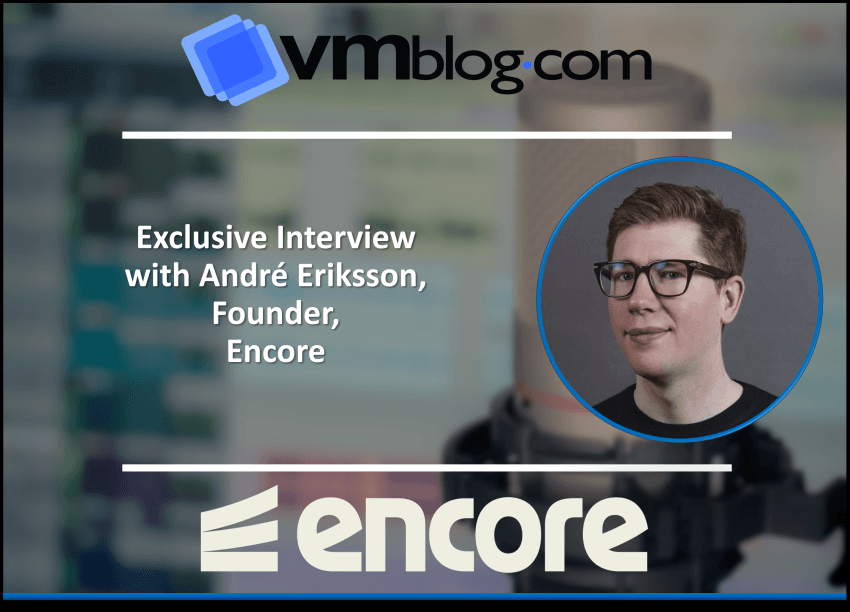
To find out more, VMblog spoke with André Eriksson, Founder of Encore.
VMblog: As we begin, can you provide some context for our readers by explaining what Encore does?
André Eriksson: Encore lets you build highly scalable cloud backends, with an incredible flowstate experience that unlocks each developer’s creative potential and radically shifts how they spend their time. Based on a pragmatic new philosophy, Encore is a Backend Development Engine that lets you escape the maze: no endless repetition of boilerplate, no infrastructure to worry about, and no reinventing the wheel. Encore does this by deeply understanding your source code and automating and innovating on the developer experience. All of this is available for free, and is based on the Open Source Encore Go framework.
VMblog: What problem does Encore solve?
Eriksson: Building distributed systems in the cloud comes with crippling complexity. Engineers today are composing their applications by combining a large set of components from cloud providers, and are forced to spend countless soul-crushing hours writing repetitive glue code in order to cobble them together. It’s a kind of hand-crafted machine language of the cloud.
With Encore, all of this goes away. By removing the need to manually configure, connect, and set up these cloud components, Encore sets developers free from the maze of complexity. By providing the development engine needed to bring back the joy of building, Encore aims to unlock the creative potential of every developer. This means more developers can spend their time creating innovative products, instead of solving the same undifferentiated problems over and over again.
VMblog: Can you talk about the developer experience you get when you use Encore?
Eriksson: Encore offers a developer experience unlike any other. Now developers can stay in the flowstate being creative, and safely avoid getting bogged down in the mechanics of cloud infrastructure. This means developers can achieve incredible results in a short amount of time, while having a lot more fun. Encore gives developers innovative features like automatic distributed tracing, fully automated setup and management of cloud infrastructure, preview environments and live reload, portability between all major cloud providers, and more.
VMblog: What are some ideal use cases for Encore?
Eriksson: For startup teams who need to build a scalable backend to support the growth of their product, Encore lets them get up and running in the cloud within minutes. It lets them focus on solving for the needs of their users, instead of spending most of their time re-solving the everyday challenges of building distributed systems in the cloud. For teams in mature companies that want to focus on innovating and building new features, Encore lets them stop spending time on operations and onboarding new team members. Using Encore for new feature development is easy, just spin up a new backend service in a few minutes.
VMblog: You recently raised $3 million in venture funding. Who are your investors and how do you plan to use those funds?
Eriksson: We’re happy to have world class venture investors and deeply experienced operators backing us. Crane Venture Partners (London) is our lead investor, along with select US venture funds: Third Kind Venture Capital, Acequia Capital, and Essence Venture Capital. We’re thrilled that we’ve also been able to include several extremely experienced founders and operators in our funding round: Nicolas Dessaigne – Co-Founder & CEO of Algolia, Scott Belsky – CPO at Adobe and Founder of Behance, David Cramer – Co-Founder & CTO of Sentry, among others.
We’re using the funds to build out our core team, to focus on accelerating product development and scaling of our platform to support the needs of our growing user base.
VMblog: Can you provide a general product roadmap for Encore over the next 12 months?
Eriksson: After several years of stealth development, we released a beta version of the Encore Backend Engine and published the Encore Go Framework as Open Source in the spring of 2021.
After a year of continuous development and many months of production use, we’re ready to graduate from beta. We’re now supporting a growing number of companies and individual makers in realizing their creative potential in building incredible and innovative products on top of Encore.
Over the next 12 months we’ll be adding many more incredible tools for developers building for the cloud, enabled by Encore’s unique understanding of the applications being built on the platform. Things like automatically generated interactive architecture diagrams, and a full suite of cloud primitives natively supported.
##