Perhaps a new company to many VMblog readers, we had the pleasure of speaking to Roi Ravhon, Co-Founder & CEO at Finout, to learn more about the company and what they are up to. They’ve released a new and interesting feature that translates cloud costs to business value so DevOps teams can more easily justify cloud spend to finance teams, and we wanted to find out more.

VMblog: This will be many readers’ first time hearing about FinOut. Can you give us a quick sense of the problem the company is trying to solve?
Roi Ravhon: As a company’s cloud environment becomes more and more complex with multiple cloud providers and usage-based pricing tools, understating why a specific bill went up becomes complex and resource taxing at best (and unattainable at worst). It is even harder for DevOps teams to figure out granular financial details like how much one specific customer or feature costs as there are just too many variables.
Finout’s platform allows you to monitor, manage, and reduce all your usage-based pricing platforms in minutes, improving the company’s profit margin and long-term profitability with no heavy lifting involved.
VMblog: How are you approaching this problem that’s different from other tools in the cost management space?
Ravhon: Finout was built from the ground up as a FinOps first, self-service platform. It means that any user, from the CFO to the head of DevOps, can create his customizable dashboard and see the information they need. Additionally, there is no need to add an agent while implementing the platform; that is a big change from the current market legacy products.
VMblog: Is your platform built for DevOps folks who need to provide better reporting to finance teams about their cloud spend, or is it built for finance teams to get that data on their own?
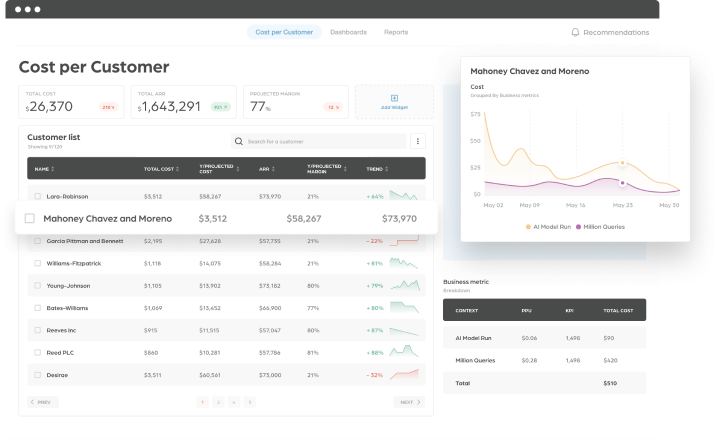
Ravhon: In a way, that is precisely the point: our platform is built from the ground up to do both. It can give DevOps all the information they need to get a complete picture of their infrastructure, no matter how complex it is (while also recommending cost reductions). And the DevOps teams can give Finance actual dashboards or recurring customizable reports that will provide them with all the needed information for the business context. For example: How much did one transaction cost the company and why? It is usually okay if overall spend is increasing, if you can show that the price per transaction is remaining constant, because ultimately that just means the business is growing.
VMblog: Maybe this is a good time to take a step back and ask: What is FinOps exactly? Do we really expect DevOps teams to become better at finance, or is it about the benefits of technical and business teams working closer together?
Ravhon: In the words of the FinOps Foundation: FinOps is an evolving cloud financial management discipline and cultural practice that enables organizations to get maximum business value by helping engineering, Finance, technology, and business teams to collaborate on data-driven spending decisions. So it is much more the latter than the first. There is no expectation for Dev teams to understand Finance; but they need to be accountable for their spend and to work with finance (among other teams like sales and BI) to improve gross margin and a company’s long-term profitability.
Just like you don’t expect the finance controller to understand what a Kubernetes label is, you can’t expect a DevOps engineer to understand unit economics. That said, both of them can work closer together using a platform like Finout.
VMblog: You just announced today FinOps Dashboards. What value can current users and potential users expect to get out of these new visualizations that they can’t get elsewhere?
Ravhon: To accomplish the FinOps methodology of promoting company-wide data-driven business decisions, the data should be as accessible as possible, with no heavy lifting or need for back-end intervention. Finout’s new FinOps Dashboards give a company all the tools they need to get this comprehensive insight in seconds, adapt and fit it per department or person, from the CEO to the sales manager. This ability is unparalleled and can’t be done with legacy products.
##