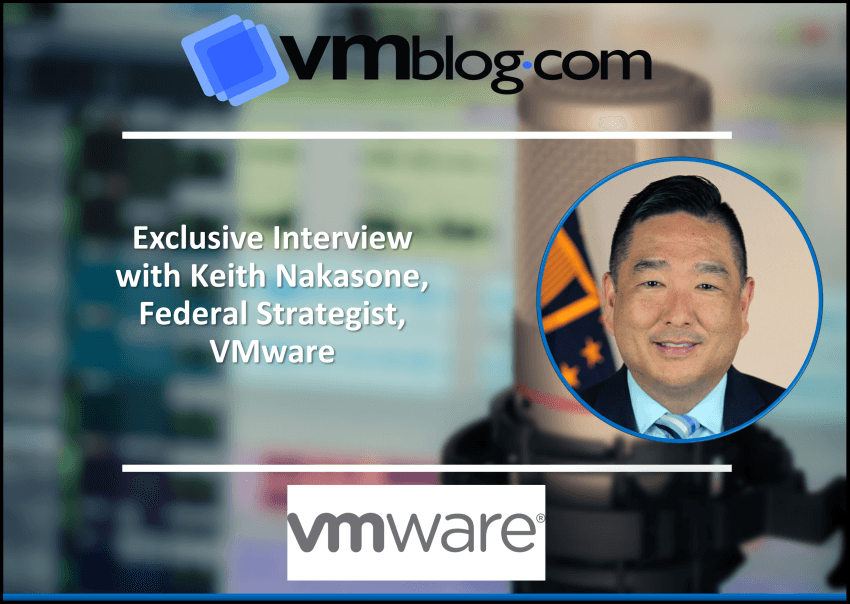
VMware recently announced findings of a study with Forrester, “Multi-cloud Is The New Frontier Of Government IT”, examining how government agencies are scaling use of multi-cloud environments for mission success. VMblog wanted to dig into the report findings and its broader implications for the public sector. To do so, we reached out to Keith Nakasone, Federal Strategist at VMware.
VMblog: What are some of the most important takeaways from VMware’s new multi-cloud for government IT study that organizations should consider this year?
Keith Nakasone: Multi-cloud is the new reality for government agencies, but it’s no longer just about a ‘cloud-first’ approach: agencies need a ‘cloud-smart’ strategy to win. VMware’s recent Multicloud Is The New Frontier Of Government IT study found that while the move to multi-cloud is a priority, government agencies face challenges supporting growing cloud environments, including compliance standards, data security and upskilling employees.
Today, agencies are focused on building the foundations for a multi-cloud strategy that supports modern applications, remote work capabilities and a better citizen experience. According to survey respondents, the most common steps agencies are currently taking to transform their cloud strategy start with moving and securing data and configuring cloud infrastructure based on new requirements. Over the next two years, government agencies plan to increase their spend on private cloud, more so than on public cloud, with security, compliance, and retaining control of the infrastructure in mind.
VMblog: Which emerging themes and trends from the study surprised you?
Nakasone: Across the public sector, agencies are at different stages of their modernization journey. There is a broad range of maturity levels when it comes to cloud strategy and therefore agencies have vastly different goals and priorities for digital transformation to meet business outcomes. The study highlighted the important role technological maturity plays in advancing agency innovation. For example, the study found correlation between maturity and the implementation of advanced security measures. Overall agencies have the ambition and are laying important groundwork for cloud-smart adoption, but need the internal workforce skill sets and security strategies to scale with their growing investments in multi-cloud solutions.
VMblog: Findings reveal that when selecting cloud providers, the top priorities for agencies were security (74%), lower total cost (67%), interoperability of applications (66%), and ease of use for users (66%). How can the public sector lay the technical and cultural groundwork for smart multi-cloud adoption?
Nakasone: The focus must start with an agile ‘cloud-smart’ approach, determining the right clouds, apps, and infrastructure. Agencies can implement a smart multi-cloud approach by:
- Using a third-party solution that supports their multi-cloud management and compliance needs;
- Limiting access to data with the Zero Trust framework;
- Allowing on-the-job training;
- Working side-by-side with contractor resources;
- Leading with IT professional services;
- And optimizing their environment to reduce burnout.
VMblog: How will the shift to multi-cloud benefit agencies?
Nakasone: A multi-cloud approach delivers a faster and smarter path to cloud for digital businesses, providing agencies with the ability to build, run and better secure apps across any cloud. Shifting to a multi-cloud approach allows agencies to be much more resilient by providing a powerful combination of freedom and control. With a multi-cloud approach, agencies have the freedom to innovate across clouds, reduced operational costs and added flexibility to meet business outcomes.
VMblog: More than half (65%) of surveyed decision-makers report their organizations are increasing their investment in professional development for developers. How important is reskilling employees as agencies set their sights on cloud adoption?
Nakasone: Reskilling employees is critical. Agencies have the ambition, and are laying important groundwork, for cloud-smart adoption. Yet many could improve the multi-cloud discipline cloud skillsets and security strategies needed to scale with their growing investments in multi-cloud/centralized management. Technology is only as good as the people that support it, use it and create efficiencies with it. That’s why agencies must train employees and work side-by-side with contractor resources in lockstep with their adoption of more cloud platforms and resources.
Government agencies that are further along in their cloud adoption journeys should look to train employees on more advanced activities like application modernization and increased cloud-native tooling while those that are just starting out should focus on aligning their internal departments on aligning business processes, outcomes, and advancing the adoption of multi-cloud with cross cloud technology and solutions.
VMblog: With the introduction of a Zero Trust mandate, how can government agencies ensure the pace of cloud innovation is met with secure infrastructure?
Nakasone: Cloud at scale requires transformed security postures. With the introduction of Executive Order 14028 and a Zero Trust mandate and the evolving threat landscape, agencies are ramping up security protocols. Respondents noted that organizations are adjusting their strategies by implementing agency wide identity and authentication systems for all apps (79%); encrypting and segmenting traffic (76%); and increasing the management of privileged access (70%). By limiting access to data with Zero Trust frameworks, agencies can continue to keep pace with cloud innovation while securing the cloud infrastructures and workloads they manage.
VMblog: And where can readers go if they want to see the full study or learn more information?
Nakasone: The full study, complete with recommendations for a ‘cloud-smart’ approach to the multi-cloud era can be downloaded here.
##