
It’s staggering to think that in 2022, there were 5 billion unique mobile internet users globally. That means that more than 60% of the world’s internet users are using mobile devices for everything from streaming movies to business meetings. What does that mean for technological advances such as cloud computing? What is mobile cloud computing, and how does it work?
What is Mobile Cloud Computing?
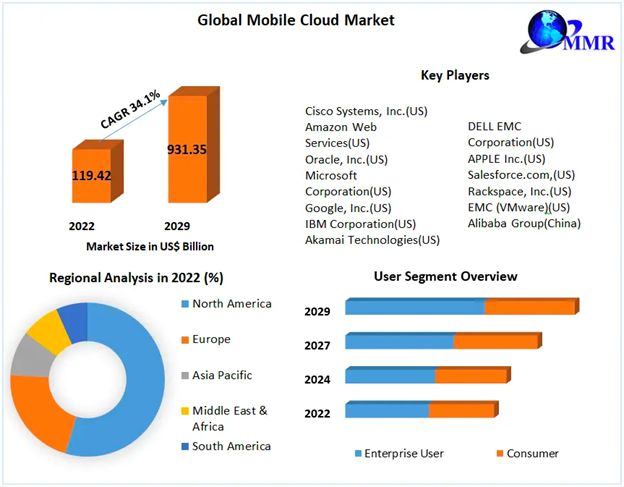
Image sourced from maximizemarketresearch.com
Let’s start with cloud computing itself. Cloud computing technology involves using on-demand services over the Internet rather than having to build and maintain physical servers and data centers. This provides businesses with the ability to scale their use of services such as storage and databases according to their needs. This can make things such as operating a call center management system far easier.
As you can probably guess, mobile cloud computing (MCC) applies those same principles to users of mobile devices. It takes mobile application development and combines it with cloud-based services to improve the delivery of mobile apps. Everything-such as computations and data storage-happens in the cloud environment, and the end mobile user sees the functionality on their mobile device.
Of course, for MCC to work properly, your device needs an internet connection. Mobile cloud apps are built and updated using cloud-based resources and then deployed to the relevant mobile devices.
The use of MCC and cloud architecture means that mobile users can access applications they may not have been able to previously due to limitations in areas such as data storage and computing power. It can also transcend the various mobile operating systems and open the power of the cloud to all.
Mobile Cloud Computing Characteristics
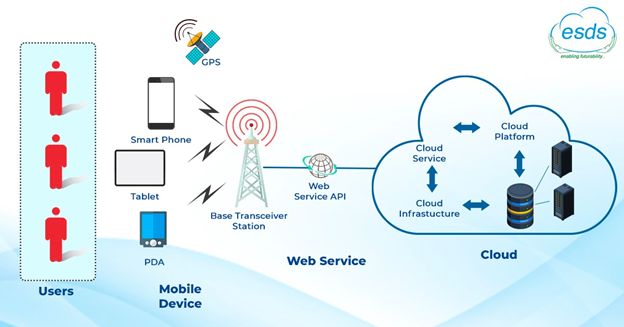
Image sourced from esds.com
So, you now know what mobile cloud computing is and what its purpose is. To understand it more, you need to understand that MCC needs to have several characteristics in order to function.
1. Cloud Infrastructure
While one of the main ideas of cloud computing is to save you from having a physical infrastructure, one is still needed.
The cloud service you use has physical servers that are based in your service provider’s data centers. Your provider maintains these remote servers and upgrades or scales them as needed. The cloud infrastructure is what allocates the hardware resources and processing power required for the app or service you’re accessing from your mobile device.
2. Software Infrastructure
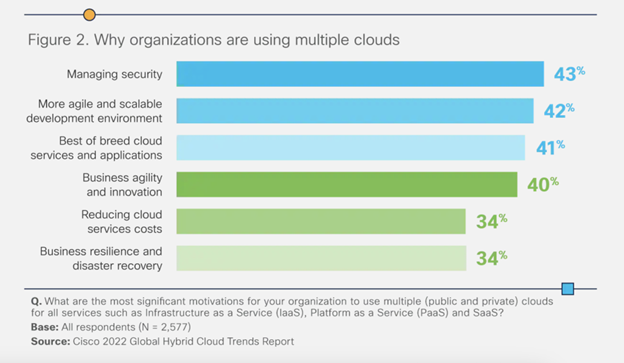
Image sourced from Cisco
This is the part of the mobile cloud computing infrastructure where network resources are managed for your use of platforms and services. Put simply, this is the area where cloud management of all the services you use takes place.
3. Supervisor Software
This comes in many different packages according to your OS and other factors. That OS is what automates the allocation of the cloud resources you need. Depending on the type of service you use, you can control different aspects via a VMM (virtual machine monitor), also known as a hypervisor.
- IaaS (Infrastructure as a Service). You can validate and manage VMs (virtual machines) created by the user.
- PaaS (Platform as a Service). Your hypervisor can contain and manage any software stack that comes from the provider.
4. Platform Infrastructure
This is an area most used for the development of web apps as the cloud infrastructure allows you to virtualize computational machines, thus allowing you to work from a mobile device. This is where common Application Programming Interfaces (APIs) such as Google App Engine are hosted.
5. Application Layer
This is where users interact with the apps and services they are using with the relevant interface. The actual data is stored in your provider’s data center. For example, if you were using contact center software solutions, the application layer is where you would be able to access things such as metrics.
Benefits of Mobile Cloud Computing
Of course, the greatest benefit of mobile cloud computing (MCC) may be accessibility. Users can access pertinent mobile applications, services, and cloud-based resources no matter where they are (as long as they have that all-important internet connection). The other benefits of MCC are similar to those of general cloud computing.
- Resources can be pooled no matter where your teams are located.
- Easy scalability when needed and quick elasticity.
- On-demand services as and when required
- The service provider shoulders all maintenance costs and upgrades when needed.
- Easy access to automated services and computational resources.
- Cost-effective as your organization requires no physical servers or data centers.
- Cost transparency as you can pay-as-you-go or choose a suitable plan.
- Robust security from your cloud-computing provider.
- Always available anywhere as long as the user has an internet connection.
- The service provider monitors quality and other crucial aspects of the service.
- Real-time data is available to you and other users.
- Data recovery is easy.
- Your data is easily integrated as it’s all stored on the same cloud architecture. This facilitates real-time analytics as well as combining services you normally would not be able to via APIs.
- You can offload computational needs to the cloud platform. This means that even the most basic device can use any application.
Challenges of Mobile Cloud Computing
It all sounds wonderfully easy, doesn’t it? As with many things, there are some challenges you will face if using mobile cloud computing.
1. Power
Because mobile devices generally have a limited power supply, this can affect app performance as the power level declines. You will also find that many mobile cloud applications use large amounts of power to maintain connectivity. These issues can also depend on how well-optimized an app is for mobile usage and the battery life of your device.
2. Bandwidth
Because mobile devices depend on wireless networks and mobile networks, service providers can face an ongoing battle to ensure that there is enough bandwidth for your device to work efficiently with mobile cloud computing.
3. Availability
Just as your mobile coverage can vary, so can your mobile cloud computing availability. Even when you have more than one OS installed, you may find that performance will sometimes be affected. Things such as built-up areas, provider downtime, and overuse of the network can all affect the availability of a strong signal.
The Takeaway

With diverse working patterns and staff often away from their home base, mobile cloud applications and cloud technology mean that your teams can access the same apps and services as if they were at their desk. While there are some challenges, the benefits of mobile cloud computing can be good for your staff and for your organization.
##



