

By Manav Khurana, Chief Product & Marketing Officer for GitLab
A fundamental shift emerged in late 2025. Three AI model releases crossed a capability threshold, compelling industry leaders to rethink the role of AI in coding. The impact has been immediate. For example, Y Combinator’s Winter 2025 batch saw a quarter of startups with 95% of their code generated by AI, while organizations broadly report developer productivity gains of 20-50% when using AI.
The problem is that coding accounts for only about 52 minutes per day of the software delivery process. Accelerating just that one stage creates a challenge for everything that follows: review, testing, security scanning, deployment, and operations. This is the “AI Paradox.” Enterprises find that solving the AI Paradox isn’t about adding more AI tools, because the challenge is fragmentation. The real opportunity is rethinking how quality and security work across the entire software development lifecycle.
The Fragmentation Challenge
Several fragmentation forces hold engineering teams back from the full value of AI.
Fragmented AI Tooling. Most enterprises built their software delivery capability tool by tool over the past decade. Now, each tool comes with its own AI agent. Developers use one AI for coding, another for security analysis, and another for CI/CD troubleshooting. The problem is that they don’t work together.
Fragmented Context for AI. Without a unified data model, each agent operates in its own silo, lacking context about the broader project. Requirements, code history, security implications, deployment constraints, and operational feedback stay disconnected across systems, and teams must manually bridge these gaps.
Fragmented Trust in AI. Even with great AI tooling, trust isn’t a switch one flips. Some developers let AI generate entire modules; others won’t accept a single suggestion without rewriting it. Neither extreme is wrong. Without consistent verification and validation processes, teams cannot determine which tasks are suitable for AI, given quality and risk, and at what level of human approval they require.
Regulatory Fragmentation around AI. Organizations face a growing need for data residency, and no single deployment model will suffice. Additionally, new AI laws create urgent governance requirements to identify and record AI use across both approved tools and shadow tools. Regulators and industry bodies demand more “prove it” controls. All of this requires a fresh look at AI security and governance.
Budget Fragmentation for AI. Finance teams see the growing AI “line item” across infrastructure investments and the different software tools that every team purchases. They rightfully ask everyone to be pragmatic, requesting clear usage telemetry, cost controls, and return on investment before pressing further.
The Alternative: From Fragmentation to Flow
The solution isn’t better integration between existing tools. It’s a unified architecture designed for software delivery. This approach replaces sequential stages with continuous execution, in which AI agents work within the loop while humans orchestrate.
Organizations need platforms that span the entire lifecycle, from planning through operations. When agents share a common execution environment, the deployment agent instantly accesses code changes, the security agent automatically triggers remediation, and the performance agent directly informs the architecture. Context persists throughout rather than disappearing at handoffs.
For example, at Thales, fragmentation meant teams operated completely isolated from one another. Moving to a unified platform transformed their environment, fostering better communication and coordination among their diverse teams across multiple locations.
Additionally, intelligent orchestration requires connecting relationships between code, requirements, tests, security findings, deployments, and metrics throughout the entire organization. This organizational memory enables agents to access full context: who requested a feature and why, what constraints apply, what similar implementations exist, and how changes impact downstream systems. Service catalogs with ownership tracking synthesize developer experience and security metrics to detect drift. When merge request cycle times spike or change-failure rates rise, the system automatically triggers responses. The data model continuously evolves, learning patterns that make every agent smarter.
Teams also need customizable autonomy to define which contexts agents rely on, which workflows to streamline, and which compliance rules to enforce. Low-risk changes proceed autonomously. Medium-risk changes trigger review workflows. High-risk changes require explicit approval. Agents connect across the enterprise toolchain, pulling context from Jira, PagerDuty, Confluence, and Snowflake, while the unified platform provides orchestration.
Teams must embed compliance throughout with AI threat modeling, automated supply chain security, secrets detection, and comprehensive AI governance. Policy gates enforce rules automatically. Audit trails capture every agent decision. Shadow-agent detection identifies unapproved tools. Continuous compliance monitoring with exportable evidence packs lets organizations demonstrate governance to regulators. Teams define policies once. The platform enforces them consistently. For example, Southwest Airlines leveraged a unified platform to bring consistency to metrics, security, and code quality across its organization.
Organizations also need deployment options (SaaS, dedicated instances, self-managed) for local and cloud-hosted models. Transparent usage-based pricing aligns costs with value, providing visibility into token spend and team-level budget controls. A marketplace approach allows teams to choose optimal models for each task rather than paying for bundled capabilities they don’t need.
Changing How Software Gets Built
Organizations that combine platform consolidation with intelligent orchestration don’t just move faster. They fundamentally change how software gets built. Their AI investments compound rather than fragment. Their delivery evolves from disconnected stages into continuous execution where value flows uninterrupted from idea to production.
The AI Paradox is not a temporary growing pain. It represents a foundational challenge that will widen for every organization that treats AI as a coding accelerator rather than a lever for delivery transformation. The window for making these architectural choices is narrow. Every month of fragmented AI adoption creates more technical debt, more integration complexity, and more organizational inertia to overcome. The question isn’t whether to consolidate. Organizations must decide whether to act deliberately now or pay a steeper price later.
##
ABOUT THE AUTHOR
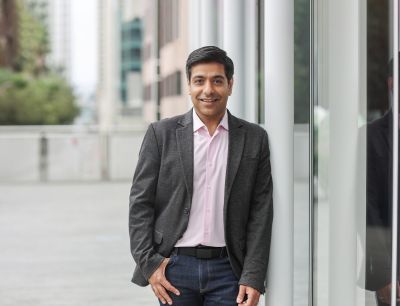
Manav Khurana is the Chief Product and Marketing Officer at GitLab, where he leads GitLab’s product, design, and marketing functions. Manav is passionate about building tools that enable engineers to do their best work and build great software.
Manav’s career spans 25 years, and before joining GitLab, he served as the Chief Product Officer at New Relic. He has also served in product and marketing leadership roles at Twilio, Aruba HPE, and Motorola. Manav has deep expertise in establishing new technology categories and taking a data-driven approach to building billion-dollar businesses.
Manav holds a B.S. in Electrical and Computer Engineering from the University of Rochester, an MBA from Santa Clara University, and has completed a leadership program at Stanford University.


