By Jay Martin, CISO at Blue Mantis
Strong patch hygiene has long been treated as a reliable indicator of cybersecurity maturity. Organizations track remediation timelines, measure compliance against service-level agreements and report how quickly critical vulnerabilities are resolved.
Those practices remain essential, but they no longer provide a complete picture of security readiness.
AI is changing how quickly vulnerabilities can be discovered, analyzed and exploited. Advanced models can examine code, identify previously unknown weaknesses and connect multiple flaws into viable attack paths at a speed once limited to specialized research teams.
The natural response is to patch faster. Yet patching begins only after an organization knows a vulnerability exists. AI-assisted discovery is expanding the risk outside that field of view. The threat model has changed, while many vulnerability-management programs have not.
Patch Metrics Only Measure Known Risk
Traditional vulnerability management depends on a flaw being discovered, documented, assigned a severity score and matched with a vendor advisory or fix. Security teams then schedule remediation based on severity and business impact.
That process remains necessary, but AI-assisted discovery can identify weaknesses before there is a CVE, advisory or available patch. It can also reveal relationships that traditional prioritization may miss.
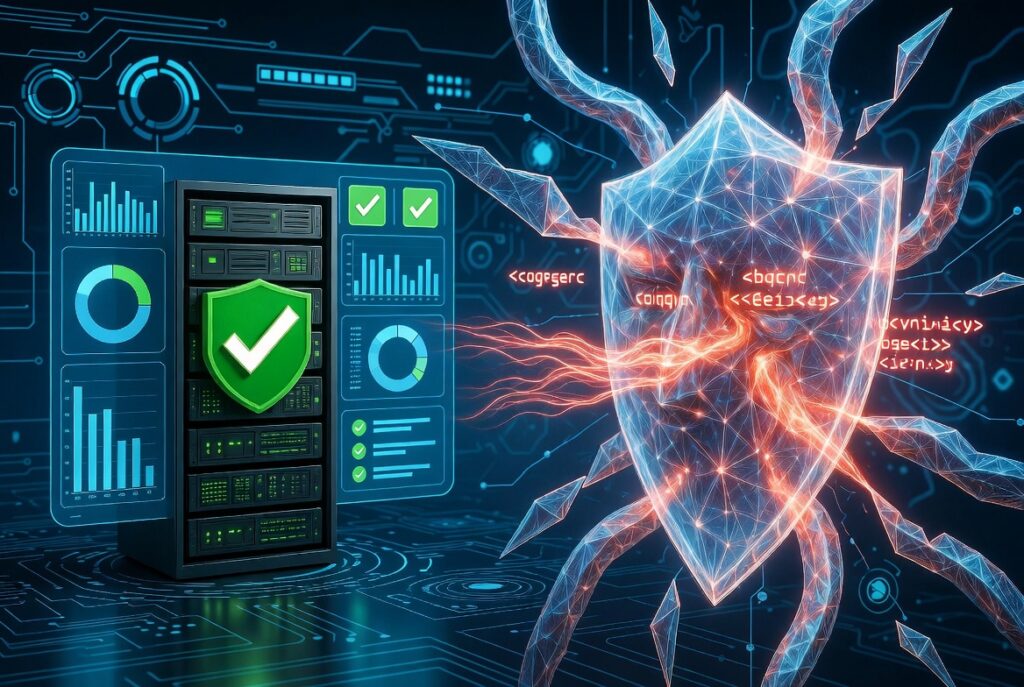
A vulnerability that appears moderate in isolation can become critical when combined with an identity weakness, exposed service, misconfiguration or another flaw. A patch-compliance dashboard cannot account for an undocumented vulnerability, nor can it always show how several lower-severity issues form a high-impact attack path.
An organization can therefore be highly efficient at fixing what it sees while remaining exposed to what an AI-enabled adversary may uncover next.
The Visibility Gap Is Expanding
As AI becomes embedded in applications and agentic workflows, the attack surface increasingly includes the model layer itself. Prompt injection, memory poisoning, model extraction and manipulated agent behavior do not fit neatly into a traditional vulnerability queue. Risk can come from what a model trusts, which data it can access and which actions it can take.
Many organizations are deploying AI faster than security teams can test and govern it. An asset inventory may confirm that an AI application exists without showing how it connects to sensitive systems or what could happen if its behavior were manipulated.
Another scanner will not solve that problem. Organizations need to understand where AI is operating, how it interacts with critical assets and how those connections could expand the impact of a compromise.
From Periodic Patching to Continuous Readiness
Quarterly scans and scheduled remediation cycles were designed for an environment in which vulnerabilities appeared at a manageable rate and the time between discovery and exploitation was more predictable.
That model becomes less effective when AI-assisted discovery operates continuously. Exposure management must also become continuous. Automated testing, adversarial assessment, AI-assisted analysis and attack-path validation should be applied regularly to the systems and workflows that create the greatest business risk.
More discovery alone will not produce better security. AI can generate findings faster than teams can validate, prioritize and remediate them. Without the right expertise and operating model, automation may simply create a larger backlog. The goal is not to find the most vulnerabilities. It is to identify and reduce the exposures most likely to create material business consequences.
Readiness Requires a Different Operating Model
The foundation should be a risk-weighted map of the environment, not simply a compliance inventory. It should connect internet-facing systems, identity infrastructure, cloud services, critical software dependencies, AI integrations and agent workflows to the business processes they support.
For each critical area, the organization should know who owns it, what a compromise would affect and which containment options are available if an immediate patch is not.
Organizations also need a standing, cross-functional response capability. High-consequence vulnerabilities cannot be managed by security operations alone. Infrastructure, application, AI, legal, compliance and business leaders may all need to participate, with named responsibilities and direct escalation paths.
Containment decisions should be made in advance. When no patch is available, teams may need to isolate an asset, restrict access, disable a feature, rotate credentials or introduce compensating controls. The authority to take those actions should be clear before the organization is under pressure.
Security leaders should also strengthen intelligence-sharing relationships with technology providers, industry groups, government partners and peers. Timely intelligence can reduce the distance between an external discovery and an informed internal response.
Security Readiness Must Extend Beyond Patching
Patching remains a foundation of effective cybersecurity. But good patch hygiene is not the same as complete visibility, and it is not a substitute for foresight.
A high remediation rate shows that an organization can address known vulnerabilities. It does not show whether the organization can identify an emerging weakness, understand an AI-specific attack path or respond when no patch exists.
The organizations best prepared for the next phase of cyber risk will understand where their visibility ends, continuously test the areas that matter most and establish the authority to act when normal remediation processes are too slow.
The defining question is no longer only whether critical vulnerabilities are being patched on schedule. It is whether the organization is prepared for what a capable AI-enabled adversary could discover before a patching clock ever begins.