Virtualization and Cloud executives share their predictions for 2016. Read them in this VMblog.com series exclusive.
Contributed by Andrew Atkinson, Senior Director, Product Marketing, Cloud Cruiser
2016: The Year to Take Control of Hybrid Cloud Complexity
We are living in a hybrid cloud world.
In a recent survey of Amazon Web Services Summit attendees, Dimensional Research found that 79% of respondents are pursuing a hybrid cloud strategy. This same survey also tells a story of cloud usage rates increasing dramatically over the next year, with more than half of the respondents planning to increase cloud utilization by more than 25%.
We can predict, based on past experience, that increased cloud use will bring many benefits to the enterprise in terms of agility, responsiveness, and sometimes even lower costs. We can also predict that the increased pursuit of hybrid cloud strategies will lead to increased complexity which, if not correctly addressed, can erode or even eliminate some of the benefits of moving to the cloud.
How can a hybrid strategy increase complexity?
By increasing the challenges of managing cloud usage – or even of properly measuring it. While most cloud platforms provide some limited functionality for tracking usage, these tools do not have a robust ability to connect usage with users in terms that are meaningful to how you run your business. Even in the case of a single cloud platform, it can be difficult to figure out who is using how much, which services, and what it is costing you.
Hybrid scenarios increase the situation exponentially. Not only are you challenged to get the financial and operational metrics you need from each platform, you must somehow try to get a holistic view of all of your cloud usage, even though the different providers will have their own distinct service offerings and nomenclatures.
This hybrid future, while potentially confusing, is not necessarily a dark one. As hybrid becomes the operating standard, we will see increasing adoption of software solutions that are capable of providing that much-needed holistic view across cloud platforms, both public and private. These systems are like a smart meter for you hybrid cloud, capable of collecting usage information from a wide range of sources, then harmonizing it so it can be aggregated or analyzed across platforms and presented in a single-pane-of-glass view.
With this holistic hybrid view, usage can be tied back to users whom can be accountable for the resources they are consuming. IT investments can be connected with valuable business returns, so those investments can be better understood in the context of the business and justified. Intelligence from across all your cloud platforms will provide you with operational insights, as well as financial metrics: you will be able to identify under-utilized resources, looming capacity constraints (with forecasts based on real data, rather than guesswork), and the best places to run particular workloads. Best of all, this can be done with automated data collection, harmonization and analysis, freeing your valuable people from the drudgery of spreadsheet-munging to do strategic, value-added work.
In summary, the 2016 forecast is that the waters of hybrid complexity are rising, and that complexity will challenge your existing management processes to the limit. There are people out there (like us at Cloud Cruiser!) ready, willing and able to throw you a “life-preserver” to meter and manage your critical cloud investments.
##
About the Author
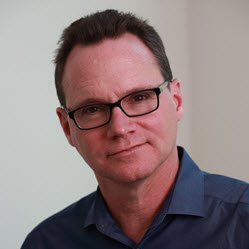
Andrew Atkinson is senior director of product marketing for Cloud Cruiser where he is responsible for working with engineering, product management and sales teams to bring products successfully to market. Atkinson has proven ability to achieve and act upon a deep understanding of customers, markets and competitors.
Previously at E2open, Atkinson has more than two decades of startup, international and IPO experience with various software companies.
Atkinson started his career in Boston, MA after he completed his bachelor’s degree at Harvard University and then went on to complete his Masters in Applied Economics and Finance at the University of Santa Cruz.