Industry executives and experts share their predictions for 2025. Read them in this 17th annual VMblog.com series exclusive.
By Bill Andrews, President and CEO of ExaGrid
Enterprise IT data centers are becoming more and more hybrid with data living in multiple locations and networks including on-premise data centers, SaaS providers, the public cloud, and IT Outsourced data centers. As a result, data protection/backup is evolving. The impact of cyber-attacks, global warming/climate change, scarcity of electricity in some countries, and other changes will drive many requirements moving forward.
ExaGrid’s 10 predictions are:
- 5 backup applications will dominate the IT data center due to the need to back up a wider range or data including virtual machines, containers, SaaS data, public cloud data, physical servers, etc. as requirements continue to expand with hybrid networks. The 5 backup applications that will dominate the enterprise IT data center are Veeam, Commvault, NetBackup, Rubrik, and Cohesity.
- Backup data will be stored in multiple locations
- On-premise data centers, outsourced data centers, and in the public cloud.
- There will be a continued increase to improve data integrity to ensure that data can be restored when required, and third-party certifications and government regulations to prove data integrity and security will continue to grow in popularity such as the Common Criteria, DoDIN APL, NIS 2, DORA, etc.
- Business continuity will take center stage in 2 major areas:
- Ability to survive or quickly recover from a cyber-attacks, including a ransomware attack. These attacks will increase in 2025.
- Ability to recovery from a site disaster, whether man-made such as fire or natural such as earthquake, tornado, hurricane, flood, etc. There are major wildfires in the news on a weekly basis and natural disasters are happening more frequently and with greater impact and destruction due to climate change. You will see more and more requirements for a tertiary hop to a third disaster recovery site in order to ensure multiple copies of data across multiple locations to keep the business running in the event of a site disaster.
- In many countries there is strain on the electric grids which will drive more organizations to look for solutions that use less power and less cooling.
- Also, many organizations are addressing sustainability in their commitment to combat climate change and will add many sustainability requirements to their requests.
- Customers will continue to explore how they pay for their data storage and will continue to weigh the cost benefits of capital equipment expenditure, leasing storage, subscription-based storage, consumption-based storage (pay by the TB) and cloud-based storage. One size will not fit all and customers will choose based upon the workload and use case.
- The pendulum will swing back and forth, as it has for decades in the IT data center, as to whether customers want an all-in-one solution from a single vendor or best-of-breed components for data protection/backup. The prediction here is that those that go all-in-one will not be satisfied and move to best-of-breed and those who go best-of-breed will not be satisfied and move to all-in-one. This dynamic has continued to exist since the 1980s and our prediction is that there will be no change on this topic.
- Solid State Storage (SSD) will continue to make inroads in backup for rack space, power and cooling reasons, as well as for potentially faster restores. The cost is higher than HDD backup storage, however the cost to a degree is counterbalanced by savings in power and cooling.
- There will continue to be a repatriation of data in the public cloud moving back to the on-premise data center due to cost. This movement began in 2023 and will continue into 2025 as organizations continue to receive eye-popping bills for their data storage in the public cloud.
##
ABOUT THE AUTHOR
Bill Andrews, President and CEO of ExaGrid
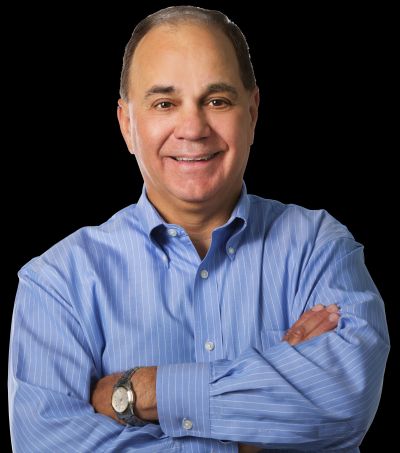
Bill has spent over 19 years growing ExaGrid from a concept to a visionary player in backup storage. With over 30 years of IT data center infrastructure experience, Bill has proven success in technical sales and marketing. Bill has impacted numerous high-growth companies, including Pedestal Software, eDial, Adero, Live Vault, Microcom and Bitstream. Bill is a graduate of Fitchburg State College and holds a BS in Industrial Technology. When Bill is not working, he enjoys boating, playing guitar and songwriting.