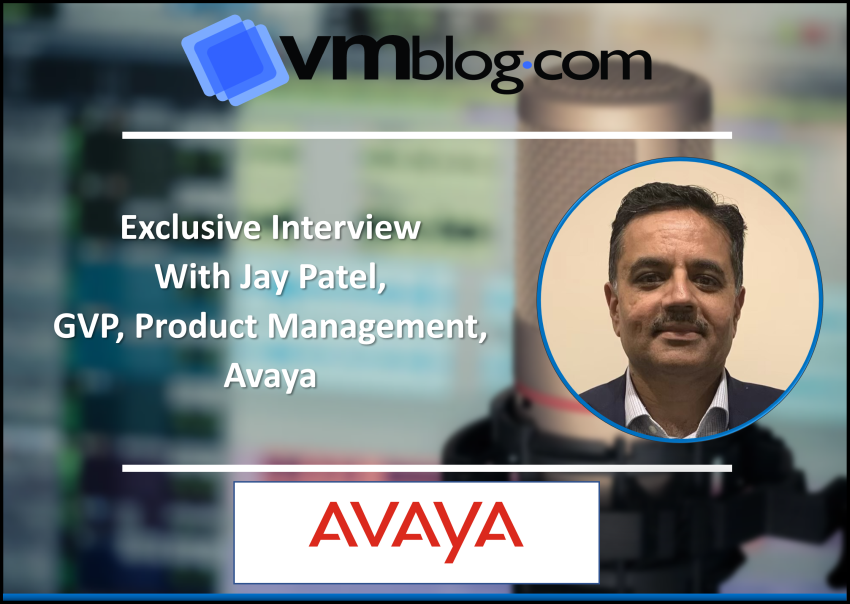
Avaya is a trusted provider of innovative contact center and communications solutions that power engaging customer experiences for organizations worldwide. In this exclusive Q&A with VMblog, Jay Patel, Global Vice President of Product Management at Avaya, shares insights into the company’s approach to cloud migration, hybrid cloud deployments, and digital transformation.
With over 25 years of experience as a global executive, Patel leads product management for all Avaya products, bringing his extensive expertise in product definition, engineering, multinational product launches, go-to-market strategies, customer experience, and organizational transformation.
As enterprises navigate the complexities of cloud migration, particularly those with existing on-premises deployments, Patel emphasizes the importance of a nuanced strategy that considers factors such as migration methods, cost, databases, on-premise infrastructure and apps, and security. Avaya’s Cloud Readiness Assessment helps customers evaluate their specific requirements and design tailored hybrid cloud solutions that seamlessly integrate on-premises and cloud environments.
In this insightful Q&A, Patel digs into Avaya’s “Innovation Without Disruption” philosophy, which allows enterprises to futureproof their investments while enjoying the benefits of the cloud without incurring additional costs. He also underscores the need for a measured approach to digital transformation, aligning solutions with the unique pace and needs of each business.
VMblog: Would you provide VMblog readers with a quick overview of the company?
Jay Patel: Avaya is a trusted provider of innovative solutions for organizations across the world, giving them the freedom to engage their customers and employees in ways that deliver the greatest business benefits. Avaya’s contact center and communications solutions power immersive, personalized, and unforgettable customer experiences that drive business growth. With the freedom to choose their journey across on-premises, private cloud, public cloud, or often a hybrid deployment combination, there is no limit to the experiences Avaya customers can create. Businesses are built by the experiences they provide, and everyday millions of those experiences are delivered by Avaya to address some of their most important ambitions and challenges. Remarkably, Avaya has established itself as a leader in the contact center market, supporting over 6.1 million contact center seats globally, which underscores its significant role in shaping customer engagement strategies worldwide.
VMblog: Can you tell us a little more about yourself and your role at Avaya?
Patel: I serve as the Global Vice President of Product Management at Avaya, where I lead product management for all Avaya products. I have more than 25 years of experience as a global executive, leading customer-centric product and operational strategies based on emerging technologies, market and competitive trends. Previously, I was the Chief Product Officer at Vonage, and led product management for market leading cloud UC, CC and CPaaS solutions. I am a cross-functional global team integrator with extensive experience in product definition, engineering, multinational product launches, go-to-market strategies, customer experience, and organizational transformation.
VMblog: What should customers and enterprises who continue to use on-premise deployments keep in mind when considering cloud migration?
Patel: Navigating the intricate landscape of cloud migration requires a nuanced strategy, particularly for enterprises tethered to on-premise deployments. They must internally reflect on where their technology currently stands, and keep in mind these five main considerations:
- Method: Offline or online migration. Each approach offers pros and cons from the perspective of performance, cost savings and security.
- Cost: Migration-related expenses can add up so careful planning in advance is critical.
- Databases: In some cases, migrating on-premises databases to the cloud is much slower than transferring app workloads, but it doesn’t have to be that way. Collaboration with all parties involved to find ways to mitigate any operational disruptions caused by an on-premises to cloud migration.
- On-premise infrastructure and apps: During the planning stage, determine whether on-premise resources should be replatformed, refactored, or replaced before migration.
- Security: Both pre- and post-migration are critical from a security standpoint.
These and other questions may arise during an in-depth assessment, which is worth considering as the benefits of heightened business momentum, competitiveness, lower costs, faster innovation cycles and flexibility outweigh any potential challenges uncovered in the process.
VMblog: Where does Avaya come in?
Patel: As enterprises contemplate transitioning to the cloud, a delicate balance should be struck between anticipated business gains and the practicalities of seamless integration. They should have the freedom to choose the right path for their cloud migration to achieve the transformation they desire while experiencing the least amount of business disruption. As a trusted partner, Avaya works with clients leveraging our Cloud Readiness Assessment to help answer crucial questions such as understanding their security requirements. During this assessment, our team of experts takes a comprehensive, customer-focused approach:
- Evaluates systems, data, applications, business processes and requirements.
- Identifies quick-win migration targets as well as elements that require re-platforming or re-architecting.
- Designs hybrid cloud solutions tailored specifically to customer environments, with seamless integration between on-premises and cloud.
- Provides a detailed migration roadmap with recommendations to evolve legacy investments while futureproofing with the latest innovations.
- Establishes success metrics and best practices for governance, security, and performance monitoring post-migration.
Depending on customer goals, the Avaya Cloud Readiness Assessment provides the strategy and plan to get customers where they want to be – smoothly and cost-effectively.
VMblog: How does Avaya add innovation to on-premises and hybrid model cloud deployments?
Patel: We understand that one size or solution does not fit every enterprise – each has different needs and requirements. After establishing their distinct needs through our Cloud Readiness Assessment, enterprises are then offered a range of deployment options. This allows them to move at a pace and path that fits their business needs allowing them to create a unique innovation journey. At Avaya, we integrate our fully managed hybrid cloud solution that combines the best of on-premises and cloud solutions without disrupting current business operations. “Innovation Without Disruption”, as we refer to it, is not just a philosophy, but a practical necessity for our customers. These complements on-premises deployments by allowing enterprises to avoid a costly full rip and replace scenario by keeping what they want. This will also allow them to see eventual return on investments they’ve already made and enjoy the benefits of the cloud without incurring additional costs. It steadily becomes a win-win.
VMblog: Is there anything else enterprises be mindful of when evaluating their digital transformation road map?
Patel: Enterprises should be mindful of the rapidly evolving landscape of modern communications does not mean they should rush their own digital transformation. By taking a measured approach and making changes at their own pace, they align with the pace of their business rather than the timelines dictated by vendors. Finding solutions that are flexible and unique for their existing systems makes for a more seamless integration with their workforce while modernizing their employee and customer experiences.
##