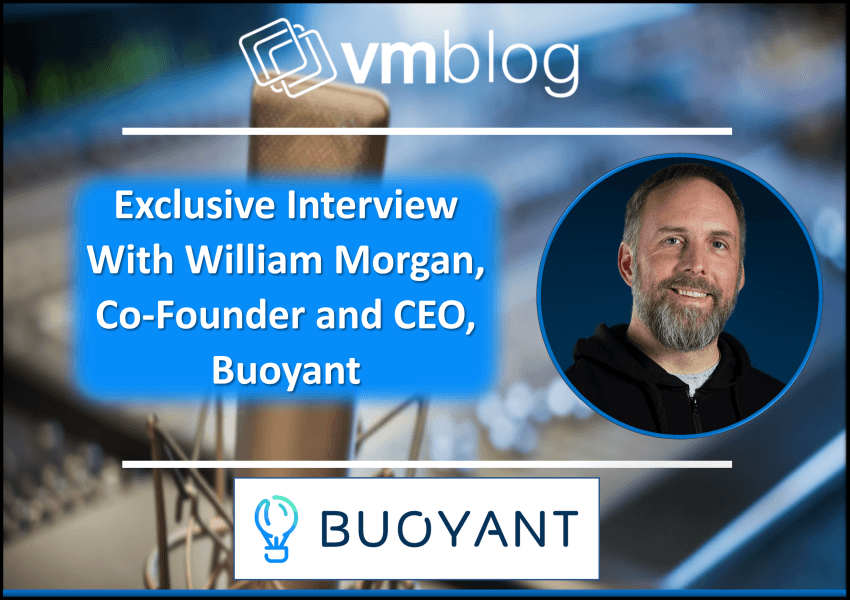
As enterprises accelerate their adoption of AI agents and large language models, a critical challenge has emerged: how to safely deploy autonomous AI systems that interact with business-critical APIs and data. Buoyant, the company behind the lightweight Kubernetes service mesh Linkerd, is addressing this challenge head-on by adding native support for the Model Context Protocol (MCP)�the communication standard that AI agents use to interact with enterprise systems. In this exclusive VMblog interview, William Morgan, co-founder and CEO of Buoyant, explains why traditional security and observability approaches fall short when dealing with unpredictable agentic workloads, and how Linkerd’s zero-trust framework is evolving to meet these new demands.
Morgan reveals that MCP traffic differs fundamentally from traditional API communications, featuring persistent sessions and context-driven interactions that require a new security paradigm. Unlike human-written code that undergoes peer review, AI agents operate autonomously and unpredictably, making granular access controls and real-time visibility essential rather than optional. By extending Linkerd’s proven security model to authorize access at the level of individual MCP tools, resources, and prompts�all while providing golden metrics for monitoring AI workload performance�Buoyant is positioning service mesh technology as the critical infrastructure layer for enterprise AI adoption. Ahead of KubeCon North America in Atlanta, Morgan discusses how this integration will help platform teams manage AI traffic with the same confidence and control they apply to traditional Kubernetes workloads.
++
VMblog: What motivated Buoyant to add Model Context Protocol (MCP) support to Linkerd, and what specific enterprise pain points does this address in AI adoption?
William Morgan: Enterprises are eager to move fast with AI. One of the most exciting areas here is that of agents, which can run in enterprise environments and take on business workflows by autonomously interacting with existing systems. This sounds amazing, but deploying agents in this way in practice is actually terrifying-they are unpredictable, complex, and can engage in what we might call “high-risk network behavior”, e.g. making API calls that you really wish they hadn’t. The way these agents are interacting with existing business APIs is over a protocol called MCP, and so if Linkerd can provide reliability, security, and observability for MCP traffic, we take a tremendous step towards making adoption of these enterprise agentic workloads safer.
VMblog: How does MCP traffic differ technically and operationally from traditional API traffic, and why does it require new service mesh capabilities?
Morgan: At the protocol level, MCP introduces persistent sessions and context-driven interactions that differ from stateless API calls, and uses JSON-RPC to encode everything in the body of the payload, vs the HTTP response codes and headers that are used by RESTful APIs. But more dramatically, you have to start from a position of distrust with agentic workloads-this means that all the ideas about zero-trust security and granular access control that were treated as nice-to-haves when the code was written by humans and went through peer review, etc, are suddenly critical. You have no idea what the LLM is going to do.
VMblog: Can you elaborate on how Linkerd’s existing zero-trust security framework extends to MCP communications and what new security controls enterprises gain from this integration?
Morgan: We’ve extended Linkerd’s zero-trust model to MCP so that you can authorize access to individual MCP tools, resources, and prompts based on the agent’s identity. This uses a natural extension of the same Kubernetes and Gateway API resource configuration that people are already using today. It’s a simple, built-in way to bring strong security to agentic AI traffic, although I want to emphasize that “securing your AI workloads” is a much broader topic that involves many other things.
VMblog: In what ways will the new observability features for MCP, such as tracking prompt usage, latency, and failures, help organizations manage and optimize AI workloads?
Morgan: The scariest aspect of agentic workloads is that you don’t necessarily know what they’re doing. By definition you’re giving them autonomy and letting them run around in your environment. So visibility is everything for AI operations. Linkerd will provide “golden metrics” like error rates, request volume, and latencies, at the level of individual MCP resources, tools, and prompts. Using this data, platform teams can trigger alerts, detect anomalies, optimize resource use, and ensure reliability as workloads grow. It transforms AI traffic from a black box into something they can monitor and manage confidently.
VMblog: How does integrating MCP support directly into the service mesh layer change the way platform teams approach managing AI-related traffic and policies across Kubernetes environments?
Morgan: Integrating MCP at the mesh layer gives teams a single control plane for all traffic and requires no new tooling or workflows. Policies, visibility, and access controls are unified across AI and traditional workloads. It means platform teams can apply the same governance and operational practices they trust today to the new world of agentic AI.
VMblog: How do you expect MCP support to influence Linkerd adoption among enterprises already experimenting with agentic AI systems or large language model integrations?
Morgan: We expect it to accelerate adoption significantly. Many organizations exploring AI face security and observability gaps. Linkerd’s native MCP support fills those gaps with proven enterprise-grade controls. It allows them to scale AI projects faster and more safely, while continuing to use the same lightweight, reliable service mesh they already trust.
VMblog: You’re going to KubeCon North America in Atlanta. What can attendees expect to see in the KubeCon demo, and how will it showcase Linkerd’s handling of MCP and agentic AI traffic?
Morgan: Our KubeCon demo (booth #440) will show how Linkerd secures and monitors MCP traffic in real time. Attendees will see live metrics on agentic communication, policy enforcement in action, and how Linkerd integrates seamlessly into existing Kubernetes setups. It’s a clear, hands-on look at how enterprises can run AI workloads with confidence and control.
##