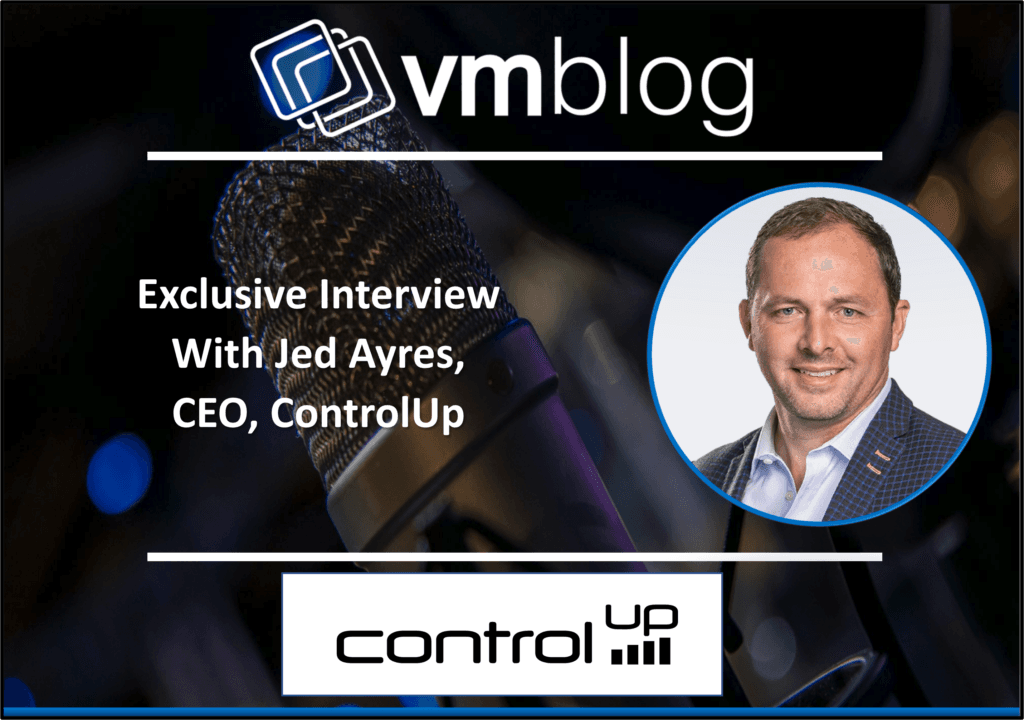
As IT environments grow more complex and distributed, organizations are rethinking how they manage endpoints, user experience, and operations at scale. Following ControlUp’s milestone of surpassing $100 million in annual recurring revenue, VMblog spoke with CEO Jed Ayres about the company’s evolution and what comes next for IT operations.
VMblog: ControlUp recently surpassed $100 million in ARR. What does this milestone represent for the company and the market?
Jed Ayres: Reaching $100 million in ARR is certainly a meaningful milestone for us, but more importantly, it reflects a broader shift happening across the industry. IT teams are moving beyond simply monitoring environments to actively managing and optimizing them in real time.
What we’re seeing is strong validation that organizations are ready for a new operational model—one that combines visibility with action. The demand is no longer just for insight into digital employee experience, but for platforms that can take that data and drive outcomes automatically.
VMblog: ControlUp has been known as a leader in Digital Employee Experience (DEX). How is that evolving?
Ayres: DEX was the foundation. It gave IT teams real-time visibility into how technology impacts employees, which was a major step forward. But visibility alone isn’t enough anymore.
We’re now defining the next chapter with Autonomous Endpoint Management (AEM). That means taking the insights we’ve built through DEX and pairing them with automation and AI to autonomously resolve issues, often before users are even aware of them.
This shift is about moving from reactive troubleshooting to proactive and, ultimately, self-healing IT environments.
VMblog: You’ve introduced agentic AI into the platform. What role does that play in this transition?
Ayres: Agentic AI is central to what we’re building. Traditional automation relies on predefined rules, which works up to a point. But today’s environments are too dynamic for static approaches.
With our AI Assistant, we can correlate signals across the entire IT ecosystem (from endpoints to applications to networks) and make intelligent decisions about what actions to take. That includes identifying issues, determining root causes, and executing remediation automatically.
That allows IT to operate at a level of scale and speed that simply isn’t possible with manual processes.
VMblog: Many IT teams are dealing with increasingly complex hybrid environments. How does ControlUp address that challenge?
Ayres: Complexity is one of the biggest challenges IT faces today. Organizations are managing physical devices, virtual desktops, cloud platforms, applications, and mobile endpoints, all at once.
Our approach has been to unify these environments into a single platform. That way, IT teams aren’t jumping between tools or working with fragmented data. They can monitor, troubleshoot, and remediate issues across their entire environment in real time.
The goal is to simplify operations and consolidate tools, which will result in increased control and efficiency.
VMblog: Your recent press release highlights more than 14 million automated remediations per week. What does that say about adoption?
Ayres: It shows that automation is no longer experimental, it’s operational. Organizations are already relying on automated remediation at scale to reduce manual workload and improve consistency.
When you think about the volume of endpoints in large enterprises, manual intervention simply doesn’t scale. Automation, and increasingly intelligent automation, is becoming a necessity, not a nice-to-have.
VMblog: How are enterprise customers responding to this shift toward autonomy?
Ayres: We’re seeing strong adoption at the enterprise level. These organizations are dealing with the most complexity, and they’re under the most pressure to deliver seamless digital experiences while controlling costs.
More than half of our ARR is coming from enterprise customers, which reflects how critical this capability has become. They’re looking for ways to reduce operational overhead, improve employee productivity, and consolidate their toolsets. Autonomy helps address all three.
VMblog: What role do partners play in your growth strategy?
Ayres: Partners are a key part of our ecosystem. They bring deep expertise in end-user computing and help customers navigate the transition to modern management models.
We’ve seen significant growth in partner-driven activity, which reinforces the value of collaboration in this space. As the market evolves, having strong partnerships helps ensure customers can successfully adopt and scale these new approaches.
VMblog: Looking ahead, what is your vision for the future of IT operations?
Ayres: We believe the future is autonomous. IT environments will be continuously monitored, analyzed, and optimized with minimal manual intervention.
That doesn’t mean IT teams become less important. It means they can focus on higher-value work. Instead of spending time on repetitive troubleshooting, they can drive innovation, improve user experience, and support business outcomes.
Ultimately, the goal is to create an environment where technology works for people, not against them, and where the digital workspace can largely run itself.
##