As Apache Iceberg establishes itself as the standard table format for modern data architectures, enterprises are discovering a critical gap: while Iceberg excels at defining table state and metadata, it doesn’t provide the operational pipelines needed for day-to-day data management. Data platform teams have been forced to build complex, custom stacks combining ingestion tools, schedulers, dbt Core jobs, and maintenance workflows�creating fragile systems that slow Iceberg adoption and drain engineering resources.
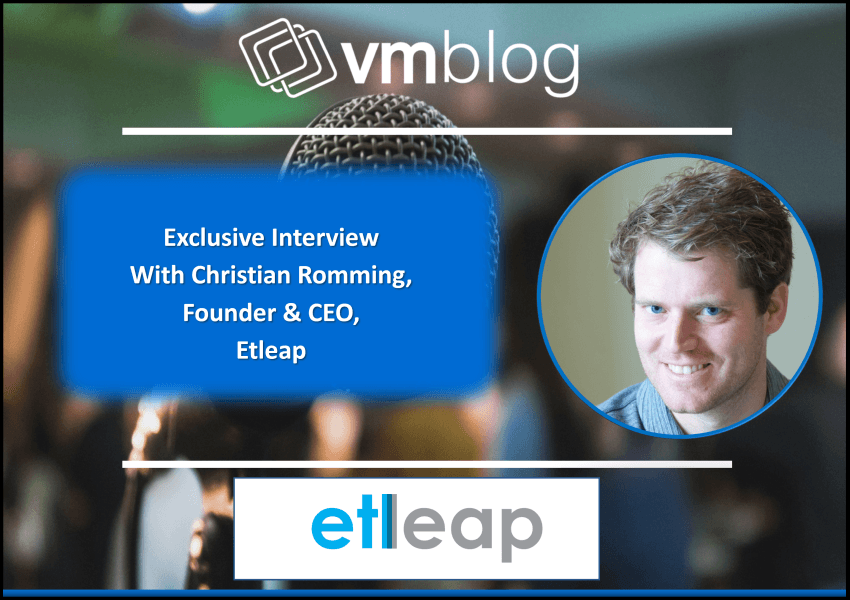
Etleap is addressing this challenge head-on with its new Iceberg pipeline platform, a purpose-built managed solution that runs entirely inside the customer’s Virtual Private Cloud. In this exclusive VMblog interview, Christian Romming, Founder and CEO of Etleap, explains how the platform delivers the missing operational layer for Iceberg deployments, providing high-performance ingestion, native dbt Core execution, automated orchestration, and continuous table maintenance. For data platform leaders looking to standardize on Iceberg across analytics and AI workloads without the burden of building custom pipeline infrastructure, Romming outlines why this managed approach represents a strategic shift in how organizations can operationalize their Iceberg foundations.
++
VMblog: What is the Iceberg pipeline platform, and why is Etleap introducing it now?
Christian Romming: The Iceberg pipeline platform is a managed pipeline layer designed specifically for Apache Iceberg. Iceberg has become the standard table format for modern data architectures, but it does not provide the operational pipelines needed to run it day to day. Teams still need systems to ingest data, run transformations with dbt Core, coordinate dependencies, and keep tables healthy over time.
We are introducing this now because many enterprises are moving to Iceberg as their data foundation and discovering that the operational burden of building and maintaining their own pipeline layer is slowing adoption. Our platform provides that missing layer as a managed system that runs entirely inside the customer’s Virtual Private Cloud (VPC).
VMblog: What problem does Apache Iceberg still face that the Etleap Iceberg pipeline platform is designed to solve?
Romming: Iceberg defines table state, metadata, and evolution, but it does not create or operate pipelines. It does not ingest data, execute dbt Core models, coordinate updates across systems, or handle ongoing table maintenance such as compaction and snapshot management.
As a result, data platform teams are forced to assemble complex stacks of ingestion tools, schedulers, dbt Core jobs, and custom Iceberg maintenance workflows. This creates operational friction and fragile systems that are hard to scale. The Iceberg pipeline platform addresses this gap by providing a continuous operational layer that keeps Iceberg tables current, consistent, and ready for downstream use.
VMblog: How does Etleap’s Iceberg pipeline platform differ from custom-built or proprietary pipeline solutions used by data teams today?
Romming: Most teams either build their own Iceberg pipeline platforms or adapt general-purpose ETL tools that were not designed for Iceberg. Both approaches lead to duplicated pipelines, brittle orchestration, and significant engineering overhead.
Etleap provides a purpose-built pipeline layer for Iceberg that is fully managed and runs inside the customer’s VPC. Instead of stitching together tools and maintaining infrastructure, teams get a single operational system designed around Iceberg semantics, dbt Core workflows, and continuous table management. This allows platform teams to focus on delivering data products rather than maintaining pipeline machinery.
VMblog: What key capabilities are included in the Iceberg pipeline platform (e.g., ingestion, transformation, orchestration, and operations)?
Romming: The platform provides high-performance ingestion into Iceberg, native execution of dbt Core models, automated coordination of pipeline dependencies, and continuous Iceberg table maintenance.
Together, these capabilities allow teams to define how data should flow and be modeled, while the platform handles execution, correctness, and operational upkeep. This makes it possible to build once on Iceberg and reliably serve analytics, AI, and data sharing workloads without maintaining separate systems for each use case.
VMblog: Who is the target customer for the Iceberg pipeline platform?
Romming: The primary audience is data platform leaders and platform engineering teams responsible for building and operating shared data infrastructure. These teams are adopting Iceberg as a strategic data foundation and need a reliable way to run pipelines at scale without building a custom platform.
The platform is designed for organizations that want to standardize on Iceberg across analytics and AI workloads while keeping control of their environment and architecture.
VMblog: Why is running the platform inside the customer’s VPC important?
Romming: Running inside the customer’s VPC gives organizations full control over data, security boundaries, and network access. Sensitive data never leaves their environment, which simplifies compliance and governance.
It also allows the platform to integrate directly with existing cloud infrastructure, identity systems, and compute resources. This model combines the benefits of managed software with the control and isolation enterprises expect from their core data platforms.
##