The enterprise AI landscape is experiencing a fundamental transformation as organizations move beyond simple chatbots and copilots toward sophisticated, autonomous systems capable of end-to-end process ownership. Agentic AI represents this evolutionary leap, introducing statefulness, goal-driven execution, and true autonomy into enterprise workflows. Unlike traditional GenAI applications that handle isolated tasks, these intelligent agents can analyze complex scenarios, navigate regulatory requirements, and deliver personalized outcomes across industries like banking, healthcare, and insurance.
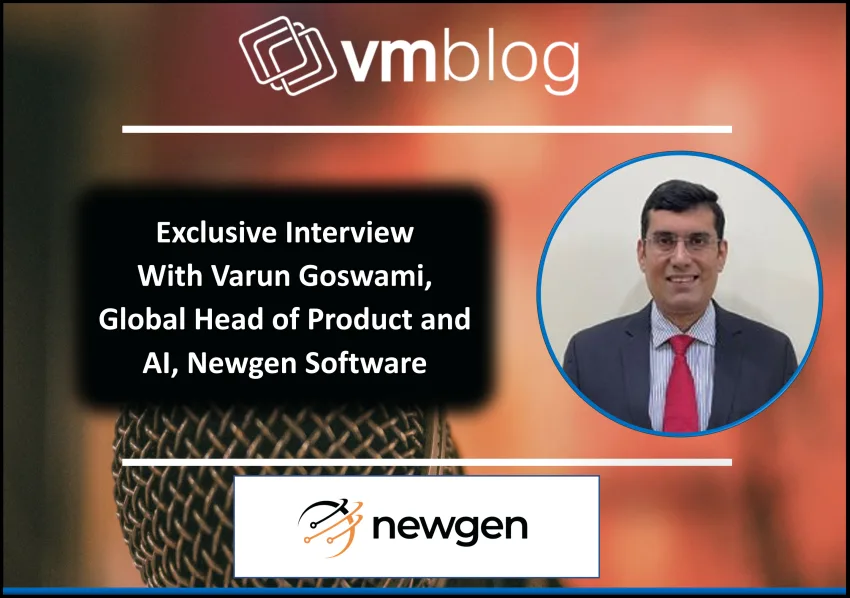
In this exclusive VMblog interview, Varun Goswami, Global Head of Product and AI at Newgen Software, explores the architectural shifts required to build these operational agents, from implementing stateful designs and modular workflows to establishing secure tool orchestration. Goswami delves into critical considerations for multi-agent ecosystems, including trust mechanisms, interoperability standards, and the governance frameworks necessary to ensure these autonomous systems operate with the same discipline and compliance as an organization’s best-trained employees. As enterprises seek to scale AI beyond simple automation, understanding these foundational principles becomes essential for building truly intelligent, accountable, and trustworthy AI systems.
++
VMblog: How does Agentic AI differ from traditional GenAI applications like chatbots or copilots?
Varun Goswami: Agentic AI is a fundamental shift. Traditional GenAI, such as chatbots or copilots, handles one-off questions or isolated tasks. But in enterprise environments, that’s not enough. Agentic AI introduces autonomy, statefulness, and goal-driven executions into systems. Think of it as going from an assistant who answers questions to a capable colleague who can own a process end-to-end.
For example, a GenAI bot might summarize a customer’s credit card transaction history for a year. However, an Agentic AI system can analyze spending needs, identify the most suitable credit card-based spending patterns, secure necessary compliance checks from regulatory bodies, and offer hyper-personalized products that map with the customer’s latent needs, all while adhering to stringent banking regulations. That continuity, compliance, and integration level demands an entirely different architectural mindset. We’re not building simple chat interfaces anymore; we’re building operational agents that can drive real financial outcomes.
VMblog: What design patterns enable the transition from stateless GenAI to goal-oriented AI Agents?
Goswami: The shift starts with three principles: stateful architectures, modularity, and secure tool orchestration.
First, agents need to remember. Stateful design allows them to carry context across sessions, which is vital when guiding someone through a mortgage application or an insurance claim. Second, modular workflows break complex tasks into manageable, auditable sub-tasks. I might design an insurance claims agent that delegates fraud detection to one sub-agent and payout validation to another, with a fallback to a human if confidence drops. And third, agents must play within boundaries. Secure orchestration ensures they use tools correctly, like querying HIPAA-compliant databases or triggering payments only after proper approvals. These design patterns aren’t just technical but operational safeguards.
VMblog: How will multi-agent ecosystems ensure trust and interoperability between autonomous agents?
Goswami: We won’t scale Agentic AI without trust, especially in regulated industries. That’s why we advocate for auditable, standards-based collaboration.
For instance, agents transacting across financial institutions should verify one another using digital signatures and log all interactions on tamper-proof ledgers. In healthcare, interoperability must revolve around FHIR standards and consent-aware access logs. I also see an immense role for reputation systems. Agents should earn trust based on historical performance, like how often a claims agent’s decisions align with post-review outcomes.
This isn’t optional. It’s how we make autonomous agents intelligent, compliant, and trustworthy across ecosystems.
VMblog: What new interface designs are needed to effectively monitor and control Agentic AI systems?
Goswami: We need interfaces that let humans stay in the loop without micromanaging the agents.
That means real-time dashboards that surface the why behind decisions, not just the what. If an agent denies a loan, I want to see the risk threshold flagged, the documents it reviewed, and the probability of default it calculated to explain the suggestion. In insurance, the AI agent can review all medical reports and prescriptions to assist the underwriter with the proper premium calculation and risk assessment.
For risk-heavy environments, “what-if” simulators are critical. They let business users test agent behavior under stress scenarios without touching code. Governance, in my view, must be embedded, not bolted on.
VMblog: Why is agent orchestration replacing traditional prompt engineering, and what challenges does this introduce?
Goswami: Prompt engineering got us started, but it’s brittle. You can’t prompt your way through a 10-step claims settlement or a cross-border payment approval.
Agent orchestration involves assembling specialized agents, each with a role, a memory, and a clear boundary. However, this introduces new risks, like state desynchronization or compliance drift. Imagine a claims agent making decisions based on outdated fraud signals or a cost-saving agent skipping mandatory disclosures.
To mitigate this, orchestration logic must enforce shared memory, mutual checks, and embedded compliance hooks. I see this as the real craft of enterprise AI: designing interactions between agents, not just their outputs.
VMblog: What infrastructure and safeguards are necessary to ensure safe and reliable tool-use by autonomous agents?
Goswami: We need infrastructure that’s Zero Trust by design and guardrail-first by function. That starts with Least Privilege Access. An agent shouldn’t access anything it doesn’t absolutely need. Secure API gateways, encrypted data layers, and automated redaction must be standard. For instance, if a diagnostic agent pulls medical data, it should receive only anonymized fields unless a user flags otherwise.
Fail-safes are equally critical. Circuit breakers should shut agents down on anomalies, like a trading agent breaching risk thresholds. And every action should be logged with a rationale. If an agent denies a claim, I want to see the exact policy clause it invoked. This is how we ensure agents are not just acting but accountable.
Agentic AI isn’t just about intelligence; it’s about institutional trust. Whether in finance, healthcare, or insurance, your AI systems must act with the same discipline, transparency, and compliance as your best-trained employees. That’s the bar we’re setting-and meeting-at Newgen.
##