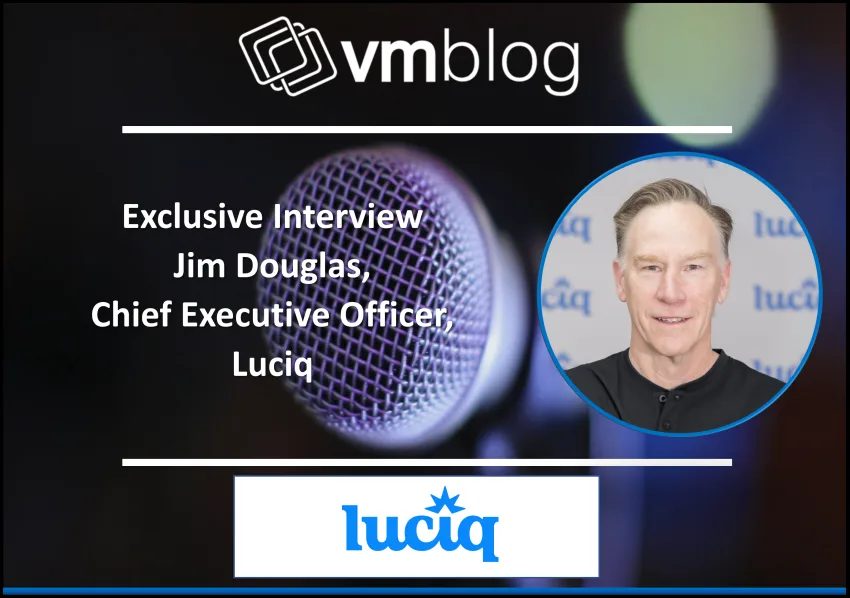
Luciq’s recent rebrand marks a strategic inflection point in the evolution of mobile observability. Formerly known as Instabug, the company has transformed from a trusted developer tool into the first and leading Agentic Observability platform built exclusively for mobile. As mobile teams face mounting pressure to deliver seamless experiences across fragmented devices, release cycles, and AI-driven workflows, Luciq is closing the loop on a chaotic, manual maintenance lifecycle.
In this exclusive VMblog interview, CEO Jim Douglas shares how Luciq‘s AI-powered agents are redefining mobile observability – from autonomously detecting and diagnosing issues to generating fixes and pull request – helping engineering, product, and QA leaders cut maintenance workloads, accelerate time-to-fix, and protect brand reputation.
++
VMblog: What prompted the decision to rebrand now and how does the timing align with where you see the company heading over the next 3-5 years?
Jim Douglas: This rebrand reflects a strategic inflection point. Our original product, Instabug, evolved from a developer tool into a broader platform: Luciq, the first and leading Agentic Mobile Observability platform. We’re closing the loop on a chaotic, manual maintenance lifecycle. Over the next three to five years, our focus is on transforming mobile maintenance from a reactive chore into an automated process, powered by AI agents that detect, diagnose, and resolve issues autonomously.
VMblog: Does this rebrand signal an intention to broaden your audience or is this about deepening your connection with your core technical audience?
Douglas: Luciq deepens our connection with mobile engineering teams while expanding our relevance across product, QA, and business leadership. Our platform is designed to serve VPs of Engineering and CIOs, as well as Product Owners and QA Leads. Luciq translates mobile engineering health directly into clear business value, helping teams deliver the outcomes their organizations expect.
VMblog: The developer tools space has become increasingly crowded, with observability, monitoring, and debugging solutions converging. How does this rebrand help you differentiate from competitors, and what specific message are you trying to communicate about your unique position in the market?
Douglas: Luciq is not just another observability tool. We are pioneering Agentic Mobile Observability: a fundamental paradigm shift from traditional monitoring to a system of AI-powered agents designed to augment your team’s productivity. Unlike tools that only alert you to problems, Luciq autonomously detects issues, generates fixes, and even creates pull requests. Our message is simple: Fix nothing. Build something that matters.
VMblog: Does your rebrand reflect an expanded technical scope or new capabilities you’re bringing to market? What new problem spaces are you moving into with your product roadmap?
Douglas: Yes. Luciq is purpose-built for the unique complexity of mobile apps. We’re expanding into automated diagnostics, frustration scoring, smart triage, and resolution workflows that include feature flag management and automated pull requests. Our roadmap includes agentic components that will autonomously prevent issues before they impact users, protecting revenue, retention, and brand reputation.
VMblog: How do you see Luciq’s role evolving in the developer’s day-to-day toolkit?
Douglas: Luciq is becoming a proactive teammate, not just a passive tool. Developers use Luciq to eliminate manual toil. Automated bug reproduction, smart triage, and contextual insights mean less time debugging and more time building. We provide the exact context they need to move from reactive firefighting to proactive, impactful development.
VMblog: End-user experience is the final measure of success in mobile applications. How do you help brands understand their end-user experiences, both positive and negative?
Douglas: Luciq captures every signal affecting user experience, from crashes and slow launches to UI glitches and rage clicks. We provide Session Replay, User Voice, and Frustration-Free Score to surface what users actually experience. This helps brands correlate technical performance with business outcomes like churn, retention, and revenue capture.
VMblog: Agentic AI is transforming how developers work. What’s your strategy here? And how does that change the value proposition from a tool developers use to an agent that works alongside them?
Douglas: Luciq transforms raw data into automated outcomes. Our platform is powered by AI agents that don’t just observe, they act. This changes the value proposition from observability to autonomy. Developers aren’t just using Luciq; they’re building with it. Our agentic workflows are designed to scale people, not just technology.
VMblog: If we’re moving toward a future where AI agents are writing more code and potentially introducing new categories of errors, how does that change what you’re building?
Douglas: It raises the bar for observability. Luciq is built to handle the complexity of AI-generated code by providing rich, contextual data that enables intelligent agents to act with precision. Our platform is designed to detect novel error types, correlate them with user impact, and resolve them proactively, ensuring quality at scale in an increasingly autonomous development landscape.
##
Jim Douglas is the Chief Executive Officer of Luciq, the first and leading Agentic Observability platform built exclusively for mobile. Luciq closes the loop on a chaotic, manual maintenance lifecycle. Unlike traditional tools that leave engineers to debug and fix, Luciq empowers your team by autonomously detecting issues, generating fixes, and even creating automated pull requests. By doing so, Luciq dramatically reduces time-to-fix and cuts maintenance workloads by up to 50%, freeing your team to focus on building new features and driving business growth. It’s mobile observability, revolutionized by AI!