AI-driven development is helping engineering teams ship code faster than ever, but that speed comes with a catch. According to New Relic’s 2026 AI coding report, 94% of respondents rate AI-generated code as higher quality, yet 78% still report more incidents once it ships. The challenge isn’t the code itself; it’s shipping faster than teams can validate it.
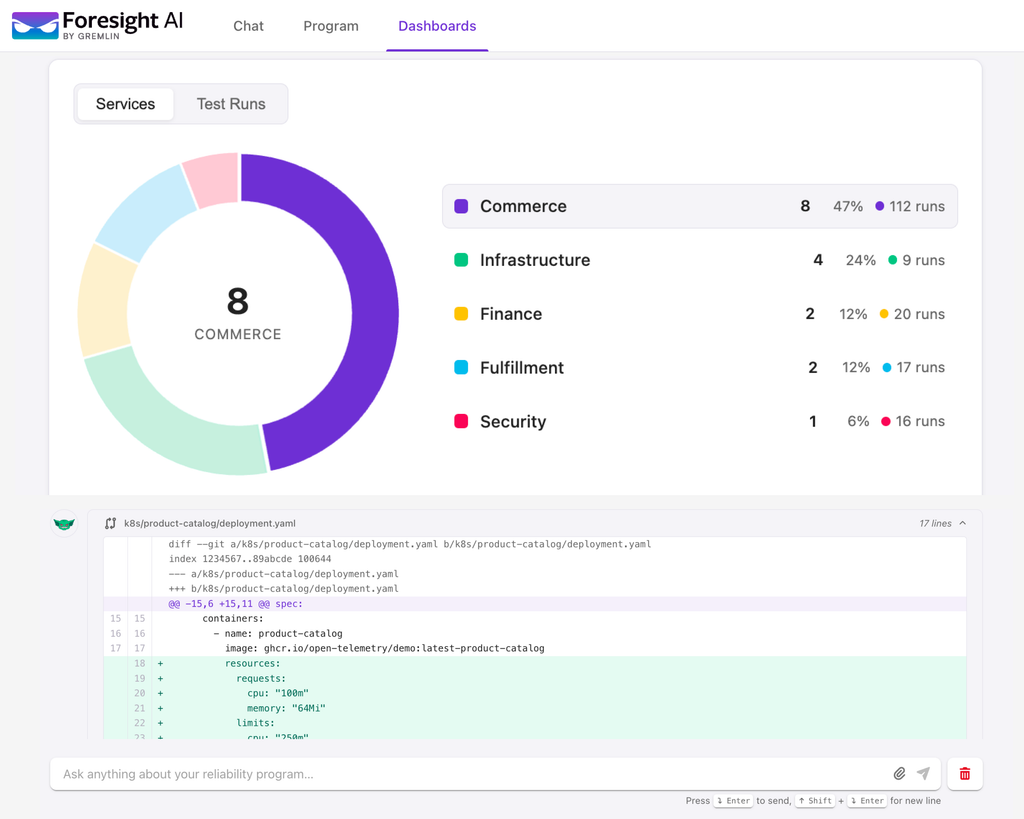
Gremlin is tackling that problem with the launch of Foresight AI, which builds on a decade of real-world data about how systems fail and recover. Rather than waiting for things to break, Foresight AI proactively runs a suite of tests to find reliability risks, and it re-runs them after a fix to confirm the problem is truly resolved. In this VMblog Q&A, Gremlin CEO Kolton Andrus explains what Foresight AI does, how it fits into the company’s story since 2017, and why he believes resilience is what makes moving at high speed possible.
++
VMblog: Congratulations on the launch of Foresight AI. Can you give us a high-level overview of what it does and how it does it?
Kolton Andrus: Thank you.
To start, we built Foresight AI on top of a decade of real-world data around how systems fail and recover. We’ve been helping engineering teams proactively test their systems for a long time now, so we just have a lot of useful data that no LLM or AI SRE tool will have.
It’s been in beta for a few months and it’s already proven that it can identify and address reliability risks proactively by running a suite of tests. This is unique because unlike other AI-driven tools in operations that wait until things break and then react, we are helping to find those fault lines and weak spots ahead of time so you can fix them and keep moving fast.
VMblog: What are the main benefits enterprises will get from using Foresight AI?
Andrus: The biggest benefit is the confidence in knowing your systems will hold up as your velocity 10Xs due to AI-driven development. Because we all want the productivity gains that come from shipping code faster than ever, but just like a race car… the faster you are going, the higher the potential for disaster if things go off track. To be a bit more specific:
- Speed without more incidents. Incidents are rising alongside code velocity. Foresight finds the weak spots before they turn into outages.
- Fixes backed by evidence. Foresight re-runs the test after a fix is implemented to ensure that it worked. An alert going quiet doesn’t prove you fixed the root cause; a test that passes under real failure conditions does.
- A reliability program that scales. Reliability work often gets pushed aside because teams don’t have the time or the expertise to do it. Foresight’s agents take on that work, and built-in reporting shows leadership that it’s paying off.
VMblog: How does this fit into the overall narrative about Gremlin. Is it a departure? Is it a continuation?
Andrus: It’s a continuation. This gets us closer than ever to realizing our vision of providing every engineering organization with the tools they need to achieve high availability.
We started back in 2017 with a suite of Chaos Engineering tests that teams could run safely, but a lot of that work was manual. Engineers needed to decide what to test, observe the results, figure out what fix to implement, etc. This took a lot of time and resources that most organizations outside of FAANG-like companies simply don’t have.
Foresight AI now does that work for you. And it runs on top of the Gremlin platform, so it uses the same safety controls and enterprise features our customers already trust. If you think of Gremlin as a strength-training gym for your systems, people have historically found all sorts of excuses not to do the work…but if you could get the results in your sleep, then what excuse do you have left not to do it?
VMblog: Do you think with Foresight AI out in the wild teams have less of an excuse to not be more proactive about their reliability?
Andrus: Yes. Proactive reliability used to take a real commitment of expertise and time, which made it easy to push down the priority list. Now you can put AI agents to work on the analysis, testing and remediation, so prioritizing reliability doesn’t mean pulling your best engineers off everything else.
And waiting for things to break isn’t a workable plan anymore. With AI shipping code faster than teams can validate it, a purely reactive approach means more incidents, more often. This is related to my response to the question before: you can think of Foresight AI as going to the gym and eating healthy; and you can think of AI SRE and incident management tools as taking medicine when you get sick. Both are important and you’ll definitely still need medicine sometimes. But I think teams should do what they can to make sure their systems stay healthy and robust.
VMblog: Would you consider it a hamster wheel? The fact that AI-driven development will necessitate AI tools like yours for reliability, or others in security, in order to keep up? Put another way: are we creating messes we then need to clean up, or is there net positive value for businesses in the AI era?
Andrus: New Relic’s 2026 AI coding report found that 94% of respondents rate AI-generated code as actually higher quality. And yet 78% still report more incidents once it ships. That means code quality isn’t the problem – shipping faster than you can validate is.
The reality is that every time an industry gets faster, it builds safety systems to match. Race cars have the best brakes in the world; nobody calls brakes a limitation on speed, it’s what actually makes moving at high speeds possible.
I think overall the value for business is clearly net positive. They keep the speed AI gives them, and resilience keeps up so you can have your cake and eat it, too.
##