Ransomware recovery just got significantly faster. Index Engines has announced the global availability of Hitachi Vantara Ransomware Detection Powered by CyberSense�, a partnership that promises to fundamentally change how enterprises approach cyber resilience. The collaboration brings together Index Engines’ AI-driven detection technology, which boasts 99.99% accuracy in identifying ransomware corruption, with Hitachi Vantara’s VSP One Block hybrid cloud infrastructure. The result is a solution that doesn’t just help organizations survive attacks, but recover from them with unprecedented speed: verified clean snapshots can be restored in as little as 30 seconds, up to twice as fast as competing offerings.
What makes this partnership particularly compelling is its departure from conventional wisdom around data protection. While immutability has long been considered the gold standard for securing backup data, this solution exposes a critical vulnerability: immutable snapshots can preserve already-compromised data if ransomware has been lurking undetected in systems. By combining Hitachi Vantara’s immutable storage with CyberSense’s continuous byte-level content inspection, the integrated platform validates that recovery points are genuinely clean before restoration begins. In an era where the average ransomware recovery takes weeks and costs millions, the ability to restore operations in seconds, with SLA-backed guarantees, represents more than incremental improvement. It’s a fundamental shift in how enterprises can approach business continuity under fire.
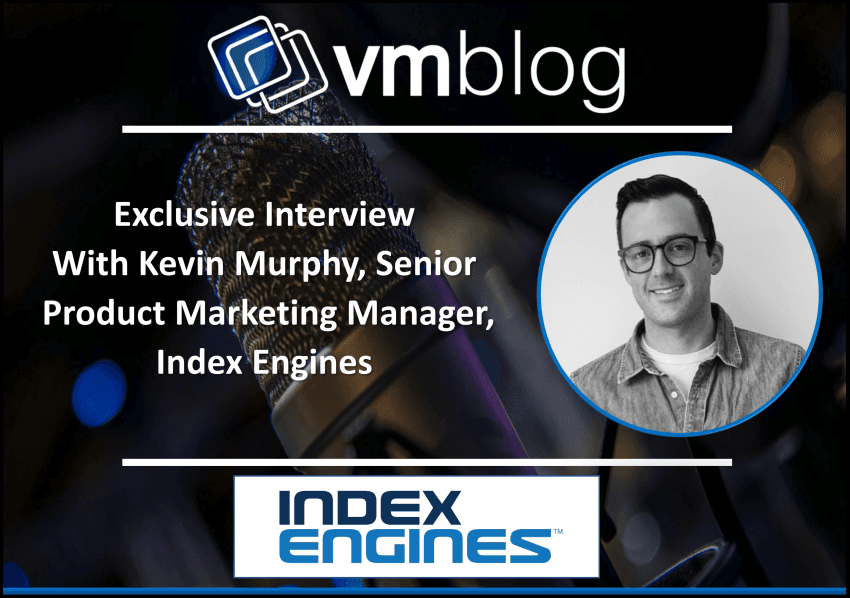
To learn more, VMblog spoke to Kevin Murphy, Senior Product Marketing Manager, at Index Engines, to get the full story.
++
VMblog: I hear Index Engines just announced GA with a fourth storage partner – can you share a little about the latest partnership?
Kevin Murphy: We’re thrilled to announce that Hitachi Vantara Ransomware Detection Powered by CyberSense� is now available globally.
This strategic partnership represents a significant milestone in enterprise cyber resilience, uniting Index Engines’ AI-driven CyberSense technology, which detects ransomware with 99.99% accuracy, and Hitachi Vantara’s battle-tested VSP One Block hybrid cloud infrastructure.
The result is a unified, integrated solution purpose-built to help organizations not only survive ransomware attacks but also recover with speed and certainty. In the business world today, where the average ransomware recovery can take weeks and cost millions, having a solution that delivers verified clean data restoration is critical.
VMblog: What’s so unique about this partnership?
Murphy: While each of our storage partners brings exceptional value, the collaboration between Index Engines and Hitachi Vantara stands out for its convergence of AI precision and infrastructure resilience.
Index Engines contributes CyberSense technology that performs byte-level content inspection using AI/ML algorithms, achieving 99.99% accuracy in detecting ransomware corruption, as independently validated by the Enterprise Strategy Group (ESG). Hitachi Vantara brings enterprise-grade, always-available storage with VSP One Block, designed for mission-critical workloads.
However, what truly differentiates this partnership is that we deliver an SLA-backed guarantee for clean data recovery that’s up to twice as fast as competing solutions. Organizations can restore verified clean snapshots in as little as 30 seconds. That’s not just impressive; it’s transformative. When every minute of downtime can mean hundreds of thousands in lost revenue, regulatory fines, or reputational damage, this speed advantage becomes a business imperative.
VMblog: You mentioned a 99.99% SLA and a 30 second restore time. Those both sound incredibly impressive – can you take me through these numbers and what they mean for customers?
Murphy: Sure. Let’s break down what these numbers mean in practice.
The 99.99% accuracy SLA is our measurable, independently validated commitment to detecting ransomware-induced data corruption with forensic-level accuracy. This validation comes from Enterprise Strategy Group (ESG), ensuring it’s not just an abstract marketing term�it’s verified performance. For customers, this means dramatically reduced false positives and the confidence that when CyberSense raises an alert, it demands immediate attention. You’re not chasing ghost threats or, worse, missing real ones.
The 30-second restore capability addresses one of the most painful aspects of ransomware recovery: time to restoration. Traditional backup systems can take hours or even days to identify clean recovery points and restore data. Our integrated solution leverages Hitachi Vantara’s immutable snapshots combined with CyberSense’s AI validation to pinpoint the last known clean copy and initiate recovery in as little as 30 seconds per validated snapshot.
Consider the business impact: If you’re a hospital, that means patient care is restored in seconds. If you’re a financial institution, transactions will be flowing again before competitors can capitalize on your downtime. If you’re manufacturing, that means getting production lines back online before supply chains rupture. This is about technical performance and business continuity at an enterprise scale.
VMblog: For a while, immutability seemed like the gold standard for protecting data, just lock it up and it’s safe. This solution goes far beyond that – why is immutability no longer enough?
Murphy: Immutability is necessary, but it’s no longer sufficient. It only guarantees that data can’t be changed after it’s written. It doesn’t guarantee that the data was clean when it was captured.
Modern ransomware operators are sophisticated adversaries. They infiltrate systems, establish persistence, and then lie dormant, sometimes for weeks or months. During this “dwell time,” they’re encrypting or corrupting data slowly, methodically, often below detection thresholds. When your backup system takes an immutable snapshot, you may be preserving already-compromised data. You’ve essentially locked the ransomware inside your vault.
This is where CyberSense fundamentally changes the equation. Rather than assuming immutable snapshots are clean, we continuously analyze them using AI-powered, byte-level content inspection. We’re looking for Indicators of Compromise (IOCs) within the actual files, not just perimeter defenses or file signatures. We examine the DNA of your data.
No signatures. No pattern matching. No assumptions. Just forensic-level validation that your recovery point is genuinely clean. When you combine Hitachi Vantara’s immutable infrastructure with CyberSense’s AI validation, you get both security AND integrity, which is what true cyber resilience requires.
VMblog: This solution really aligns closely with NIST 2 Cybersecurity Framework, was this by design?
Murphy: Absolutely, and it’s an alignment we’re keen to strengthen moving forward. Many organizations are actively working to implement the NIST Cybersecurity Framework 2.0, and we believe our combined solution uniquely supports all five core functions in ways that traditional backup and recovery simply cannot.
Here’s how we map to each function:
Identify: CyberSense indexes and analyzes both metadata and content at a massive scale, giving organizations comprehensive visibility into their data landscape. This helps security teams understand not just what data they have, but also identify potential risks, anomalies, and exposure related to corruption or tampering before an incident occurs.
Protect: Hitachi Vantara provides the foundation with immutable storage, encryption, and air-gapped snapshots. But CyberSense adds a critical layer by continuously validating backup integrity and protecting against the hidden threat of ransomware dwell time. Even if attackers breach your perimeter, contaminated data is quickly identified, establishing an essential layer of protection against restoring compromised data.
Detect: This is where AI/ML becomes transformative. CyberSense detects indicators of ransomware or sabotage in backup data with a 99.99% accuracy rate. We flag anomalies, corruption patterns, and IOCs that signature-based tools and traditional backup validation completely miss. Early detection means earlier response�often before production systems are impacted.
Respond & Recover: When an attack occurs, CyberSense identifies the precise last known clean copy of your data and enables surgical, targeted recovery. No guesswork about which backup to trust. No restoring and discovering corruption days later. Just fast, verified restoration that gets your business operational again, which is exactly what the NIST Recover function calls for.
This wasn’t accidental. The solution was built with NIST best practices as a guiding framework, because we know organizations need recovery processes that align with industry standards while delivering measurable outcome.
VMblog: If someone wants to learn more about the partnership or implement this in 2025, where should they go?
Murphy: The best starting point is our CyberSense for Hitachi Vantara page on the Index Engines website. There you’ll find plenty of resources that demonstrate real-world impact.
For personalized engagement�whether you need a technical demo, a pricing discussion, or want to explore how this solution fits your specific environment, please reach out directly to our team at [email protected]. We’re actively working with organizations planning their cyber resilience investments, and we’d welcome the opportunity to show you what SLA-backed, AI-verified recovery looks like in action.
Given the evolving threat landscape and increasing regulatory pressure around data protection, now is the ideal time to evaluate whether your current backup and recovery strategy can truly deliver when it matters most.
##