As the complexity of enterprise network environments continues to grow, so does the challenge of managing firewall rules, maintaining compliance, and responding to risks in real-time. FireMon is tackling that head-on with the latest updates of FireMon Insights, its AI-powered analytics platform designed to illuminate and automate policy risk management at scale.
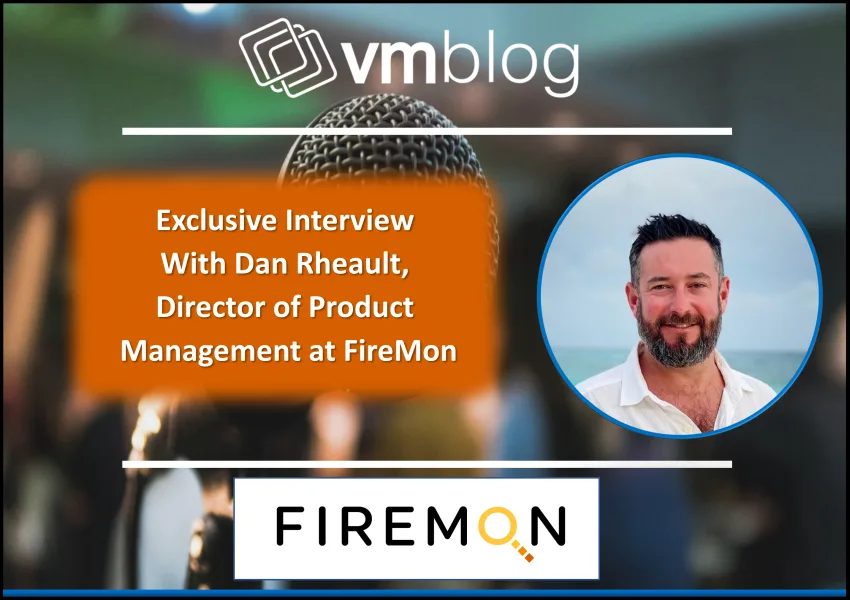
In this exclusive VMblog Q&A, we sat down with FireMon’s Dan Rheault, Director of Product Management, to unpack the major enhancements, including natural language AI capabilities, peer benchmarking, and policy intelligence that reaches far beyond the SOC. With industry-first data on firewall compliance failures and policy clutter, the conversation reveals how FireMon is helping teams move from firefighting to governance, and what’s next for a platform that’s fast becoming core to Zero Trust execution.
VMblog: For readers who may be new to FireMon, what is FireMon Insights, and why is it getting so much attention right now?
Dan Rheault: Insights is our new analytics platform that gives enterprises a real-time view into the health of their firewall environments, and it can be more easily interrogated and understood using AI. Think of it like a diagnostic engine for network security policies, but with the context of industry benchmarks, business impact, and guidance built in.
What’s getting people’s attention is the clarity it brings. Most tools just spit out alerts or static reports. FireMon Insights goes further. It shows you where your most business-critical risks are, how they compare to your peers, and what remediation and mitigation options are available, all in one interface. It helps teams stop reacting and start governing proactively. Understanding where the most impactful changes can be made today means six months down the road, you’re in a much better place.
VMblog: This latest release includes some serious findings. What surprised you the most?
Rheault: The compliance failure rates were eye-opening. When we first deployed the solution across multiple organizations that were not using FireMon, we found that sixty percent of enterprise firewalls failed high-severity checks immediately, and another 34% failed at the critical level. This is a significant operational red flag that points to deeper governance issues that could derail audits, open up security gaps, and even disrupt business continuity.
The other big surprise? The sheer amount of unused policy clutter. Nearly 30% of firewall rules show zero usage. Over 60% don’t have an owner. That kind of policy bloat slows down teams and obscures the real risks, let alone the detrimental impact on firewalls themselves.
VMblog: How does FireMon Insights actually help security and IT teams respond to those issues?
Rheault: First, it gives teams visibility they can trust. Whether you’re managing one vendor or a hybrid, multi-vendor environment, FireMon Insights brings it all together in real time. That means no more swiveling across multiple consoles or sifting through outdated dashboards – you can understand network security holistically across your environment, or limit it to the most critical networking environments within the enterprise.
Second, it benchmarks your environment against internal goals and industry peers, which isn’t just a FireMon first, but an industry first. This helps teams prioritize where to focus and gives CISOs the metrics they need to guide strategy, justify budgets for necessary tooling or projects, and not just maintain the status quo firefight.
And third, Insights helps drive actionable outcomes. With these updates, we’ve deepened integration with FireMon Policy Manager, so when you spot a problem, for instance, a redundant rule, a compliance gap, or a risky configuration, you can understand its contextual importance to the business and take the appropriate action.
VMblog: Let’s talk about the AI side. What’s new in Insights on that front?
Rheault: Insights introduces a natural language AI search and chatbot experience. That means any team member (not just seasoned analysts) can ask questions in plain English like “Which devices failed compliance checks this week?” and get instant, actionable answers. Non-technical executives can understand risk and network security outcomes without being familiar with the underlying technologies, which netsec engineers can expedite troubleshooting, and app developers can understand if any network changes are even needed for an application.
This is part of our mission to democratize policy intelligence. Security tools shouldn’t require a litany of certifications to understand their outputs. With Insights, we’re making risk understandable, explainable, and consequently actionable across all stakeholders.
VMblog: What are some of the new features customers are most excited about?
Rheault: Three things stand out.
First, Device-Level Metrics now give teams richer context. We group data by complexity, risk, and environment so you can zoom in on high-impact issues fast.
Second, the new peer benchmarking feature lets customers see how they’re doing relative to others in the industry. That’s been a huge hit with security leaders who want to validate performance and set realistic goals. It’s also the first anonymized benchmark available to support necessary and informed investments in security to reduce risk.
And third, everything we’re delivering in 1.5 (think AI tools, integrations, and benchmarks) is included at no extra cost. That’s a big deal in a market where most vendors charge for every new feature.
VMblog: What kind of feedback are you hearing from early adopters?
Rheault: Engagement has been exceptional, and I think a big part of that is due to the intelligence aligned to industry trends. Customers are using Insights to justify budget requests, prioritize fixes, and show tangible progress over time. We’ve heard from teams who uncovered massive policy gaps they didn’t know existed and had the tools to fix them before audit season hit.
We’re also seeing cross-functional adoption. App teams, IT ops, and governance folks are logging in, not just the security team. That’s when you know a product has moved beyond the SOC when it starts guiding decisions across the business. Our customers are cutting down on wasted time on tickets, security is reducing mean-time-to-resolution for incident response, and executives are better informed in more concise formats.
VMblog: With this momentum, what’s next for FireMon Insights?
Rheault: We’re just getting started. FireMon Insights is central to how we’re helping customers execute on Zero Trust and microsegmentation strategies. We’ve always said that if you can’t see what’s happening inside your network, you can’t protect it. That’s why visibility, benchmarking, and automation are so key.
In future releases, expect to see deeper integrations, increased AI capabilities, and more capabilities to have meaningful dashboards consumable across all levels of stakeholders. The goal is to make policy risk management an integrated and enabling part of business operations.
##