
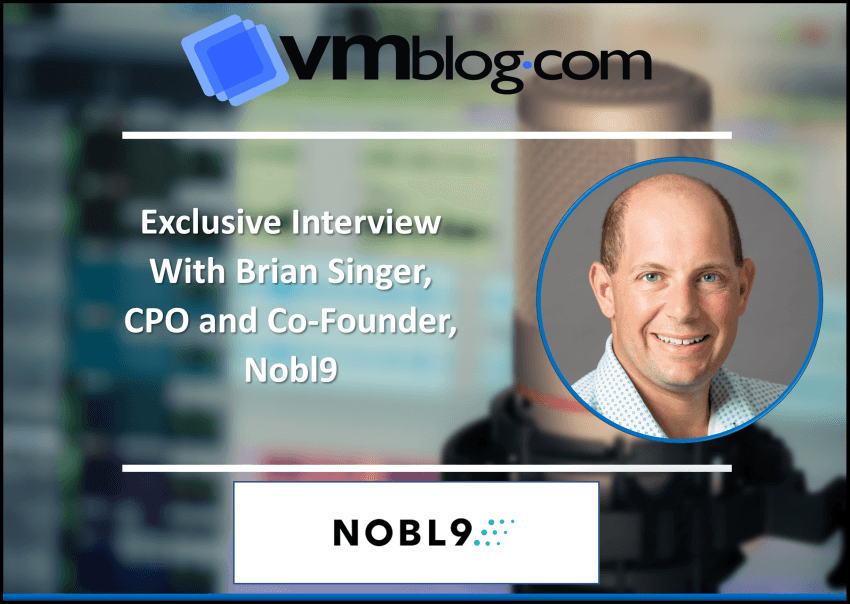
As today’s distributed systems become increasingly complex, maintaining reliable performance is harder than ever. Beyond typical monitoring and observability tooling, many organizations are utilizing Service Level Objectives (SLOs) to get a clearer picture of system performance. Nobl9, which provides a comprehensive SLO platform, today announced new advanced capabilities with Nobl9 Composite SLO 2.0. To learn more about the release and composite SLOs, I spoke with Brian Singer, Nobl9’s CPO and cofounder.
VMblog: It’s been a while since we’ve spoken about updates to Nobl9’s platform. What’s new with Nobl9, and how has the platform evolved in 2024?
Brian Singer: 2024 has been an eventful year in the reliability world, with some major outages that remind us about the importance of resilient systems. We have been working hard this year to update our platform, Nobl9 Reliability Center, to enable mature reliability practices for organizations of all types. We released several product updates in the first half of 2024 that make it easier to manage complex software, like a redesigned UI to add structure to user journey SLOs and reduce noise, and more customizable alerting to combat alert fatigue.
More recently, we released two game-changing features that make it easier to effectively manage SLOs and stay ahead of potential issues. The System Health Review Report adds a true executive view of system reliability, rolling up data from thousands of SLOs to provide a granular view of business performance. Meanwhile, the new Alerting Center centralizes all the alerts firing within an organization in one easily accessible place, presenting past and active alerts in a single timeline to help users understand how reliability unfolds over time. And of course, today we are releasing Composite SLO 2.0.
VMblog: What are the key features of Composite SLO 2.0, and what should users expect with this new release?
Singer: Composite SLO 2.0 unlocks user journey SLOs at scale. It allows for the aggregation of multiple SLOs within a single SLO to provide a consolidated view of reliability for a service or user journey. The addition of composites allows users to capture an end-to-end user journey for a complex service such as an ecommerce website or a digital banking platform. These composite SLOs can be differentiated by business units or use cases, enabling IT leaders to link their strategy directly to business impact. Managers can aggregate these composites into a unified overarching hierarchy to view the entire system’s performance holistically, with rich context of each component’s behavior easily accessible in a single dashboard.
The key feature here is the ability to create composites from a large number of SLOs. By aggregating SLOs from many components of a system into a single hierarchy, teams and executives gain a reliability metric for their entire product or service. Another crucial feature is that users can combine data from different data sources and projects, uniting SLOs based on data from Dynatrace, Amazon CloudWatch, and other sources for maximum flexibility. This enables more management-oriented SLOs that can be tailored to each ongoing project.
Composite SLO 2.0 also makes it easy to identify the “biggest offenders” – the components consuming the most error budget. Because composite SLOs roll up the behavior of complex systems in one place, users can drill down into the error budget consumption of each component to understand the root causes of issues, which is what reliability is all about. Further, users can assign “weights” to each SLO within a composite, ensuring that SLOs with the largest impact on end-user experience contribute more to error budget burn. One more powerful feature is the ability to build composites out of other composites, which means teams can create SLOs of near-infinite size and complexity out of any existing composites. This offers truly comprehensive, unified reliability metrics.
VMblog: Can you tell us more about how Composite SLO 2.0 moves beyond traditional SLOs?
Singer: Traditional SLOs are great, they are the core of our platform and offer important insight. However, they lack information on how an element affects the total reliability of the system. Composite SLO 2.0 brings this critical context, allowing teams to link individual elements into a dynamic system-wide SLO. Composites can be built from any SLOs in an organization; they are not limited to certain projects or areas. Teams could build these composites layer by layer, with different teams adding their components and then managers overseeing the assembly of system-wide hierarchies.
In contrast, engineers previously would typically create SLOs to track the reliability of system components they were directly responsible for; for example, the checkout process in an eCommerce platform. Now, team members can feed their SLOs into composites and see how their small portion of the system is impacting end-user experience. Providing such perspective not only informs IT decision-making but shows engineers how meaningful their work is to overall customer experience. This release marks years of work at Nobl9 to support folks responsible for reliable products with the most advanced SLO capabilities possible.
VMblog: SLOs are a somewhat advanced reliability management practice. How should organizations think about composite SLOs if they are just beginning to adopt SLOs in the first place?
Singer: It’s a common misconception that SLOs are advanced, but they are very straightforward in practice. My advice for companies just starting out with SLOs is simply to get started. Start with a few critical APIs, set an SLO on latency, and go from there. You can take any metric you have, add it to Nobl9,and have a working SLO. The harder part is the cultural change needed to adopt them for decision making. But that is also the beauty of the technique, because deploying SLOs helps identify all the places where you might be lacking sufficient data to make a decision, and that helps you tweak your SLOs to capture really meaningful data tied to customer experience. At Nobl9, SLOs quickly became the metric engineers wanted to pay attention to.
A composite SLO is just like a normal SLO. Any team using SLOs can take advantage of composites easily, because they behave the same way. They have the same settings: time windows, budgeting method, performance targets, and so on. It is very similar to configure a composite, and they work like a regular SLO with all of Nobl9’s other features. That means composite SLOs work seamlessly with the same alerting and reporting, budget adjustments, annotations, data export capabilities, the Nobl9 Service Health Dashboard, everything. Our goal from the beginning was to make Composite SLO 2.0 compatible with all existing capabilities, so that users do not have to deal with composites any differently. It is simply that the data is coming from a different place – other SLOs. And actually, composite SLOs should simplify things for both engineers and management, because now everyone has a unified view of reliability.
VMblog: Are there particular use cases where Composite SLO 2.0 is most effective, and are there any scenarios when an organization should stick to traditional SLOs?
Singer: I’ll start by highlighting the ideal use cases for traditional SLOs. The first thing to do is look for anywhere that your user community or customer base is asking for more reliability. That is definitely somewhere you should add SLOs. Another great use case is during some kind of change, like upgrading your hardware in a data center, or doing a cloud or database migration, maybe going multi-region whereas before you were only in one. In those scenarios, you are introducing instability to the system and SLOs are the best way to track whether the changes are working as planned. They can guide you towards architectural or infrastructural changes, or perhaps you need some cost tuning.
Composite SLO 2.0 will be most effective after these initial use cases, once an organization has some SLOs up and running and has gotten comfortable enough to rely on them for decision-making. After going through the initial process of figuring out how to map system components to SLOs for maximum customer success, Composite SLO 2.0 offers a groundbreaking new way to improve reliability and user experience by leveraging detailed insights into every aspect of the system. There are no other tools on the market that let you combine SLOs into a large hierarchy, without losing any granularity. You need existing SLOs to make composites, but once you have them I think any company will see immediate value from Composite SLO 2.0, both for engineers and executives.
VMblog: Is there anything else VMblog readers should know? What can users expect from Nobl9 moving forward?
Singer: We are excited to see how the Nobl9 community will use Composite SLO 2.0 to make efficient, informed decisions that improve the reliability of their systems. To try out Composite SLO 2.0, anyone interested should visit https://www.nobl9.com/resources/composite-service-level-objectives-2.0 to see more details and schedule a demo. I would also encourage folks to connect with us on LinkedIn to stay up to date with the latest in SLOs. We will continue to work directly with our customers to understand which new capabilities will be most effective for them moving forward, as they leverage SLOs in their day-to-day decision-making.
I would add that with increased regulatory scrutiny on the horizon, particularly with the EU’s Digital Operational Resilience Act (DORA) coming online in January 2025, the ability to understand and manage technical risk and make real-time decisions about the performance of software systems is more important than ever. At Nobl9, we are committed to helping organizations adapt to regulatory and other industry changes efficiently, easily, and safely – users should expect our platform to evolve in line with that goal.
##
About Brian Singer
Brian Singer is the Cofounder and Chief Product Officer at Nobl9. Singer is a product-focused entrepreneur with a passion for enterprise software, cloud computing, and reliability engineering and in-depth knowledge of cloud and SaaS technologies and markets. He is an experienced leader, skilled at translating customer requirements into scalable business models and executing on ideas to drive revenue growth. Singer holds a BS in Computer Engineering from Brown University and an MBA from MIT.



