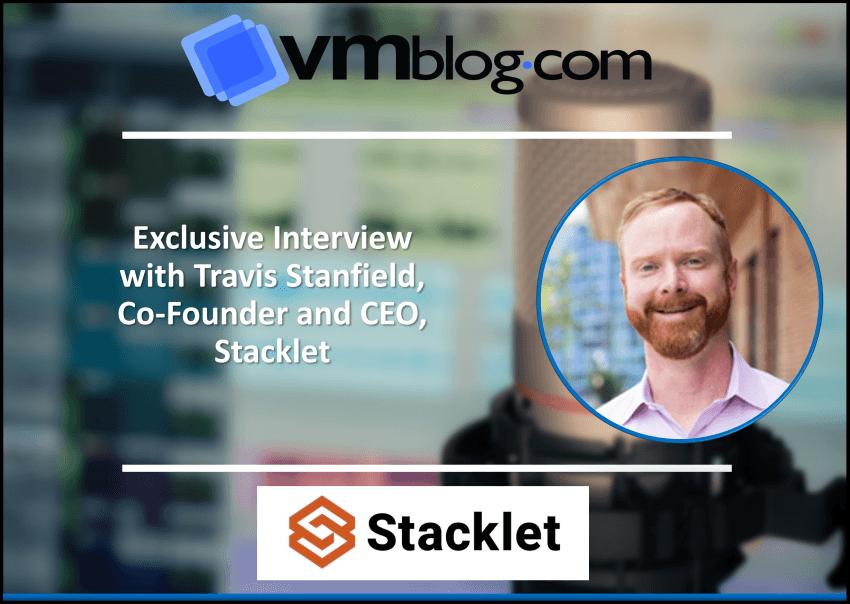
In today’s fast-paced digital landscape, businesses are increasingly turning to public cloud services to drive innovation and efficiency. However, with the rapid growth in cloud spending, companies are facing significant challenges in managing their expenses effectively. The recent “State of Cloud Usage Optimization 2024” survey conducted by Stacklet sheds light on these obstacles enterprises face in optimizing their cloud spend, particularly in light of the growing reliance and adoption of AI. To dive deeper into these findings and discuss strategies for optimizing cloud spending, I sat down with Travis Stanfield, co-founder and CEO of Stacklet.
VMblog: Can you tell us about the motivation behind this survey and some of the key findings?
Travis Stanfield: We conducted this survey to gain a deeper understanding of how enterprises are managing their increasing reliance on public clouds, and the challenges they face in optimizing cloud usage. We engaged over 300 respondents from mid- to large-sized enterprises to capture their experiences with cloud spend optimization. With cloud spending projected to reach $805 billion in 2024, it’s important to understand the factors driving costs and identify areas for improvement.
Our survey revealed some alarming trends in cloud spend and usage, including that 78% of respondents estimate that 21-50% of their cloud spend is wasted. This waste can largely be attributed to preventable mistakes and inefficiencies, such as manual processes and a lack of visibility into cloud resources. On average, companies are losing over $50,000 each month due to these issues, with 15% reporting losses that exceed $75,000.
VMblog: What are some of the most common mistakes leading to cloud waste or inefficiencies?
Stanfield: The survey revealed several key factors contributing to cloud waste and inefficiencies. One notable issue, cited by 50% of respondents, is excessive log and data retention, occurring when organizations hold onto data far longer than necessary, leading to unnecessary storage costs and resource consumption.
Another prevalent mistake recognized by 49% of participants is incorrect resource sizing and type. Companies often miscalculate the resources required for their workloads, leading to either over-provisioning or under-provisioning, both of which can drive up costs. Costly AI experiments also play a large role, with 48% of respondents acknowledging this as a factor. As businesses increasingly invest in AI initiatives, many fail to optimize the related cloud usage, resulting in unexpected expenses.
Lastly, issues with outdated instance types and misconfigured networking were each cited by 48% of respondents. These problems not only create inefficiencies, but also lead to increased spending.
VMblog: How frequently do organizations encounter costly cloud-related mistakes, and what is the typical financial impact?
Stanfield: Our survey found that costly cloud-related mistakes are quite common, with 49% of organizations experiencing them on a monthly basis. The financial impact is substantial, as 62% of respondents reported that these mistakes cost them over $25,000-/0 each month, while 15% of participants revealed that their losses exceeded $75,000 monthly.
These figures illustrate a widespread issue within the industry, as 88% of organizations encounter such costly mistakes multiple times a year, with half of them facing these challenges monthly or even weekly.
VMblog: The survey mentions AI’s impact on cloud complexity and spending. Can you elaborate on how AI is affecting cloud usage?
Stanfield: The survey results clearly show that AI is having a significant impact on cloud usage and costs. An overwhelming 82% of our survey respondents agree that AI is fueling increased cloud complexity and spending, with 45% strongly agreeing. This trend is driven by the rush to leverage AI capabilities, which often requires substantial computational resources and data storage.
A concerning aspect is that many enterprises admit they are not optimizing their AI-related cloud usage sufficiently. This is often linked to expensive AI experiments, which 48% of respondents identified as a common mistake leading to cloud waste.
It’s clear that as AI adoption grows, so does the need for greater visibility and more effective cost controls or guardrails to help enterprises navigate these challenges and reduce waste in their cloud environments.
VMblog: What challenges are organizations facing in optimizing their cloud usage?
Stanfield: Organizations are encountering multiple challenges in optimizing their cloud usage. One of the primary issues is limited visibility into resources and costs, which 59% of our survey respondents identified as a major hurdle. Without clear insights, teams struggle to pinpoint areas of waste, leading to unnecessary expenses.
Manual processes are also a major contributing factor, with 53% of respondents reporting that these processes complicate cloud management. These manual tasks can lead to errors and inconsistencies, and in turn, increase cloud waste.
The growing complexity brought on by AI initiatives further complicates optimization efforts. Many organizations acknowledge they are not adequately optimizing their AI-related cloud usage, leading to costly mistakes.
VMblog: Given these challenges, what strategies can organizations implement to address cloud optimization issues, and how does Stacklet support these efforts?
Stanfield: To tackle cloud usage optimization challenges effectively, organizations should focus on a few key strategies:
- Enhance Visibility: It’s crucial for organizations to gain deeper insights into their cloud resources and spending. This involves implementing tools that provide real-time data on resource usage and costs, empowering teams to make more informed decisions.
- Streamline and Automate Processes: Organizations should streamline their processes to reduce reliance on manual interventions. By adopting automation, organizations can reduce errors and improve overall efficiency in cloud management.
- Establish Preventative Guardrails: To prevent mistakes related to cloud usage, it’s important to conduct regular audits and make necessary updates. This helps ensure that resources are properly configured and performing optimally.
At Stacklet, we support these efforts through our governance as code platform, powered by Cloud Custodian project, which helps organizations cut cloud costs by up to 50%. Our solution helps organizations identify and remediate governance issues while establishing protective measures against recurring problems. By empowering teams with the right tools and insights, we enable them to optimize costs, strengthen security, and maintain compliance effectively.
##