Industry executives and experts share their predictions for 2026. Read them in this 18th annual VMblog.com series exclusive.
By Qing-Jie Li, Senior Application Scientist, Matlantis Inc
Materials science is entering a pivotal moment of accelerated change. Growing pressure to deliver new materials faster – for energy storage, semiconductors, pharmaceuticals, or advanced manufacturing – is colliding with the limits of traditional discovery methods. Well-established computational approaches like density functional theory (DFT) are constrained by scale, cost, and time, often relegating simulation to late-stage validation rather than early-stage exploration. As a result, the pace of materials innovation has struggled to keep up with growing expectations, not only for technology but also for the skillsets required to interpret increasingly complex data.
Today, that dynamic is changing. Advances in artificial intelligence (AI), machine learning, modeling, scalable computing, and digital workforce development are converging to move computation and human insight upstream. Predictive insight is arriving earlier in the discovery process, simulations are becoming more accessible, and researchers themselves are evolving into hybrid scientists capable of bridging traditional domain expertise with computational fluency. These shifts are collectively redefining the foundations of modern materials science.
The Shift from Computational Chemistry to AI-Powered Discovery
While the integration of computational chemistry into materials R&D has been ongoing for some time, we’ll see the rise of AI-powered materials discovery. AI will move decisively upstream. The conversation is no longer just about applying computational chemistry, which is already an established practice, but about leveraging AI to drive it.
Rather than relying on human intuition to narrow the search space, research teams will increasingly use AI models to generate candidate materials, identify promising compositions, and guide experimental design from the outset. This approach allows scientists to explore vast chemical and structural spaces that would be impossible to navigate manually.
The Establishment of Trust in Machine Learning Interatomic Potentials (MLIPs)
Machine Learning Interatomic Potentials (MLIPs) will move from emerging innovation to a trusted standard. Once met with skepticism, MLIPs are now demonstrating consistent accuracy across a growing range of materials classes, and as a result, have been widely adopted across both industry and academia. As validation datasets expand and best practices become established, confidence in MLIP-based simulations will continue to rise.
The shift closely mirrors the historical adoption of DFT. Once viewed as promising but speculative, DFT eventually grew to become an indispensable tool for materials modeling despite known limitations. MLIPs are on track to follow a similar path, enabling simulations at larger scales and longer timescales. Soon, they will be treated not as emerging techniques, but as reliable components of standard materials research workflows.
The “Democratization” of Atomistic Simulation via the Cloud
The growing availability of cloud-based simulation platforms will accelerate the adoption of advanced computational methods. By removing the need for specialized on-premises infrastructure, cloud environments allow teams to scale simulations on demand and lower the barrier to entry for researchers without deep computational expertise.
This shift will also change how collaboration happens. Experimentalists, computational scientists, and data specialists will be able to work from shared environments, integrating simulation results more directly into experimental planning and interpretation. As simulation becomes more accessible and collaborative, its role will expand beyond retrospective analysis toward continuous, real-time decision support throughout the research lifecycle.
The Rise of the Hybrid Scientist
AI and automation are not only changing tools – they are reshaping the scientific workforce itself. We will see the emergence of the “hybrid scientist”: researchers who combine deep domain expertise in chemistry, physics, or biology with fluency in data science, simulation, and AI-driven analysis. High-throughput digital platforms, AI-guided experimentation, and large-scale simulations are becoming as essential as traditional lab instruments, requiring new skill sets across research teams.
These hybrid scientists will enable organizations to move faster, interpret complex datasets more effectively, and design experiments that were previously too costly, time-consuming, or difficult to scale. As AI increasingly augments human intuition, research workflows will evolve to integrate digital fluency at every stage – from ideation to validation – ensuring that teams can capitalize on computational predictions and accelerate innovation. This trend signals that talent development, training programs, and organizational culture will be as important as technology adoption in driving 2026’s breakthroughs.
Together, these trends – in tools, computation, and talent – signal a future where materials innovation is faster, more predictive, and more integrated across disciplines than ever before. As AI-driven discovery, trusted MLIPs, cloud simulation, and hybrid scientists mature in parallel, 2026 will mark a clear turning point: materials research will become both computation-first and human-augmented, reshaping not just how materials are discovered, but who is doing the discovering.
##
ABOUT THE AUTHOR
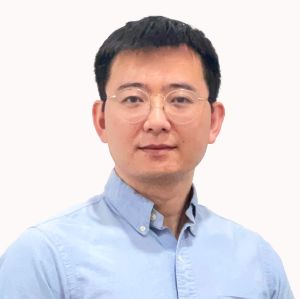
Qing-Jie Li, Ph.D., is a Senior Application Scientist at Matlntis, Inc., where he focuses on delivering sustainable materials solutions through computational science and machine learning. Previously, he served as a Senior Engineer at Samsung Semiconductor US, contributing to computational discovery for battery applications, and as a Postdoctoral Associate at MIT, where he specialized in developing machine learning interatomic potentials for energy materials. Dr. Li earned his Ph.D. from Johns Hopkins University, with expertise spanning fundamental materials mechanics and energy materials.